A coffee bag can tell you the country, region, farm, variety, and roast. But one of the most useful clues is often a small word near the bottom of the label: washed, natural, or honey. That single processing note can explain why two Guatemalan coffees from similar altitudes taste surprisingly different in your cup.
Honey-processed Guatemalan coffee sits in a delicious middle ground. It can keep the clarity and structure many people love in washed Central American coffee, while adding a little more fruit sweetness, roundness, and tactile depth. For specialty-coffee drinkers in the US, UK, EU, and Nordic markets, it is a helpful style because it answers a common buying question: how do you choose a more expressive single-origin coffee without jumping straight into wild fermentation or heavy natural flavors?
This guide explains what honey processing means, how it changes flavor, how Guatemala makes the style especially useful, and how to brew it at home without turning sweetness into muddiness.
Quick answer: what is honey-processed Guatemalan coffee?
Honey-processed Guatemalan coffee is coffee from Guatemala where some sticky fruit mucilage is left on the coffee seed during drying. Despite the name, no honey is added. The word describes the tacky, honey-like layer of fruit that remains after the coffee cherry skin is removed.
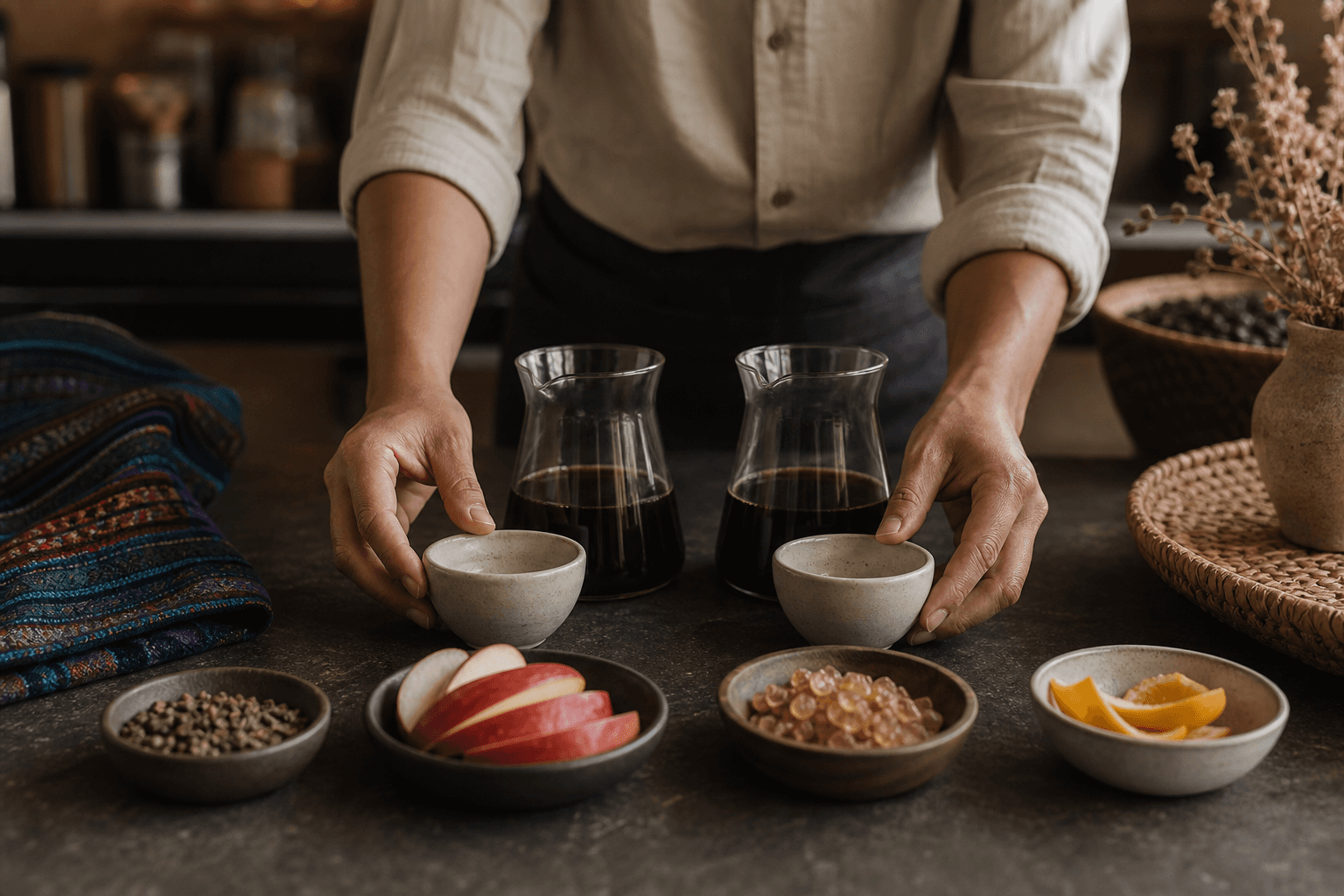
In the cup, honey process coffee often tastes sweeter, rounder, and more fruit-forward than a classic washed coffee, but cleaner and less fermented than many natural coffees. With Guatemalan coffee, that can mean cocoa, caramel, red apple, orange peel, stone fruit, brown sugar, and a soft, syrupy body.
Why process matters more than most buyers think
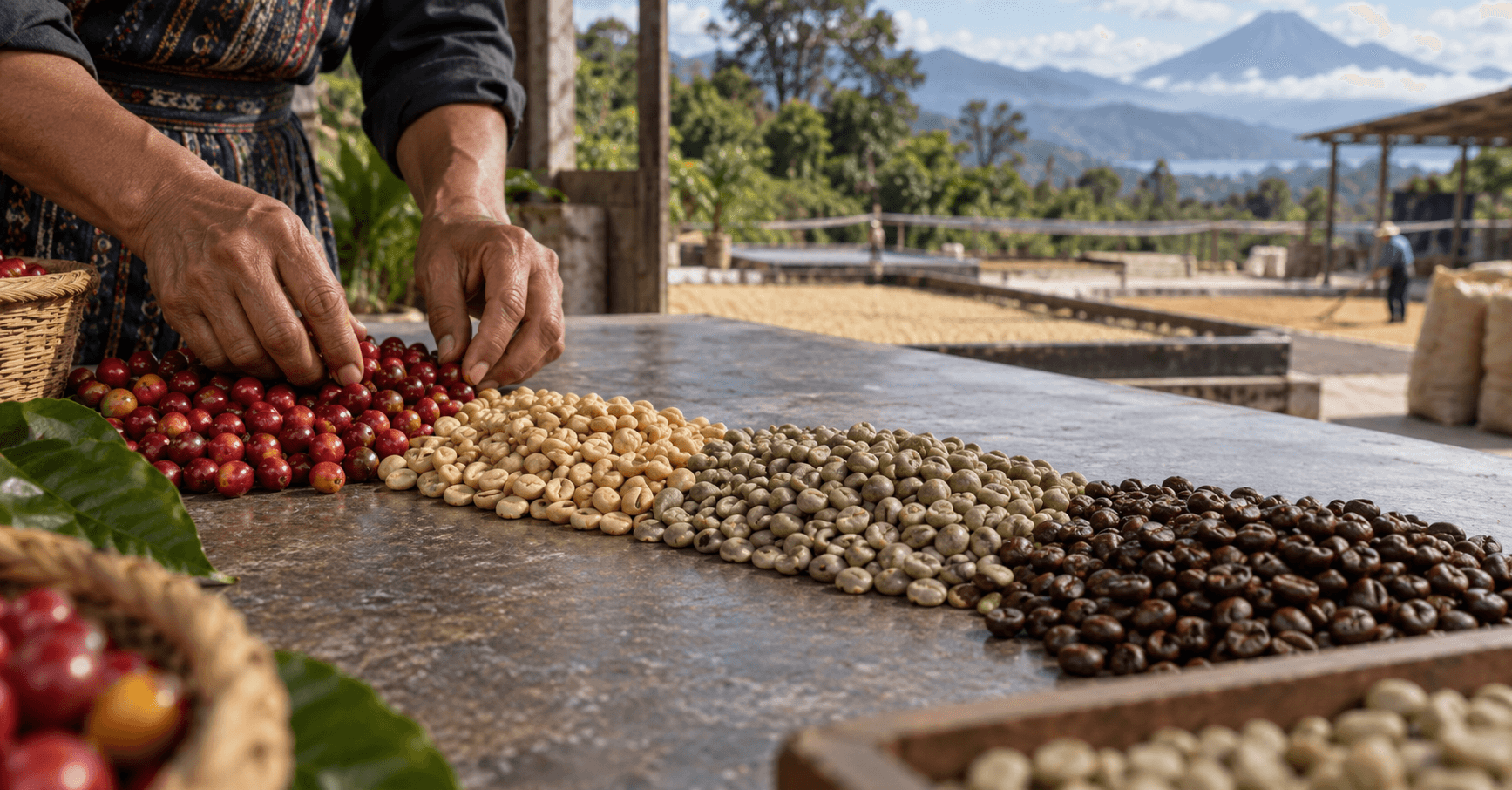
Coffee processing is the step between harvesting coffee cherries and preparing green coffee for export. In plain English, it is how producers remove the fruit from around the seed we later roast and brew. The method affects fermentation, drying, sweetness, acidity, body, and how clearly origin character comes through.
Specialty coffee has made processing language part of everyday buying. CBI’s study on European specialty coffee notes that consumers increasingly care about taste profiles, origin stories, traceability, and processing techniques, and it names traditional methods such as dry, wet, and honey processing as part of that market conversation (CBI specialty coffee market potential). The same study describes specialty coffee as a premium segment where quality, differentiation, and traceability matter more than commodity volume.
That is why a processing note is not just roaster jargon. It helps you predict the experience:
Swipe the table sideways to see all columns.
| Process | What happens | Typical cup direction | Good for |
|---|---|---|---|
| Washed | Fruit is removed before controlled fermentation and washing | Clean, bright, structured | Clarity, filter coffee, origin detail |
| Natural | Whole cherries dry with fruit intact | Fruity, heavy, wine-like or berry-like | Bold sweetness, adventurous drinkers |
| Honey | Skin is removed, some mucilage dries on the seed | Sweet, rounded, fruitier than washed | A bridge between clarity and richness |
The table is not a guarantee. Variety, region, altitude, picking, drying, storage, roast, and brewing still matter. But process gives you a useful starting hypothesis before you even open the bag.
Why Guatemala is especially good for the honey process
Guatemala is a Central American origin with a strong reputation for balanced, high-grown Arabica: sweet structure, cocoa depth, citrus lift, and regional variety. The Guatemalan Coffees origin platform associated with Anacafé describes distinct profiles across areas such as Antigua, Highland Huehue, Acatenango Valley, Traditional Atitlán, Fraijanes Plateau, Rainforest Cobán, New Oriente, and Volcanic San Marcos, shaped by microclimates, altitude, soils, and varieties (Guatemalan Coffees regions and profiles).
That matters because honey processing works best when the underlying coffee already has structure. If the raw material is flat or poorly sorted, leaving more fruit sugars on the seed will not magically create elegance. It may simply add heaviness. But when the coffee is picked ripe, dried carefully, and roasted with restraint, honey processing can amplify what Guatemala already does well: chocolate sweetness, fruit clarity, and a steady finish.
Compared with many Ethiopian naturals, a honey-processed Guatemalan coffee is usually less floral and less berry-saturated. Compared with Kenyan coffee, it is often less sharply blackcurrant-like and more rounded. Compared with Brazilian naturals, it can offer more acidity and mountain-grown definition. Compared with washed Colombian coffee, it may feel a little more textured and brown-sugar sweet while still staying approachable.
For an international buyer, that makes honey-processed Guatemalan coffee a smart upgrade when you want more personality than a standard washed lot but still want a cup that behaves well across pour-over coffee, AeroPress, batch brew, and careful espresso.
What “honey” actually means on the drying bed
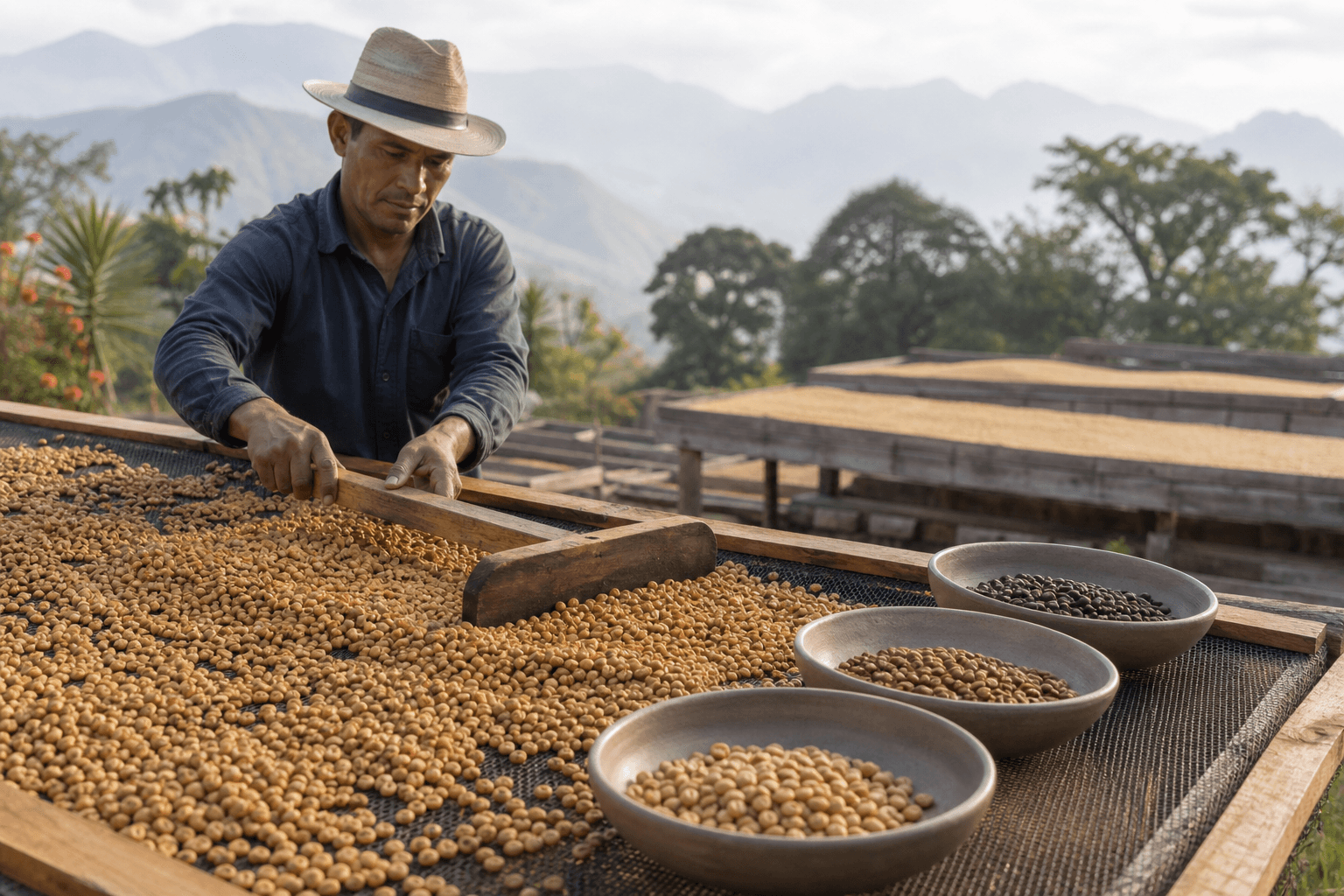
After coffee cherries are picked, producers remove the outer skin and some of the fruit. In a washed process, most of the mucilage is removed before drying. In a honey process, some mucilage remains attached while the coffee dries on patios, raised beds, or mechanical systems.
That sticky layer contains sugars and pectins. During drying, it can influence fermentation and how the seed absorbs aromatic compounds from the surrounding fruit layer. The producer must manage airflow, turning, thickness of the drying layer, weather, and time. Too fast, and the coffee may lack depth. Too slow or too humid, and it can become unstable or develop off-flavors.
You may also see terms such as yellow honey, red honey, or black honey. These are not universal legal categories, but they usually refer to how much mucilage is left and how slowly the coffee is dried. Yellow honey tends to be lighter, cleaner, and faster drying. Red honey often has more fruit and body. Black honey is usually the most intense and slowest to dry, with more risk and more potential for depth.
Think of it like toast color rather than a fixed recipe. “Red honey” tells you a style direction, not an exact flavor promise.
How honey-processed Guatemalan coffee tastes
A good honey-processed Guatemalan coffee should not taste like someone stirred syrup into the cup. The sweetness is integrated. It shows up as ripe fruit, caramelization, and texture rather than obvious sugar.
Look for these signs:
- Aromatics: cocoa, caramel, panela, baked apple, dried apricot, orange peel, red plum, soft spice.
- Acidity: rounded citrus or apple-like brightness rather than sharp lemon.
- Body: a more syrupy or creamy mouthfeel than many washed coffees.
- Finish: sweet, lingering, and clean when drying has been well managed.
In specialty coffee, “body” means mouthfeel: the weight and texture of the liquid. “Acidity” does not mean sourness; it means the lively, fruit-like quality that keeps coffee from tasting dull. A honey process often softens acidity and adds body, which is why it can feel generous without needing a dark roast.
This is where Guatemala’s balance is useful. If you are new to single-origin coffee, a very floral Ethiopian coffee may be exciting but unfamiliar. A high-acid Kenyan coffee can be thrilling but intense. Honey-processed Guatemalan coffee often gives a more gradual path into complexity: still sweet and readable, but with enough fruit to feel special.
The buyer’s checklist: when to choose honey process
Choose honey-processed Guatemalan coffee when you want one or more of these results:
Swipe the table sideways to see all columns.
| Reader goal | Why honey-processed Guatemala fits |
|---|---|
| You want a sweeter filter coffee | Mucilage drying can add roundness and brown-sugar fruit notes. |
| You like washed coffee but want more body | Honey process keeps some clarity while building texture. |
| You find naturals too funky | Honey lots can be expressive without heavy ferment flavors. |
| You brew for guests | Guatemala’s balance makes the cup interesting but not polarizing. |
| You want a giftable specialty coffee | The process story is easy to explain and the flavor is accessible. |
| You are comparing origins | It shows how process changes cup character, not just country. |
If you mainly want a very crisp, tea-like pour-over, a washed Guatemalan coffee may be the better fit. If you want blueberry, wine, and big fruit saturation, a natural Ethiopian or natural Central American lot may be more dramatic. But if your ideal cup is sweet, rounded, clean, and quietly expressive, honey-processed Guatemala belongs on your shortlist.
How to brew honey-processed Guatemalan coffee
Honey process coffees can be forgiving, but they reward a little care. Because the cup often has more body and sweetness, over-extraction can turn heavy or dry faster than you expect. Start with a clean filter recipe, then adjust for balance.
Kapalaj pour-over starting recipe
Swipe the table sideways to see all columns.
| Variable | Starting point | Why it helps |
|---|---|---|
| Coffee | 18 g | Enough to read sweetness and acidity clearly |
| Water | 300 g | A 1:16.7 ratio for balance |
| Grind | Medium, slightly coarser than a washed light roast if needed | Prevents the cup becoming dense or dry |
| Water temperature | 92–94°C / 198–201°F | Hot enough for sweetness, gentle enough for fruit |
| Brew time | 2:45–3:30 | A clean range for most cone drippers |
- Rinse the paper filter and warm the brewer.
- Add 18 g of freshly ground honey-processed Guatemalan coffee.
- Bloom with 45 g of water for 35–45 seconds.
- Pour slowly to 180 g, then finish to 300 g in one or two gentle pulses.
- Swirl lightly only if the bed looks uneven. Avoid aggressive agitation.
- Taste when the coffee cools from hot to warm; sweetness often becomes clearer after a few minutes.
If the cup tastes heavy, bitter, or drying, grind coarser or lower the temperature slightly. If it tastes thin or grassy, grind finer or use water closer to 94–95°C. If the fruit tastes muted, check freshness and water quality before blaming the coffee.
For immersion methods such as French press or AeroPress, keep the recipe controlled. Honey coffees can taste lovely with a fuller texture, but too much sediment or an overly long steep may blur the fruit. If you enjoy press brewing, compare this article with our guide to French press Guatemalan coffee. For a broader processing comparison, our guide to washed and natural Guatemalan coffee gives more context.
What cafés, roasters, and educators can do with it
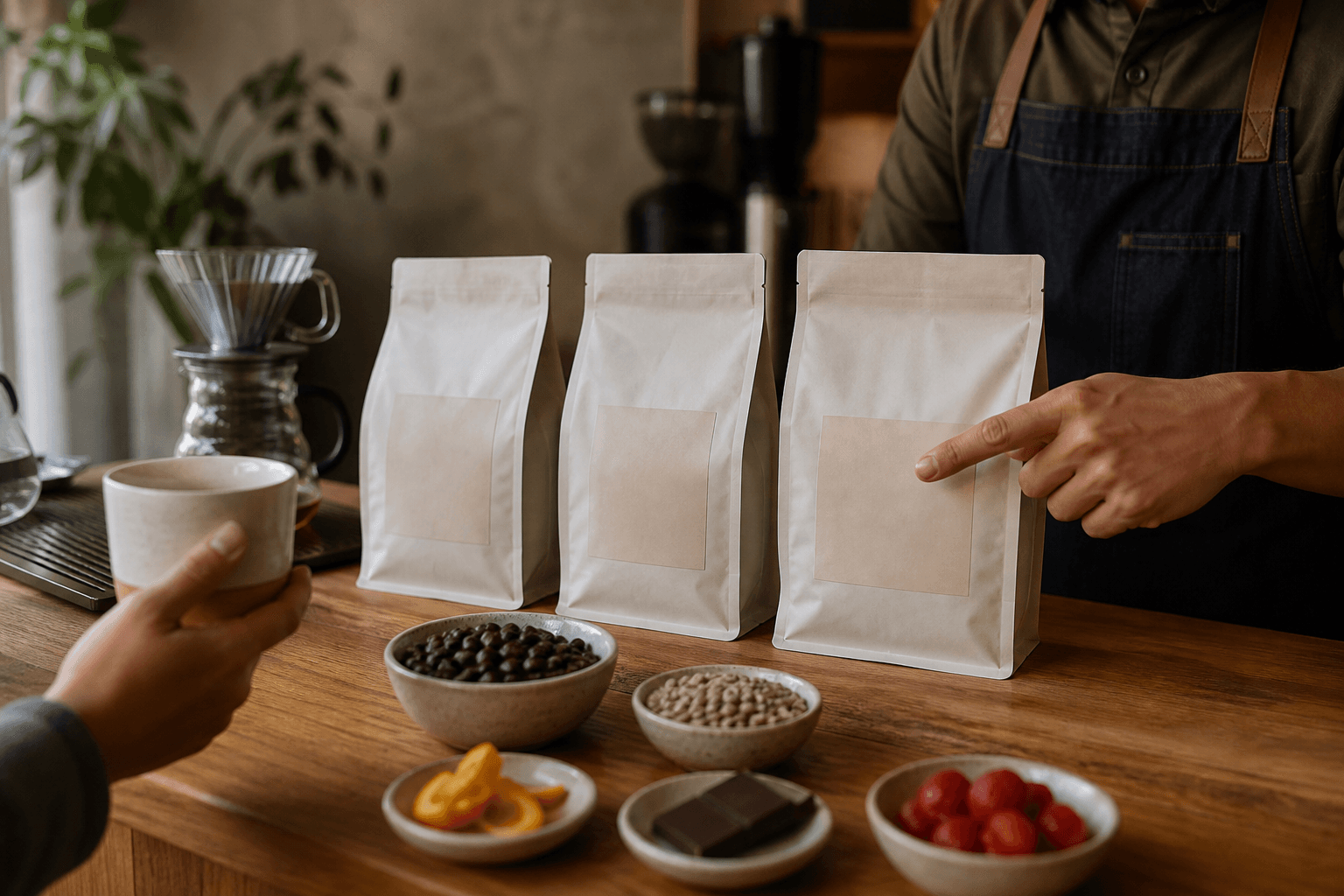
Honey-processed Guatemalan coffee is also useful in café service and coffee education because the contrast is easy to demonstrate. Put a washed Guatemalan coffee beside a honey-processed Guatemalan coffee and most guests can taste the difference without needing advanced language.
Staff can explain it in one sentence: “This coffee is dried with some fruit still on the seed, so it keeps Guatemala’s clean cocoa-citrus profile but adds more sweetness and body.” That is more useful than simply saying “notes of plum and caramel.”
The Specialty Coffee Association gives the industry shared standards and protocols for evaluating coffee quality and sensory attributes (SCA protocols and best practices). You do not need a formal cupping in every café, but the mindset helps: compare coffees side by side, use consistent recipes, and separate what comes from origin, process, roast, and brewing.
How to store and serve it
Because honey-processed coffees can have delicate fruit sweetness, store beans in an airtight bag or container, away from heat, light, and moisture. Let the coffee cool slightly before judging it: cocoa may become more caramel-like, citrus may turn into orange or apple, and the body often feels softer.
Pair it with food that respects the coffee’s middle ground. It is excellent with almond cake, milk chocolate, banana bread, roasted nuts, aged Gouda, soft goat cheese with honey, or a citrus dessert that is not too sweet. For savory brunch, it can work with avocado, eggs, and toasted sourdough because the coffee has enough sweetness and body to stand up to fat without tasting bitter.
FAQ: honey-processed Guatemalan coffee
Does honey-processed coffee contain honey?
No. Honey-processed coffee does not contain added honey. The name refers to the sticky fruit mucilage left on the coffee seed during drying.
Is honey-processed Guatemalan coffee sweet?
It can taste sweeter than many washed coffees, but the sweetness is natural cup character, not added sugar. Expect brown sugar, caramel, fruit, cocoa, or ripe apple rather than literal honey flavor.
Is honey process better than washed coffee?
Not always. Washed coffee is often cleaner and more precise, while honey process can be rounder and fruitier. The better choice depends on the lot, roast, brew method, and your taste preference.
Is honey-processed Guatemalan coffee good for pour-over?
Yes. Pour-over coffee is one of the best ways to show honey process balance because the paper filter keeps the cup clean while the coffee still brings body and sweetness.
What should I compare it with?
Try it beside a washed Guatemalan coffee first. That comparison teaches you what process changes while keeping origin relatively constant. Then compare it with Colombian, Ethiopian, or Kenyan coffee to see how origin and process interact.
The takeaway
Honey-processed Guatemalan coffee is a bridge: cleaner than many naturals, richer than many washed lots, and expressive without becoming difficult. It helps you understand processing as a real flavor choice, not a label decoration.
If you want a sweeter, fruitier single-origin coffee that still feels balanced enough for daily brewing, explore Kapalaj’s Guatemalan coffees and choose a bag that matches the way you brew, taste, and share coffee.