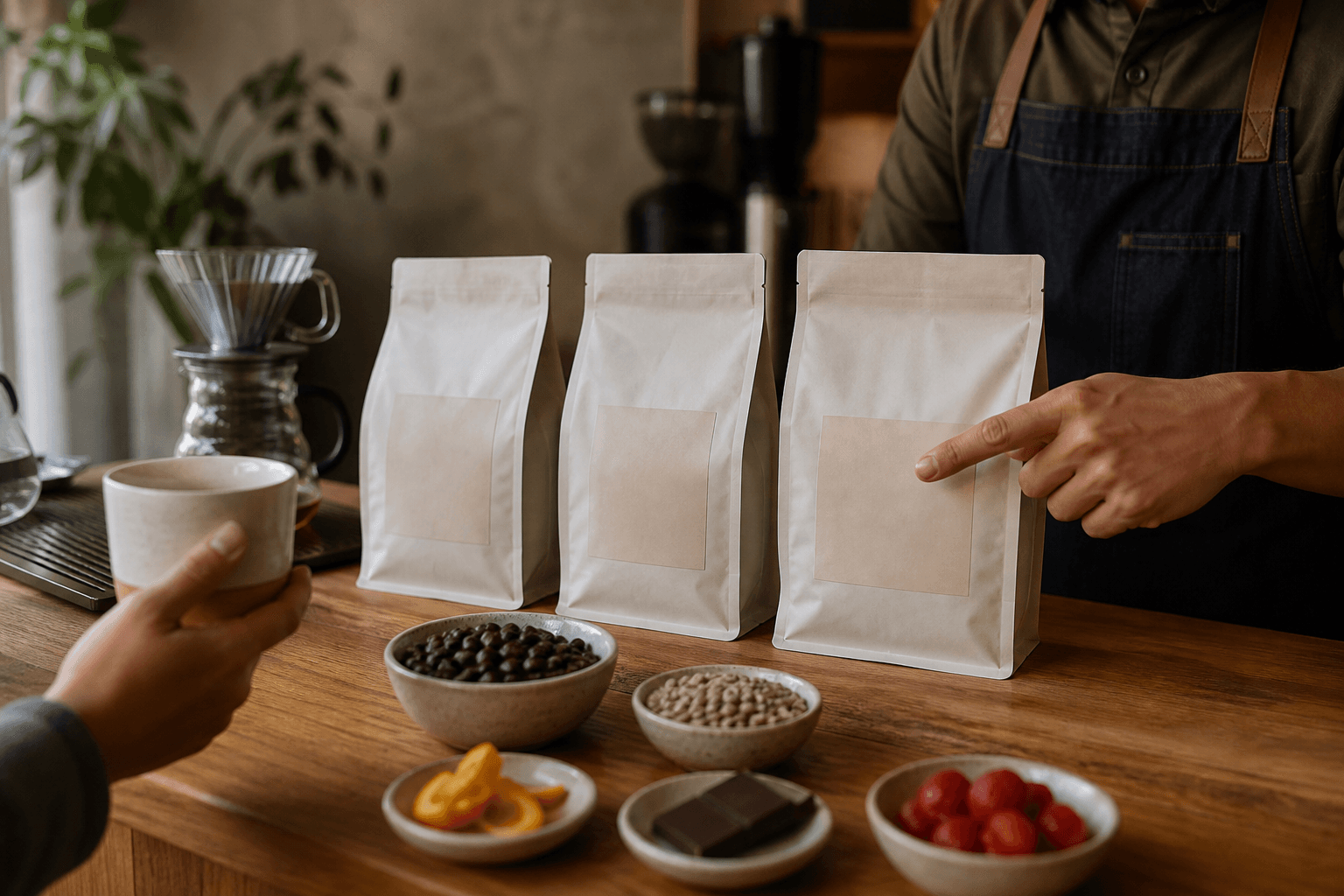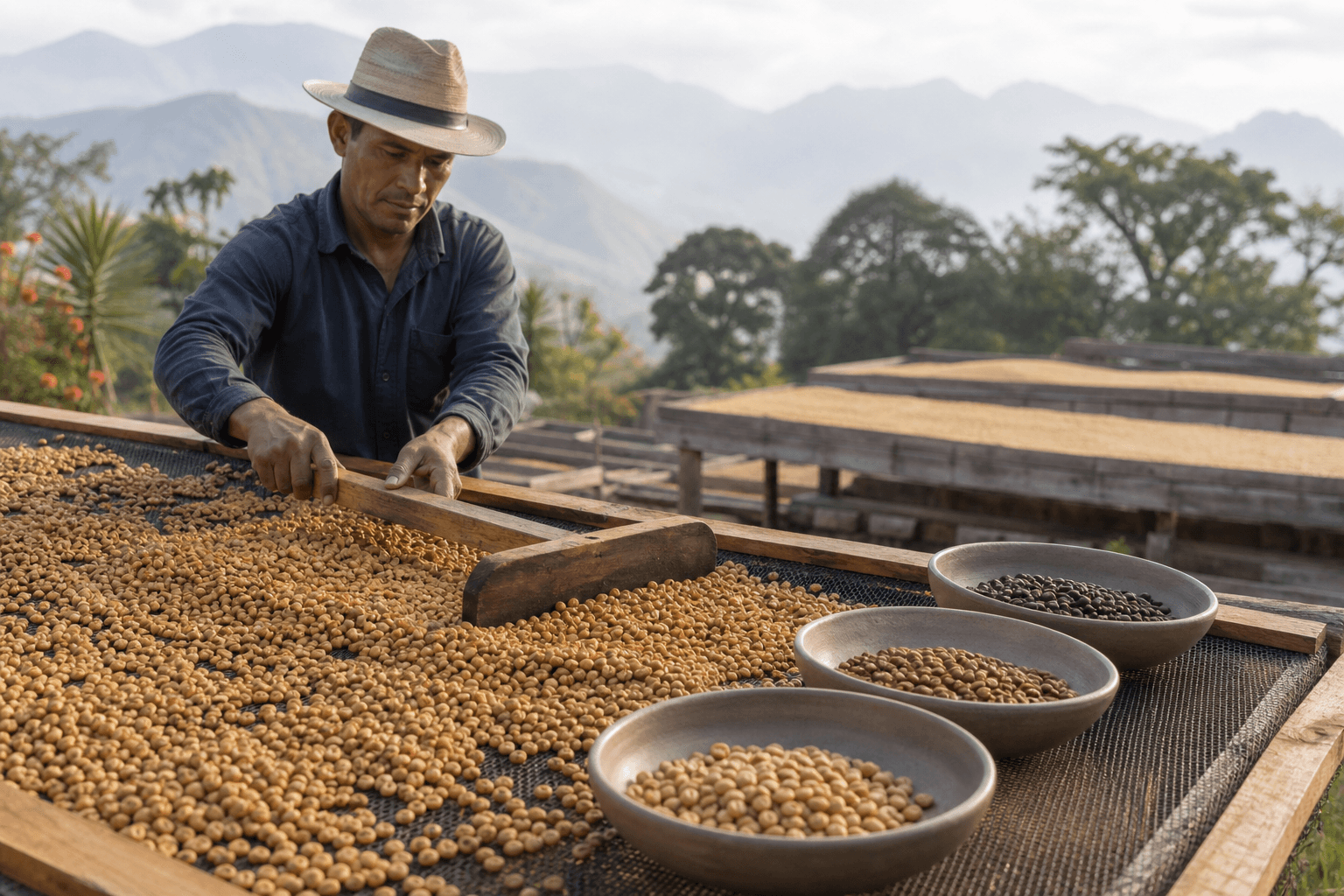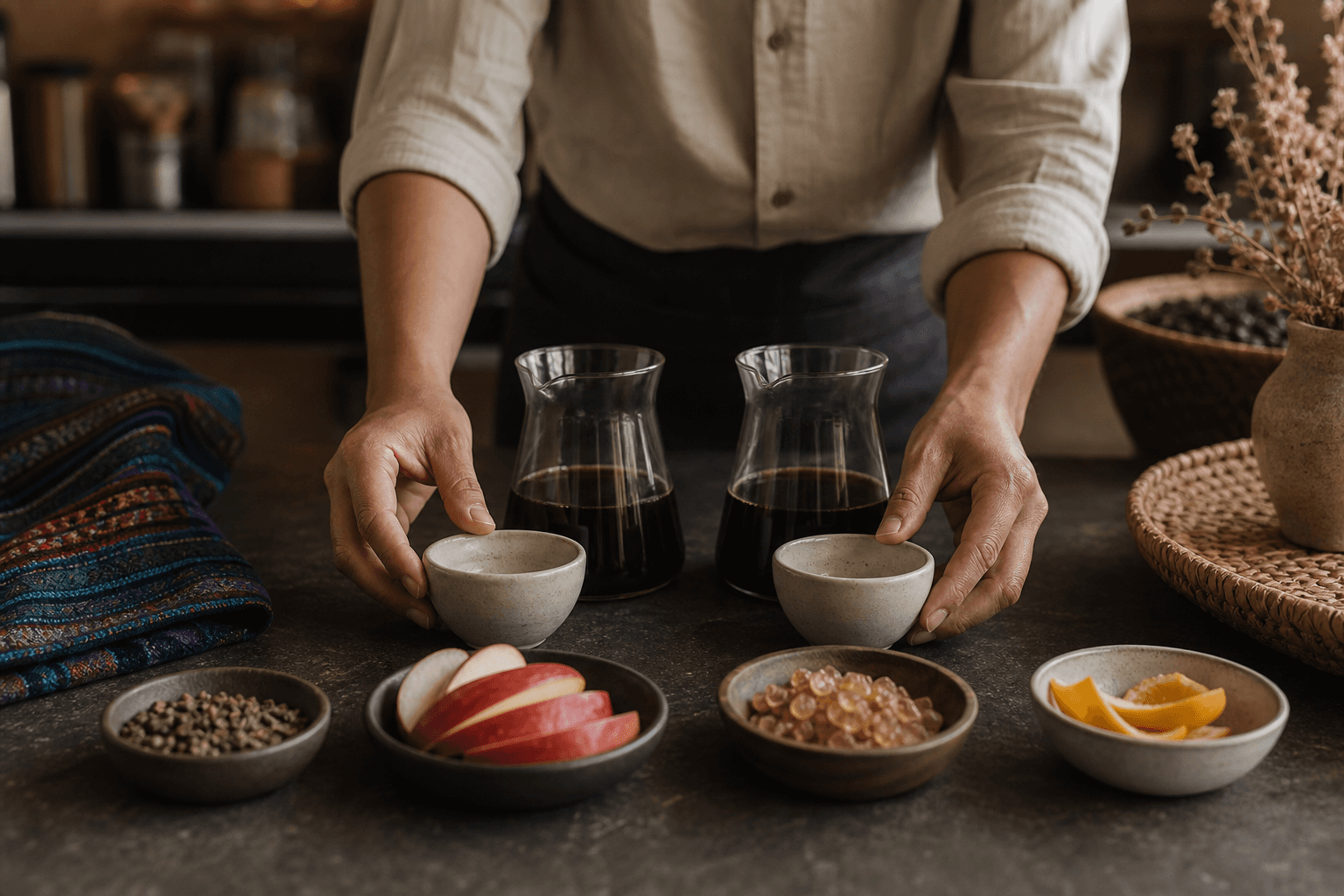
Two bags sit on the shelf. One says Guatemala. One says Colombia. Both promise sweetness, altitude, Arabica, careful roasting, and a better morning cup than the anonymous blend you used to buy. If you are newer to single-origin coffee, the choice can feel oddly difficult: these origins are close enough to seem comparable, but different enough that the wrong bag may not suit your brew method, palate, or daily routine.
That choice matters because specialty coffee drinkers in the US, UK, EU, and Nordic markets are buying coffee with a different set of questions. The third-wave café taught people to ask about origin, process, roast date, brew recipe, and producer relationships. Home brewers have brought those questions into the kitchen.
So, when should you choose Guatemalan coffee over Colombian coffee? And when is Colombia the better answer? The useful comparison is not which country is “best.” It is which origin gives you the cup profile, brewing flexibility, and buying confidence you need right now.
Quick answer: Guatemalan coffee vs Colombian coffee
Guatemalan coffee is often better when you want a structured, sweet, balanced cup with cocoa, caramel, citrus, red apple, stone fruit, or gentle spice. It is especially useful for pour-over coffee, batch brew, AeroPress, and everyday filter drinkers who want origin character without a wildly floral or sharp profile.
Colombian coffee is often a strong choice when you want broad familiarity, medium body, fruit sweetness, and a versatile profile that can move from filter to espresso depending on region, roast, and process. Both origins can be excellent specialty coffee. Decide by taste goals, brew method, freshness, and traceability.
Why this comparison keeps coming up in specialty coffee
Guatemala and Colombia occupy a similar mental space for many international coffee buyers. They are both Latin American origins with long coffee histories, mountain-grown Arabica, export recognition, and enough regional diversity to produce very different cups. They also sit in the approachable middle of the specialty-coffee spectrum: more origin-specific than a generic house blend, usually less polarising than a very floral Ethiopian or an intensely bright Kenyan.
That middle ground is valuable. CBI describes Europe as the world’s largest coffee consumption market, accounting for 30.7% of global coffee consumption in 2023/2024, and points to value growth through premiumisation (CBI European coffee demand). In a separate specialty-coffee analysis, CBI highlights traceability, origin storytelling, and distinctive taste profiles as part of what buyers increasingly look for in premium coffee (CBI specialty coffee market potential).
In plain English: people are not only buying caffeine. They are buying a clearer answer to “what am I drinking, and why does it taste this way?” Guatemala and Colombia both answer that question well. They simply answer it in different accents.
The flavor difference in practical terms
Coffee professionals often talk about acidity, body, sweetness, and finish. These words can sound abstract until you connect them to real drinking.
Acidity is not sourness by default. In good coffee, it is the lively fruit-like lift that makes a cup taste fresh rather than flat. Think red apple, orange, plum, or blackcurrant.
Body is the feeling of weight or texture. A tea-like Ethiopian coffee may feel light. A chocolatey Latin American filter coffee may feel rounder. Espresso and milk drinks often need enough body to avoid tasting thin.
Sweetness is the impression of ripe fruit, brown sugar, caramel, honey, chocolate, or pastry-like warmth, even when there is no sugar in the cup.
Guatemalan coffee often shines when these three elements are in balance. Many lots feel structured: the sweetness is clear, the acidity has definition, and the cup finishes cleanly. A Guatemalan coffee from Antigua may suggest cocoa, caramel, orange, and gentle spice. A highland Huehuetenango coffee may feel brighter, with citrus, apple, stone fruit, and a lifted finish. Other coffee regions of Guatemala can bring softer fruit, floral edges, or deeper chocolate tones depending on microclimate, variety, and processing.
Colombian coffee can be equally nuanced, but the familiar profile many drinkers recognise is rounded sweetness with medium body and fruit clarity. Depending on region and roast, it can taste like caramel, red fruit, citrus, panela-like sugar, nuts, or chocolate. Colombia’s enormous regional diversity also means the category is wide: one bag may be mellow and balanced, another intensely fruity or experimental.
If that sounds like overlap, that is because there is overlap. The difference is often one of emphasis. Guatemala frequently gives a cup that feels compact, clear, and grounded; Colombia often feels broad, friendly, and fruit-forward. Neither description is a rule. It is a starting point for choosing.
A simple buying table
Swipe the table sideways to see all columns.
| If you want… | Start with… | Why it helps |
|---|---|---|
| A balanced daily filter coffee | Guatemalan coffee | Cocoa, fruit, and clean acidity can work across many home brewers. |
| A familiar first single-origin coffee | Colombian coffee or Guatemala | Both are approachable; choose Guatemala for more structure, Colombia for broader familiarity. |
| A pour-over with clarity but not sharpness | Guatemala | Washed Guatemalan lots often show sweetness and definition without becoming austere. |
| A fruitier espresso or milk-friendly roast | Colombia or Guatemala | Colombia can bring soft fruit; Guatemala can bring chocolate-citrus structure. Roast style matters most. |
| A café batch brew guests can understand | Guatemala | It is easy to describe: sweet, balanced, chocolate, apple, citrus, clean finish. |
| A tasting flight with clear contrasts | Both | Brew side by side and compare sweetness, acidity, body, and finish. |
| Origin education for customers or friends | Guatemala | Regional names such as Antigua, Huehuetenango, Acatenango, and Atitlán are useful teaching anchors. |
Why Guatemala is especially useful for origin education
Guatemala is not one flavor. That is the first lesson.
Guatemalan Coffees, the origin platform associated with Anacafé, explains that Guatemala has profiled distinct coffee regions and that varietals, microclimates, and growing conditions strongly shape cup character (Guatemalan Coffees regions and profiles). Names such as Antigua, Highland Huehue, Acatenango Valley, Traditional Atitlán, Rainforest Cobán, Fraijanes Plateau, New Oriente, and Volcanic San Marcos are not just romantic geography. They are clues.
For a buyer or home brewer, that means a bag marked “Guatemala” can be an entry point rather than the whole story. Antigua may lead you toward structure, cocoa, citrus, and volcanic-soil depth. Huehuetenango may suggest higher-altitude brightness and a more lifted fruit profile. Acatenango and Atitlán can show their own combinations of sweetness, acidity, and aromatic complexity.
This is where Guatemalan coffee can have an advantage for teaching. It gives you enough internal diversity to learn about region, altitude, process, and roast level while staying inside a flavor family that many drinkers find comfortable. You can explore without feeling as if every new bag requires a new palate.
For a deeper regional breakdown, Kapalaj’s guide to Guatemala coffee regions is a useful next read.
When Colombia may be the better choice
A good comparison should not pretend Guatemala wins every situation. Choose Colombia when you want a familiar, flexible coffee with a broad international reference point. Many specialty drinkers have tasted Colombian coffee in cafés, competitions, supermarket upgrades, or roaster subscriptions, so it can be a helpful bridge between classic coffee comfort and more expressive single-origin coffee.
Colombia can also be excellent when you want sweetness with a softer fruit emphasis, or when you are curious about more experimental processing. Natural, honey, anaerobic, and extended-fermentation lots can be vivid and aromatic. The caution is the same as with any origin: do not buy the country name alone. Region, producer, process, roast style, freshness, and brewing fit matter more than a broad national reputation.
When Guatemala is the better choice
Choose Guatemala when you want your coffee to feel polished but not predictable. Ethiopian coffee can be beautiful but delicate. Kenyan coffee can be thrilling but intense. Brazilian coffee can be comforting and chocolatey, but some drinkers miss brightness. Colombian coffee can be versatile, but the category is so broad that the bag can vary widely.
Guatemalan coffee often sits in a useful middle lane: enough cocoa and caramel to feel grounded, enough fruit and acidity to feel alive, enough structure to brew cleanly, and enough regional range to keep learning interesting. That makes it strong for people moving from blends into single-origin coffee, cafés that want approachable specialty language, hotels and offices that want a premium but guest-friendly cup, and home brewers who care about sweetness more than shock value.
It also works well when traceability matters. Traceability means the coffee can be followed back to a clearer place, producer group, or lot rather than being treated as anonymous commodity coffee. Kapalaj’s guide to traceable Guatemalan coffee explains what to look for before you buy.
Brew them side by side: a practical comparison recipe
The best way to compare Guatemalan and Colombian coffee is not to argue about origin stereotypes. Brew them side by side with the same recipe and taste them slowly.
Use this simple filter recipe as a baseline:
- Coffee: 18 g Guatemalan coffee and 18 g Colombian coffee, brewed separately
- Water: 300 g per brew
- Ratio: 1:16.7, a balanced filter starting point
- Grind: Medium, similar to coarse table salt
- Water temperature: 92–95°C / 198–203°F
- Total brew time: Around 3–4 minutes for pour-over, or your normal batch/filter equivalent
- Rest time: Let both cups cool for 3–5 minutes before judging
Taste each coffee in three passes.
First, taste for sweetness. Does one cup remind you more of cocoa, caramel, brown sugar, red apple, or ripe fruit? Sweetness is often easiest to notice as the coffee cools.
Second, taste for acidity. Does the brightness feel like orange, apple, plum, lemon, or berry? Does it lift the cup, or does it feel sharp? If both coffees taste sour, grind a little finer next time or extend contact time.
Third, taste for finish. After you swallow, does the flavor disappear quickly, linger as chocolate, stay juicy, or dry out? A clean finish is one of the signs that the roast, green coffee, and brew recipe are working together.
The Specialty Coffee Association publishes standards and protocols that help coffee professionals use shared language for brewing and tasting (SCA coffee standards). You do not need to run a formal cupping at home, but using the same ratio and tasting order makes your comparison more honest.
What to ask before you buy either origin
A country name is only the beginning. Before choosing between Guatemalan coffee and Colombian coffee, ask five simple questions:
- What brew method is this roasted for? A light filter roast and a developed espresso roast can taste very different even from the same origin.
- How specific is the origin information? Country is useful; region, producer, cooperative, farm, or lot is better.
- What process is listed? Washed coffees usually taste cleaner and more transparent. Natural and honey coffees may bring more fruit, body, or sweetness.
- When was it roasted? Freshness matters, especially for specialty coffee. You want lively coffee, not old coffee with a nice label.
- What problem should this bag solve? Daily filter, espresso, milk drinks, gift, tasting flight, café batch brew, or origin education all call for slightly different choices.
If your job-to-be-done is “I want my first serious single-origin coffee,” either origin can work. If your job is “I want a clean, sweet, balanced coffee that teaches me about place without becoming difficult,” start with Guatemala.
FAQ
Is Guatemalan coffee better than Colombian coffee?
Not universally. Guatemalan coffee is often more appealing if you want structure, cocoa-like sweetness, citrus lift, and a clean finish. Colombian coffee may be better if you want a familiar, flexible, fruit-forward profile.
Does Guatemalan coffee taste more chocolatey than Colombian coffee?
Many Guatemalan coffees can show chocolate, cocoa, caramel, spice, and red-apple sweetness. Colombian coffee can also taste chocolatey, but it often has a broader fruit-and-caramel reputation.
Which is better for pour-over coffee?
Guatemalan coffee is an excellent choice for pour-over coffee because it often combines sweetness, clarity, and satisfying body. Colombian coffee can also be excellent when you want softer fruit or a rounder profile.
Which origin is better for espresso?
Both can work. Guatemala can give espresso chocolate, citrus, structure, and sweetness. Colombia can bring caramel, fruit, and roundness. Roast development and freshness matter as much as origin.
The bottom line
Guatemalan coffee and Colombian coffee are not rivals in a simple ranking. They are two different ways into specialty coffee. Colombia often gives breadth, familiarity, and fruit-friendly versatility. Guatemala offers balance, structure, regional clarity, and a calm kind of depth that works beautifully for everyday brewing.
If you want a coffee that can teach you about origin while still tasting generous on a normal morning, Guatemala is a smart place to start. Explore Kapalaj’s single-origin Guatemalan coffees or learn more about our Guatemalan origin relationships to choose a bag that fits how you brew.