A good coffee label should do more than look beautiful on a kitchen shelf. It should help you make a better decision before you grind the first dose: Is this coffee likely to taste chocolatey or citrusy? Will it work for pour-over coffee? Is it built for espresso? Does “single origin” mean a country, a region, a farm, or simply a marketing mood?
That matters especially with Guatemalan coffee. Guatemala is compact on a map, but it is not simple in the cup. Antigua, Huehuetenango, Atitlán, Cobán, Acatenango, Fraijanes, San Marcos, and New Oriente can all point you toward different versions of sweetness, acidity, body, aroma, and structure. If you know how to read the label, you can buy with more confidence instead of choosing only by roast color or tasting-note poetry.
This guide is for international specialty coffee drinkers — home brewers, café teams, hotel buyers, and anyone moving from “nice beans” toward more intentional buying. The goal is simple: decode the clues that actually change the cup.
Quick answer: what should you look for on a Guatemalan coffee label?
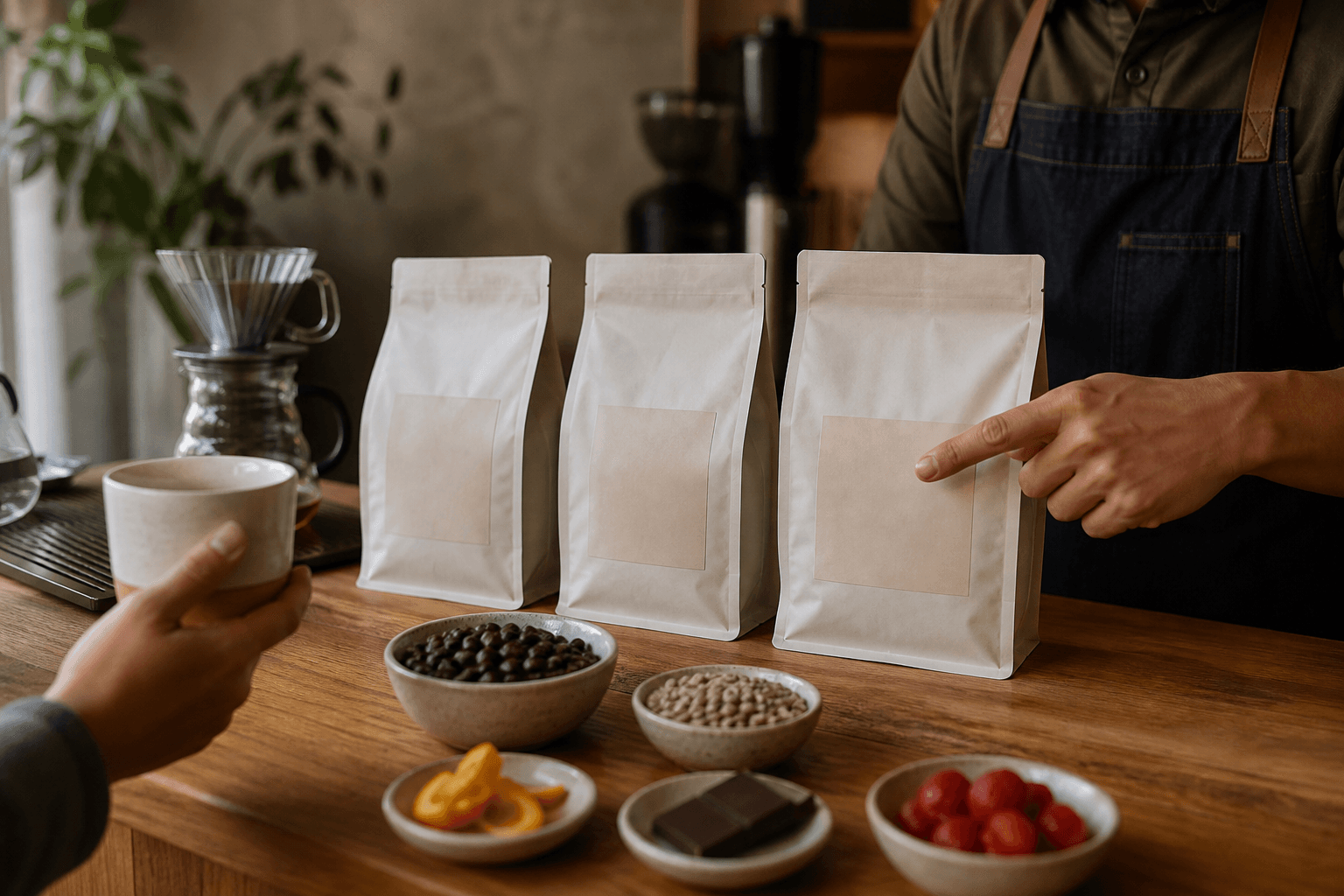
Look first for origin detail, then process, roast level, tasting notes, and freshness. A useful Guatemalan coffee label should tell you more than the country: region, producer or cooperative when available, process, roast date, and a clear flavor direction such as cocoa, citrus, stone fruit, caramel, spice, or red fruit.
For most specialty coffee buyers, the best label is specific without being confusing. It should make one promise you can test in the cup: clean sweetness for filter, structure for espresso, traceability for buying confidence, or a region profile you can compare with Colombia, Ethiopia, Kenya, Brazil, or Costa Rica.
Why label literacy matters in specialty coffee
Third-wave coffee culture trained drinkers in the US, UK, EU, and Nordic markets to ask origin questions that used to stay behind the bar. “Where is it from?” became “Which farm or region?” “Is it light or dark?” became “How was it roasted for this brew method?”
That shift is visible in the market. CBI describes Europe as a major coffee consumption market and notes that European buyers are shaped by premiumisation and taste-profile differences across markets (CBI European coffee demand). In its specialty coffee research, CBI also highlights traceability, transparency, origin storytelling, and single-origin interest as important features of the European specialty segment (CBI specialty coffee market potential).
In plain English: people are not only buying caffeine. They are buying trust, flavor clarity, and a story that can be tasted. A label is where those promises either become useful or stay vague.
The Specialty Coffee Association helps explain why shared language matters. Its standards work is built around consistency, common terminology, quality practices, evaluation methods, and professional development across the coffee value chain (SCA coffee standards). For the buyer, terms like process, extraction, acidity, and roast level should not feel like secret code. They should help you brew better coffee.
Start with origin: country is only the first clue
“Guatemalan coffee” is a useful starting point because Guatemala has a strong specialty identity: highland growing areas, volcanic soils in several regions, varied microclimates, and a history of presenting regional cup profiles. Guatemalan Coffees, the origin platform associated with Anacafé, lists regions including Acatenango Valley, Antigua Coffee, Traditional Atitlán, Rainforest Cobán, Fraijanes Plateau, Highland Huehue, New Oriente, and Volcanic San Marcos, and explains that varietals, microclimates, and growing conditions influence taste (Guatemalan Coffees regions and profiles).
That is why a label that only says “Guatemala” is incomplete. It may still be delicious, but it gives you fewer tools. A label that says “Guatemala, Huehuetenango, washed process, medium-light roast” already tells a clearer story: crisp sweetness, bright fruit, and clean structure. A label that says “Antigua, washed, medium roast” may suggest cocoa-spice balance.
Treat region as a clue, not a guarantee. Variety, altitude, picking, fermentation, drying, roasting, and brewing all matter. But region gives you a starting hypothesis: is this the kind of Guatemalan coffee you want for morning filter, milk drinks, batch brew, or a slow weekend tasting?
For more background, see Kapalaj’s Guatemala origin guide. To compare current coffees, start with Kapalaj’s single-origin coffee selection.
Producer, farm, cooperative: how specific is specific enough?
A strong specialty coffee label often names a producer, farm, association, cooperative, exporter, or washing station. This can show traceability — the ability to follow the coffee back to a more precise origin than “somewhere in the country.”
Traceability does not always mean a single farm. Many excellent coffees come from smallholder groups where farmers deliver cherries or parchment to a shared mill or cooperative. In that case, the label may name the community, association, region, or lot.
“Direct trade coffee” is another term worth reading carefully. It usually suggests a closer buying relationship between roaster and producer or exporter, but it is not a protected certification with one universal definition. Ask what evidence sits behind the phrase: a named producer, a clear region, or a specific relationship.
The safest rule is simple: prefer labels that answer real questions. Who grew, processed, roasted, or selected this coffee? What should I taste? How should I brew it?
Process: washed, natural, honey, and what they mean
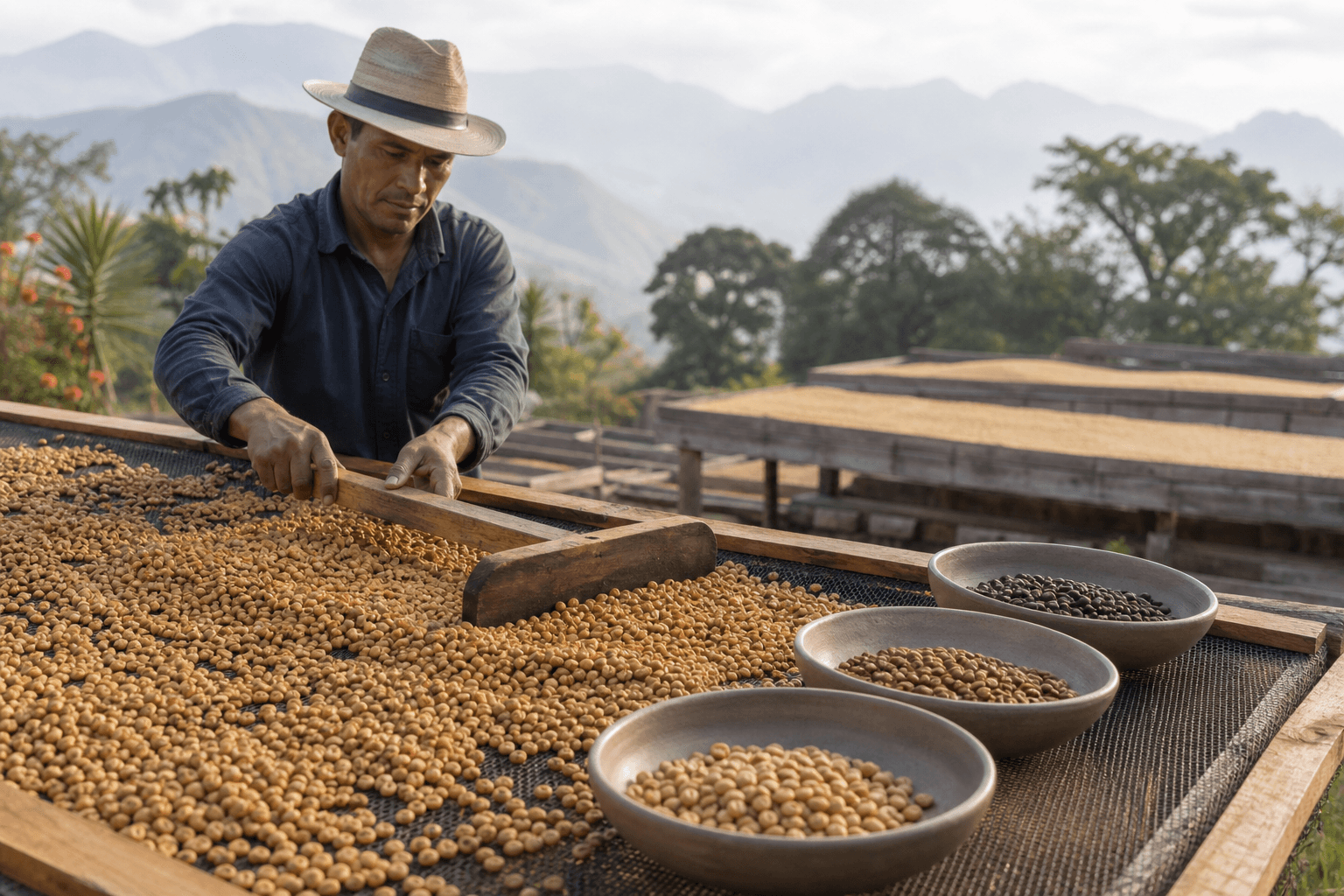
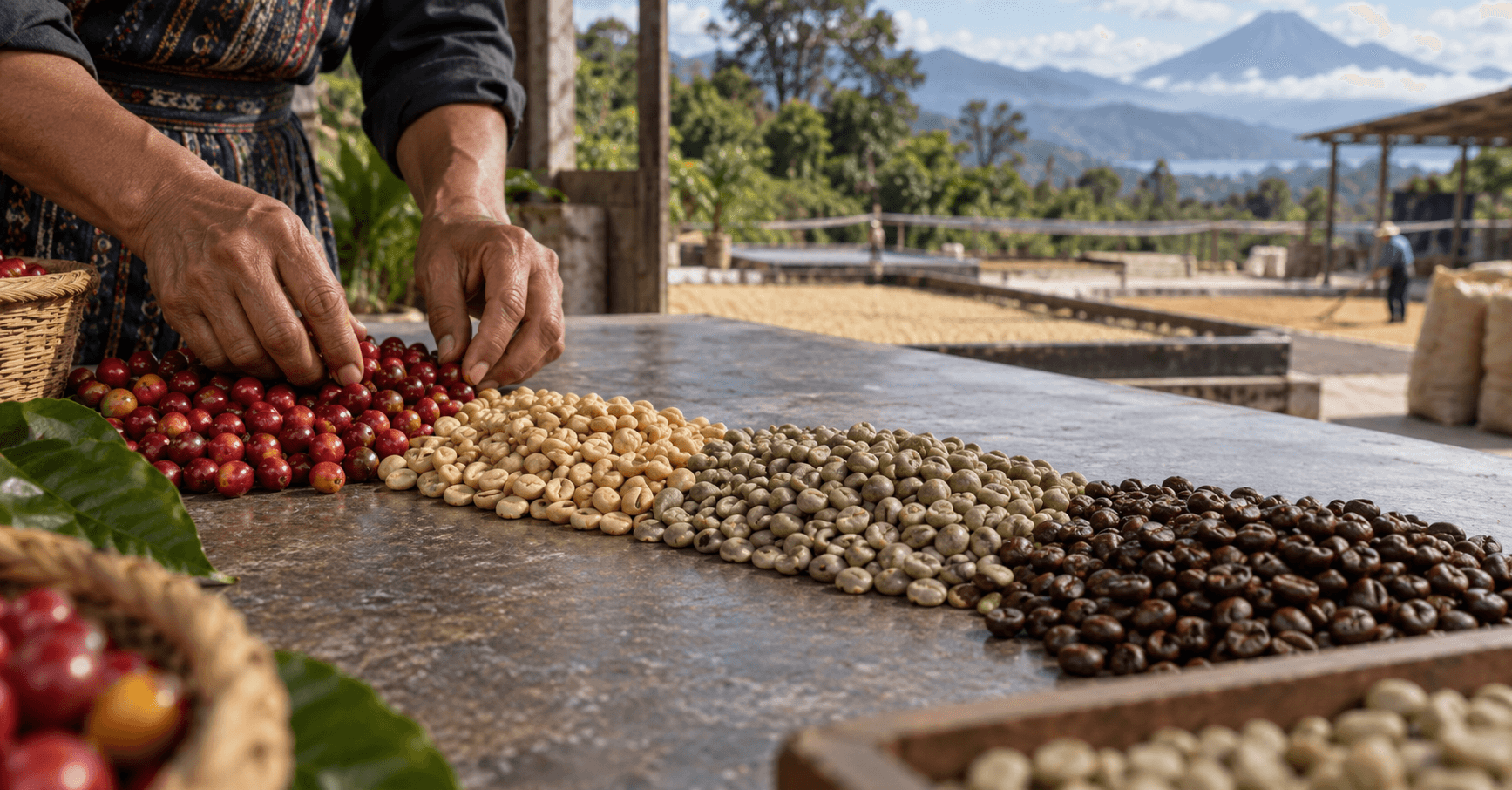
Processing is what happens to the coffee cherry after picking so the seed can be dried, sorted, roasted, and brewed. It is one of the biggest clues on a label.
Washed coffee usually means the fruit is removed before drying, often after fermentation and rinsing. In the cup, washed Guatemalan coffee often tastes clean, structured, and precise — a strong choice for pour-over coffee, batch brew, and buyers who want clarity.
Natural coffee means the coffee dries with more of the fruit intact. It can produce heavier body, stronger fruit notes, and sometimes a winey or jammy character.
Honey-processed coffee sits between those ideas. Some sticky fruit mucilage remains during drying, which can add sweetness and roundness without becoming as intense as many naturals.
No process is automatically better. For a clean everyday single-origin coffee, washed Guatemala is often a safe starting point. For a sweeter, fruitier weekend cup, honey or natural processing may be worth seeking out. For hotel, office, or café batch brew, clarity and repeatability may matter more than wild fruit.
Roast level: brew guidance, not a quality ranking
Roast level is where buyers often over-simplify. Light roast is not automatically better, dark roast is not automatically stronger, and medium roast is not automatically boring. Roast level tells you how the roaster has chosen to translate a green coffee.
A light roast tends to preserve more acidity and aromatic detail. With Guatemalan coffee, that can mean citrus, apple, florals, red fruit, and a tea-like clarity in some lots. It can taste sharp if under-extracted.
A medium-light to medium roast often gives Guatemala its most approachable international profile: cocoa, caramel, citrus, gentle spice, and enough structure for both black coffee and milk drinks.
A darker roast can emphasize roast flavor, bittersweet chocolate, body, and lower perceived acidity. It may work for espresso or milk drinks, but can hide regional nuance if pushed too far.
Instead of asking “Is this roast good?” ask: “What was it roasted for?” A useful label may say filter, espresso, omni-roast, or suitable for both. Omni-roast means the roaster intends the coffee to work across several brew methods.
Tasting notes: useful clues, not flavor guarantees
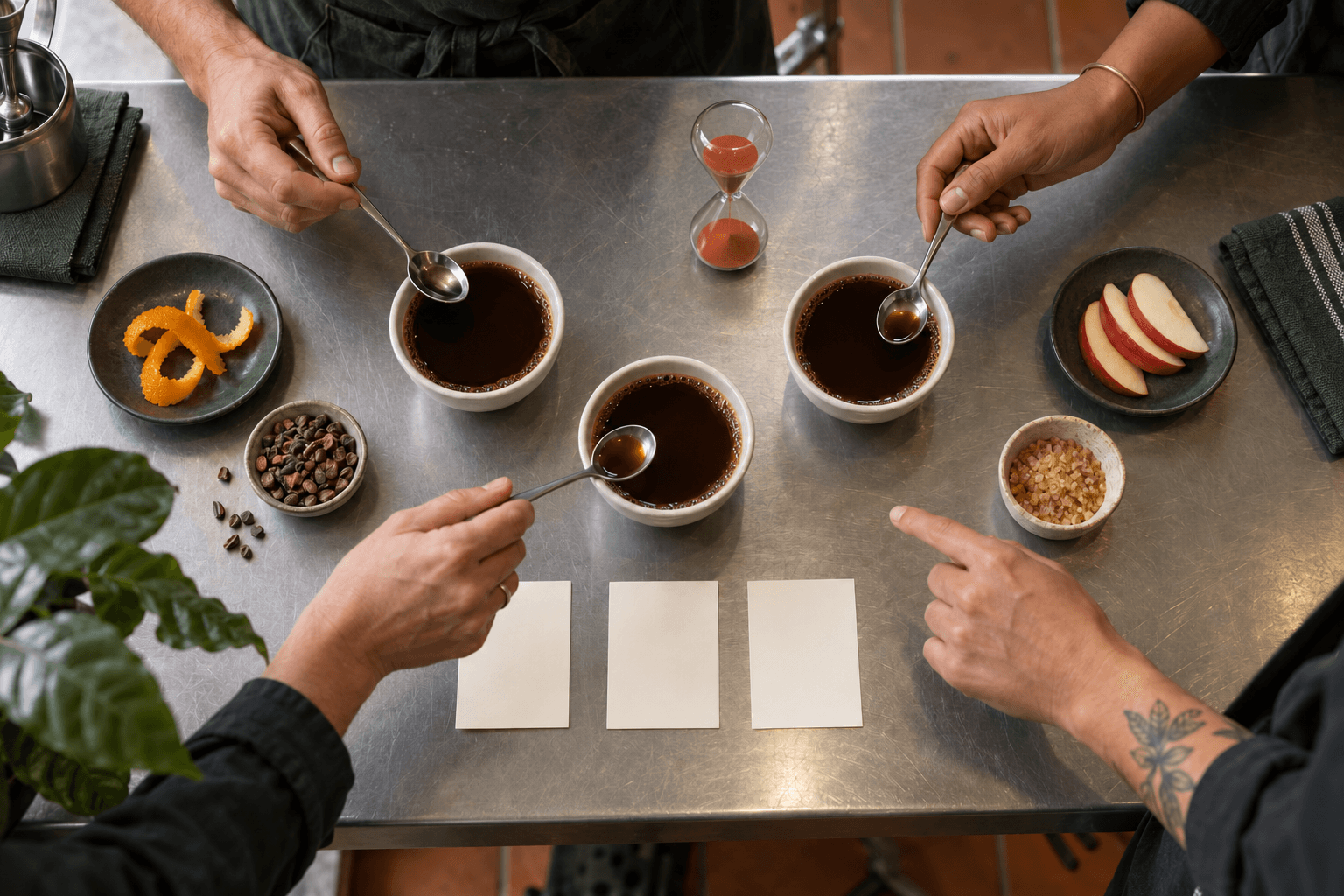
Tasting notes are not added flavors. A bag that says cocoa, orange, and brown sugar does not contain those ingredients. The notes describe what trained tasters were reminded of when evaluating the coffee.
Use the notes by category:
Swipe the table sideways to see all columns.
| Label clue | Plain-English meaning | What to expect from Guatemalan coffee |
|---|---|---|
| Cocoa, chocolate, cacao nib | Familiar sweetness and gentle bitterness | Good for espresso, milk drinks, dessert, and everyday filter |
| Citrus, orange, lime, apple | Lively acidity and cleaner finish | Good for pour-over coffee and brighter black cups |
| Caramel, brown sugar, honey | Rounded sweetness | Good for balanced filter, batch brew, and first specialty bags |
| Red fruit, stone fruit | More expressive fruit character | Good for tasting flights or adventurous brewing |
| Spice, nut, toasted sugar | Warm structure and depth | Good for medium roasts and food pairing |
Compare Guatemala with other origins to calibrate expectations. Ethiopian coffee may be more floral, tea-like, or berry-driven. Kenyan coffee can be more intensely blackcurrant-like and high-acid. Colombian coffee often overlaps with Guatemala in balance and sweetness, while Brazilian coffee often brings lower acidity, more nut and chocolate. Guatemala is valuable because it can sit between comfort and complexity: familiar enough to drink every day, specific enough to teach you something.
Freshness: roast date, storage, and when to open the bag
A coffee label should ideally show a roast date, not only a best-before date. Freshness is not about drinking coffee five minutes after roasting. Most beans need a short rest so brewing becomes more stable.
For filter coffee, many specialty drinkers enjoy beans from roughly a few days to several weeks after roast. Espresso may need a little more rest because too much gas can make shots unstable. Once opened, keep the bag sealed, cool, and dry.
If a label has no roast date, buy from a roaster or shop with strong turnover. Freshness is partly printed information and partly trust.
A practical Guatemalan coffee label checklist
Use this before buying a bag online, in a specialty shop, or from a café shelf.
- Country and region: Does it say Guatemala plus a region such as Antigua, Huehuetenango, Atitlán, Acatenango, Cobán, Fraijanes, San Marcos, or New Oriente?
- Traceability: Does it name a producer, farm, cooperative, community, exporter, or lot?
- Process: Is it washed, natural, honey, or another method? Does that match the cup you want?
- Roast and brew fit: Is it roasted for filter, espresso, milk drinks, batch brew, or flexible use?
- Tasting-note category: Do the notes suggest cocoa comfort, citrus clarity, fruit expression, or deeper spice?
- Freshness: Is there a roast date or a clear freshness promise?
- Buying context: Is this for everyday brewing, a gift, a tasting flight, café service, office coffee, or a special weekend recipe?
If the label answers most of these, you are not just buying a pretty bag. You are buying a coffee you can understand.
How to choose by brewing method
For pour-over coffee, look for washed or carefully honey-processed Guatemalan coffee with citrus, apple, cocoa, or honey notes. Start around 60 g of coffee per litre of water, grind medium-fine, and adjust finer if the cup tastes thin or sour.
For espresso, look for cocoa, caramel, brown sugar, nut, spice, or red fruit in a medium-light to medium roast. Guatemala can work beautifully as single-origin espresso because it has sweetness and structure.
For batch brew, choose a clean washed lot with approachable notes. The best office, hotel, or café batch brew stays sweet, clear, and stable across many cups.
For milk drinks, look for chocolate, caramel, and spice. A balanced Guatemalan coffee can keep origin character in a flat white, cappuccino, or iced latte.
FAQ
Is Guatemalan coffee usually light or dark roasted?
Guatemalan coffee can be roasted light, medium, or dark. Specialty roasters often use medium-light to medium profiles to preserve sweetness, acidity, and regional character.
What does single-origin Guatemalan coffee mean?
Single-origin Guatemalan coffee means the coffee comes from Guatemala rather than a multi-country blend. The best labels go further and name the region, producer, process, and roast date.
Which Guatemala coffee region should I look for first?
Antigua is a classic starting point for cocoa, spice, and structure. Huehuetenango is useful if you want brighter fruit and citrus. Other regions are worth exploring when the label gives clear details.
Is Guatemalan coffee good for pour-over?
Yes. Washed Guatemalan coffee is often excellent for pour-over because it can combine clean sweetness, lively acidity, and enough body to feel complete.
How do I know if a Guatemalan coffee label is trustworthy?
Look for specificity. A trustworthy label usually gives origin, process, roast date, brew guidance, tasting-note categories, and traceability beyond the country name.
Buy the bag you can explain
The best coffee label is not the one with the most words. It is the one that helps you choose, brew, and share the coffee with confidence. With Guatemalan coffee, the right details can turn a bag from a broad origin name into a practical promise: clean washed Huehuetenango for filter, cocoa-structured Antigua for espresso, honey-processed sweetness for a weekend tasting, or a balanced single-origin coffee for daily brewing.
Explore Kapalaj’s Guatemalan specialty coffees and choose a bag with the region, roast, and flavor clues that match the cup you want to brew next.