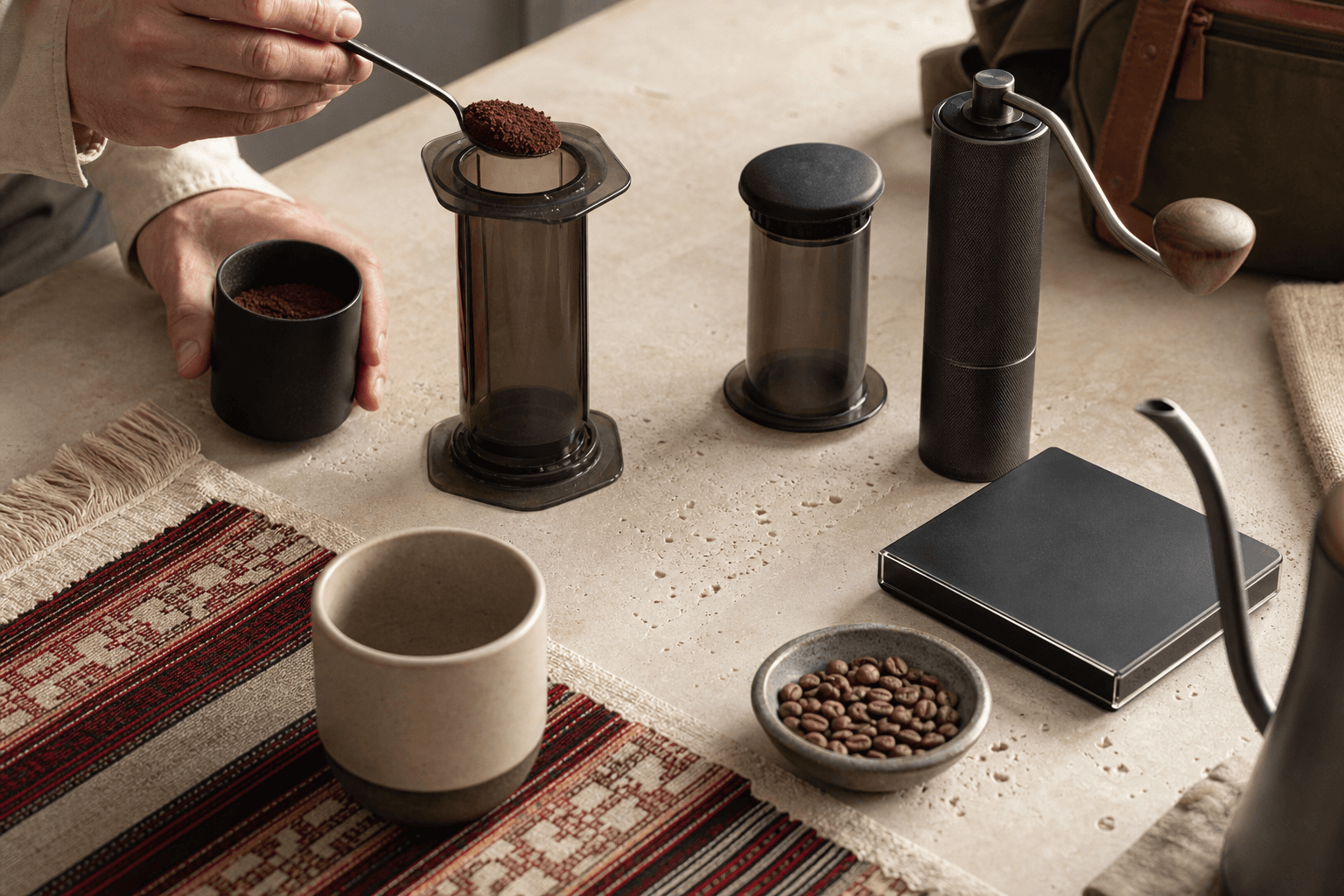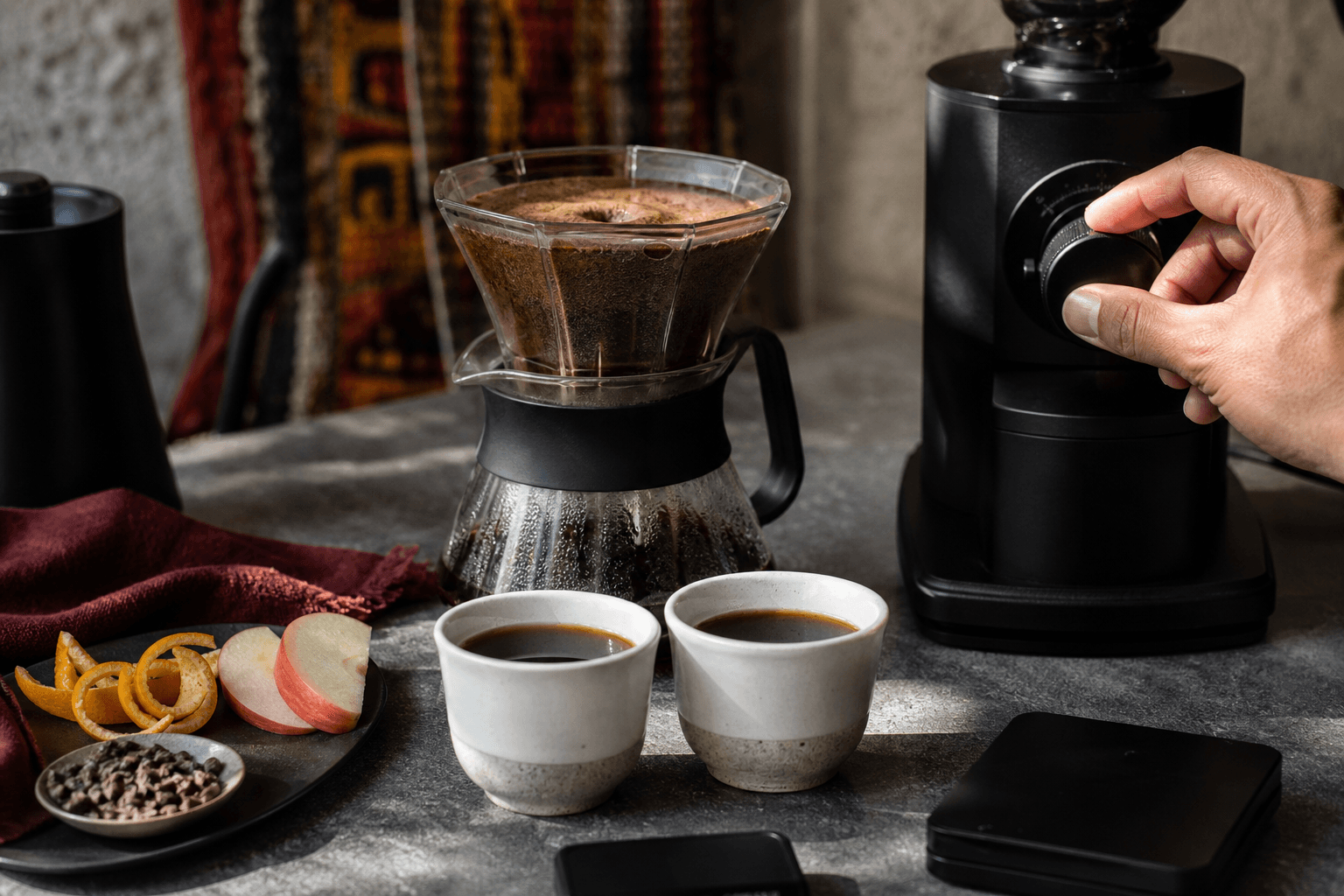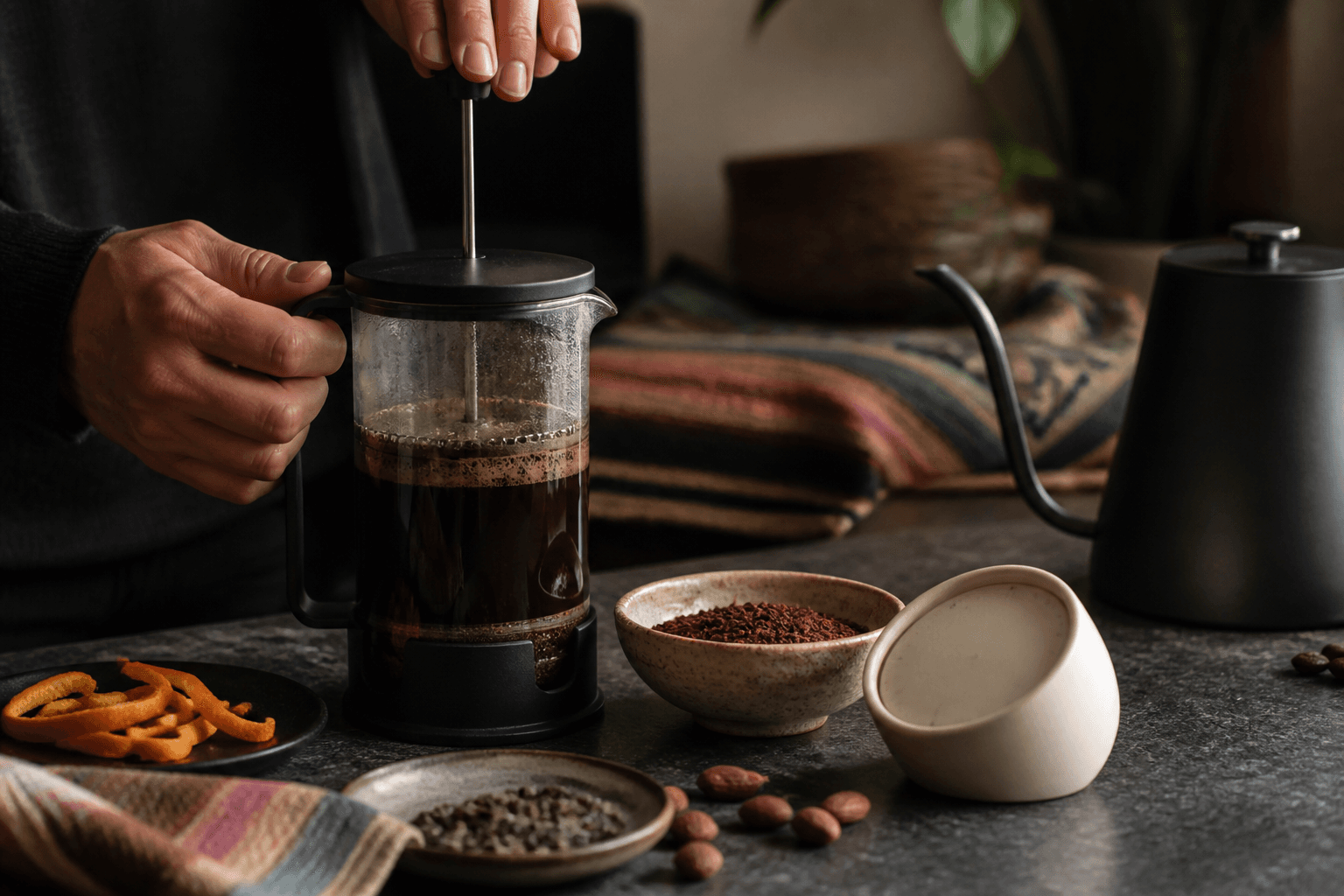
French press coffee has a reputation problem in specialty circles. It is loved for body, warmth, and low-effort brewing, but it is also blamed for cups that taste silty, heavy, or blunt. If your idea of a press pot is “strong coffee with texture,” that can be comforting. If you are buying single-origin coffee because you want to taste origin, sweetness, and balance, it can feel like the wrong tool.
It does not have to be. Guatemalan coffee is one of the most useful origins for French press brewing precisely because it can carry both structure and clarity. A good lot can bring cocoa, caramel, orange, red apple, toasted nuts, gentle spice, and a clean finish. The French press adds roundness and texture. Your job is to keep that texture from turning into muddiness.
This guide is for international home brewers who want a more polished press-pot routine: specialty-coffee drinkers in the US, UK, EU, and Nordic markets, people moving beyond supermarket blends, and anyone who wants Guatemalan coffee to taste sweet and intentional without needing a pour-over setup.
Quick answer: is Guatemalan coffee good for French press?
Yes. Guatemalan coffee can work beautifully in a French press because many lots combine medium body, structured sweetness, and balanced acidity. Those qualities suit immersion brewing: the coffee sits in water long enough to build depth, while the origin character can still show through as chocolate, citrus, apple, stone fruit, nuts, or spice.
For the cleanest result, use a coarse but even grind, a sensible ratio, water just off the boil, a four-minute steep, and a gentle pour after plunging. Do not squeeze every last drop from the press. The final cloudy layer is usually where bitterness and sediment concentrate.
Why the French press deserves another look in specialty coffee
Third-wave coffee culture often celebrates paper-filter methods: V60, Kalita, Chemex, batch brew, and other recipes that highlight clarity. That makes sense. Paper filters catch oils and fine particles, producing a cleaner cup where floral, citrus, and delicate fruit notes can be easy to read.
The French press works differently. It is an immersion brewer, which means ground coffee and hot water stay together for the full brew time. A metal filter then separates the liquid from the grounds. Because metal lets more oils and microscopic particles through than paper, the cup feels heavier and rounder. In plain English: French press coffee has more body. Body is the weight or texture of the coffee in your mouth, not its caffeine level.
That extra texture can be a gift. It can make a light or medium roast feel satisfying. It can turn cocoa, caramel, and nut notes into something plush. It can also make sloppy brewing taste worse. Too many fines, too much agitation, too long on the grounds, or a final aggressive plunge can bury a coffee’s best qualities under grit.
The broader market context matters here. CBI describes Europe as the world’s largest coffee-consuming market, accounting for 30.7% of global coffee consumption in 2023/2024, and connects value growth with premiumisation (CBI European coffee demand). Its specialty-coffee analysis also points to traceability, distinctive taste profiles, and origin stories as important in premium segments (CBI specialty coffee market potential). That does not mean every home brewer needs café equipment. It means everyday methods like the French press should be treated with the same respect as more fashionable brewers.
Why Guatemala fits immersion brewing
Guatemala sits in Central America, not South America, and its coffee is shaped by mountain terrain, volcanic influence, altitude, rainfall, varieties, processing choices, and producer skill. Guatemalan Coffees, the origin platform associated with Anacafé, presents regional profiles such as Antigua Coffee, Highland Huehue, Acatenango Valley, Traditional Atitlán, Rainforest Cobán, Fraijanes Plateau, New Oriente, and Volcanic San Marcos, noting how microclimates, varieties, and growing conditions influence cup character (Guatemalan Coffees regions and profiles).
For a French press drinker, the practical point is not memorising every region. It is knowing why Guatemalan coffee often feels so dependable in this brewer. Compared with a very floral Ethiopian coffee, Guatemala may be less perfumed but more grounded: chocolate, citrus, apple, caramel, and spice can sit comfortably in a heavier cup. Compared with a high-acid Kenyan coffee, Guatemala often feels less sharply blackcurrant-like and more rounded. Compared with many Brazilian coffees, Guatemala can offer more lift and fruit clarity while still keeping enough body for a satisfying morning brew. Compared with Colombian coffee, it can share the approachable Latin American sweetness but often adds a slightly firmer structure or cocoa-citrus balance, depending on region and roast.
That makes Guatemalan coffee useful for people who want one brewer to do several jobs: breakfast coffee, slow weekend cups, shared table service, and a lower-fuss way to taste single-origin coffee.
The Kapalaj French press recipe
Use this as a starting point, then adjust one variable at a time.
Swipe the table sideways to see all columns.
| Variable | Starting point | Why it matters |
|---|---|---|
| Coffee | 30 g | Enough for two generous cups |
| Water | 500 g | A 1:16.7 ratio: balanced, not weak |
| Grind | Coarse, even sea-salt texture | Reduces sediment and harshness |
| Water temperature | 94–96°C / 201–205°F | Hot enough to extract sweetness |
| Steep time | 4 minutes | Builds body without overcooking the cup |
| Rest after plunge | 30–60 seconds | Lets fine particles settle before serving |
- Warm the French press with hot water, then discard it.
- Add 30 g of freshly ground Guatemalan coffee.
- Pour in 500 g of hot water, saturating all the grounds.
- Stir once gently if you see dry pockets. Do not churn the slurry.
- Place the lid on top, with the plunger raised, and wait four minutes.
- Press slowly and stop when you feel resistance. The plunger is a filter, not a piston.
- Wait 30–60 seconds, then pour the coffee into cups or a separate server.
The last step is more important than people think. If coffee sits in the French press after brewing, it continues extracting from the grounds trapped below the filter. The first cup may taste sweet; the second may taste bitter and dusty. Decanting keeps the flavor more stable.
How to keep body without losing clarity
The most common French press mistake is treating “strong” as the goal. Strong can mean several things: more coffee, darker roast, longer steep, finer grind, or simply more bitterness. Specialty coffee asks a better question: what kind of strength do you want?
For Guatemalan coffee, aim for sweet strength. That means enough dissolved coffee to feel full, but not so much sediment and bitterness that the cup loses shape. The Specialty Coffee Association publishes standards and protocols that give the industry a shared language for coffee quality, brewing, and evaluation (SCA coffee standards). At home, the same mindset can be simple: control your recipe, taste carefully, and change only one thing at a time.
If the cup tastes thin, sour, or hollow, grind a little finer or extend the steep by 30 seconds. If it tastes bitter, dry, or ashy, grind coarser, pour sooner after plunging, or use slightly cooler water. If the flavor is good but the texture is gritty, check your grinder. A cheap blade grinder often creates boulders and dust at the same time, which makes French press brewing unpredictable. A burr grinder gives more even particles and a cleaner cup.
Water also matters. If you have read our guide to better water for Guatemalan coffee, you already know that very hard or heavily chlorinated water can flatten sweetness. You do not need a lab setup. A simple filtered water source is often enough to reveal more chocolate, fruit, and balance.
What to taste for in French press Guatemalan coffee
A well-brewed French press should not taste like a paper-filter cup. It will be rounder, softer, and slightly more textured. The goal is not to remove body; it is to make the body feel deliberate.
Look for these signs:
Swipe the table sideways to see all columns.
| Cup clue | What it may mean | What to do next |
|---|---|---|
| Cocoa, caramel, orange, red apple | Balanced extraction | Keep the recipe and repeat it |
| Sweet aroma, but thin taste | Not enough extraction | Grind slightly finer or steep longer |
| Heavy body, dusty finish | Too many fines or too much sediment | Grind more evenly, pour gently, decant |
| Bitter, dry, smoky edge | Over-extraction or roast too dark for the recipe | Grind coarser or reduce steep time |
| Bright but sharp acidity | Under-extraction or water too cool | Use hotter water or finer grind |
This is where Guatemala becomes an educational origin. Its balance gives you feedback. If an Ethiopian natural tastes wildly fruity, it can be hard to know whether the brewer or the coffee is driving the result. If a dark Brazilian blend tastes mostly roast, the origin may disappear. A clean Guatemalan coffee often shows the relationship between recipe and flavor more clearly: sweetness comes forward when extraction is right, acidity turns sharp when it is not, and body becomes pleasant when sediment is controlled.
Choosing beans for a cleaner press pot
When shopping for French press Guatemalan coffee, do not look only for the word “strong.” Look for clues that match your desired cup.
Choose tasting notes such as chocolate, cacao, caramel, brown sugar, orange, red apple, plum, almond, hazelnut, or gentle spice if you want a round and balanced press. Choose a light-to-medium or medium roast if you want sweetness and origin character without a thin body. Choose whole beans when possible, and grind shortly before brewing. If you need pre-ground coffee, ask for a French press grind and use the bag relatively quickly.
Traceability is also worth asking about. Direct trade coffee is not a magic label, but in plain English it usually points toward a closer relationship between buyer and producer, with more attention to origin, quality, and price transparency than anonymous commodity sourcing. For readers who care about where coffee comes from, Guatemala offers a useful bridge between sensory pleasure and origin education. You can explore Kapalaj’s approach to provenance on our origin page, or browse coffees through the Kapalaj shop when you want beans selected with Guatemala at the center.
French press vs pour-over: when to choose each
Pour-over coffee is better when you want maximum clarity, delicate aromatics, and a cup that feels almost tea-like. If your Guatemalan coffee has very refined citrus, floral, or high-altitude fruit notes, a paper filter may show them with more precision.
French press is better when you want a fuller mouthfeel, an easier shared brew, and a cup that carries breakfast, conversation, and slow mornings well. It can be especially good for Guatemalan coffees with cocoa, caramel, nut, apple, orange, and spice notes because those flavors remain pleasing in a rounder texture.
Neither method is more serious. They answer different moods. The useful question is not “Which brewer is best?” It is “Which brewer makes this coffee more enjoyable today?”
FAQ: French press Guatemalan coffee
What grind size is best for Guatemalan coffee in a French press?
Use a coarse, even grind, roughly like coarse sea salt. If the coffee tastes thin or sour, move slightly finer. If it tastes bitter or gritty, move coarser and pour more gently.
Should French press Guatemalan coffee be light or dark roast?
A light-to-medium or medium roast is usually the safest place to start. It keeps Guatemalan coffee’s cocoa, citrus, fruit, and spice notes visible while giving enough body for immersion brewing. Very dark roasts can work for some drinkers, but they may hide origin character behind roast bitterness.
How long should I steep Guatemalan coffee in a French press?
Start with four minutes, then plunge slowly and pour after a short rest. If the cup is weak, try four and a half minutes. If it is bitter or dusty, keep the time at four minutes and adjust grind or pouring first.
Is French press good for single-origin coffee?
Yes, as long as you control the recipe. French press brewing can make single-origin coffee taste round, sweet, and generous. It is less transparent than a paper-filter method, so it works best with coffees that have both clarity and structure.
Why does my French press coffee taste muddy?
Muddy flavor usually comes from too many fine particles, aggressive plunging, coffee left sitting on the grounds, or an uneven grind. Use a burr grinder if possible, press gently, let the cup settle briefly, and decant the full brew.
Brew Guatemala with more intention
French press coffee should not be a compromise between convenience and quality. With the right beans and a simple recipe, it can be one of the warmest ways to enjoy Guatemalan coffee: sweet, textured, generous, and still clear enough to teach you something about origin.
Explore Kapalaj’s Guatemalan coffees and choose a bag that gives your French press more sweetness, structure, and purpose in the cup.