Coffee shelves pretend that time has stopped. The same origins appear in January and July, each bag sealed and ready, while the fruit itself grows, ripens and disappears according to a living agricultural calendar.
That creates a useful question for anyone buying single-origin coffee: when is Guatemalan coffee actually in season?
The simple answer is “around the Northern Hemisphere winter.” The better answer takes two clocks. One follows green coffee from harvest through processing, export and storage. The other begins on the roast date and follows flavour after heat transforms those seeds into the brown beans we brew.
Understand both clocks and you can read a coffee bag more intelligently, ask a roaster better questions and stop treating either “fresh crop” or “roasted yesterday” as an automatic guarantee of quality.
Quick answer: when is Guatemalan coffee in season?
Guatemala’s coffee harvest generally runs from late in the year into the first months of the next, with timing varying by region, altitude and weather. Warmer, lower areas may begin earlier; cooler highland coffees often ripen and finish later. Processing, drying, resting, milling and export mean a new harvest usually reaches international roasters months after the first cherries are picked.
For a buyer, “in season” therefore means more than a harvest month. Look for a coffee that belongs to a reasonably current crop, has been stored well as green coffee, and has been roasted recently enough for your brewing method. A carefully stored previous-crop coffee can taste far better than a badly processed or poorly roasted new-crop lot.
Why Guatemala does not have one harvest date
Guatemala is in Central America, but neither that location nor the country name creates one uniform coffee calendar. Mountains, volcanic slopes, valleys, rainfall patterns and large differences in elevation make ripening staggered.
The Guatemalan Coffees platform associated with Anacafé describes eight regional profiles: Antigua Coffee, Acatenango Valley, Traditional Atitlán, Rainforest Cobán, Fraijanes Plateau, Highland Huehue, New Oriente and Volcanic San Marcos. Its regional overview emphasises differences in microclimate, varieties and growing conditions. Those differences affect harvest timing as well as cup character.
Coffee cherries do not ripen because a calendar says December. They respond to flowering, rain, temperature, elevation and local conditions. At higher elevations, cooler temperatures can slow development. Picking may therefore continue later than it does in warmer zones, and even neighbouring farms can move at different speeds.
Anacafé’s report on Guatemala’s 2024–2025 crop treats the coffee year as a defined production and export cycle. Coffee is followed not only by the year on a retail bag, but by harvest, production and trade periods.
This is why a precise producer, region or lot is more useful than a sweeping claim such as “Guatemala is harvested in December.” December may sit inside the national harvest, but it does not describe every cherry or tell you when a particular lot became export-ready.
The first clock: harvest freshness
The first freshness clock begins with ripe fruit, but it does not run like a countdown on milk.
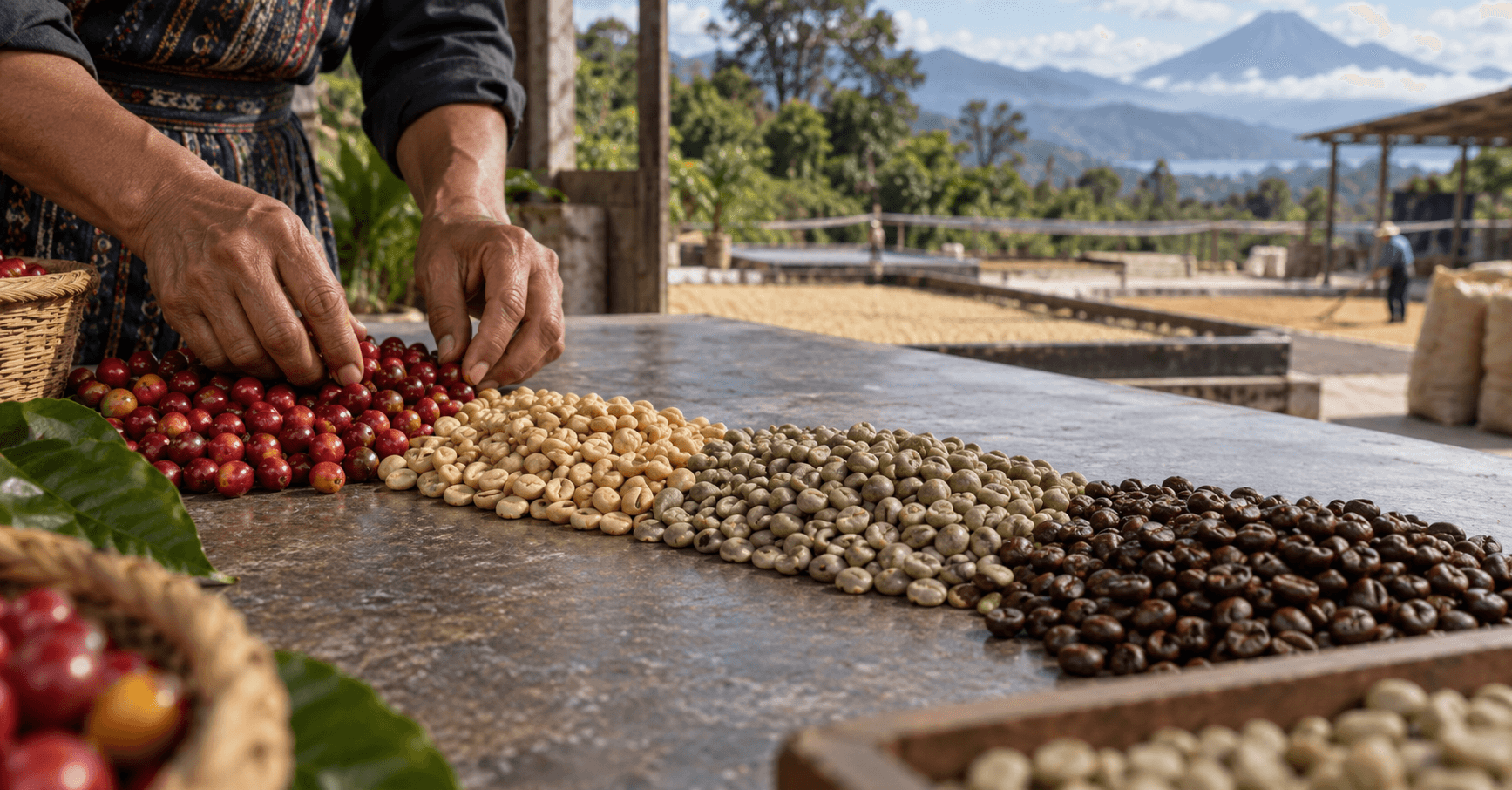
After picking, coffee cherries must be processed. In a washed process, the skin and much of the fruit are removed before fermentation, washing and drying. In a natural process, the whole cherry dries around the seed. Honey processing removes the skin while leaving some sticky fruit material, called mucilage, during drying.
Once dried, coffee is commonly stored in a protective parchment layer before dry milling removes that layer and prepares the green coffee for export. The lot may then be sorted, packed, transported to port, shipped, cleared, warehoused, sampled and eventually delivered to a roaster. That journey can take months, and speed alone is not the goal. Drying coffee safely and allowing it to stabilise are parts of quality, not inconvenient delays.
In specialty coffee, fresh crop usually means coffee from the latest relevant harvest to reach the market. It does not mean the beans were fruit last week. Nor does the phrase guarantee sweetness, cleanliness or complexity. A fresh crop can be poorly picked, dried or stored; an older crop can remain expressive when its moisture, temperature and packaging have been managed well.
Green coffee changes gradually in storage. Aromatic potential can fade, acidity can feel flatter and flavours sometimes become woody, papery or baggy. But this is not governed by one universal expiry date. Storage environment, water activity, moisture, packaging and the coffee itself all influence how it ages.
That distinction matters globally. Ethiopian, Kenyan, Colombian and Guatemalan coffees do not all arrive together. Specialty roasters build changing menus partly because origin calendars move. Seasonality helps explain why a coffee is available now and what condition it is in; it is not a contest in which the newest arrival always wins.
The second clock: roast freshness
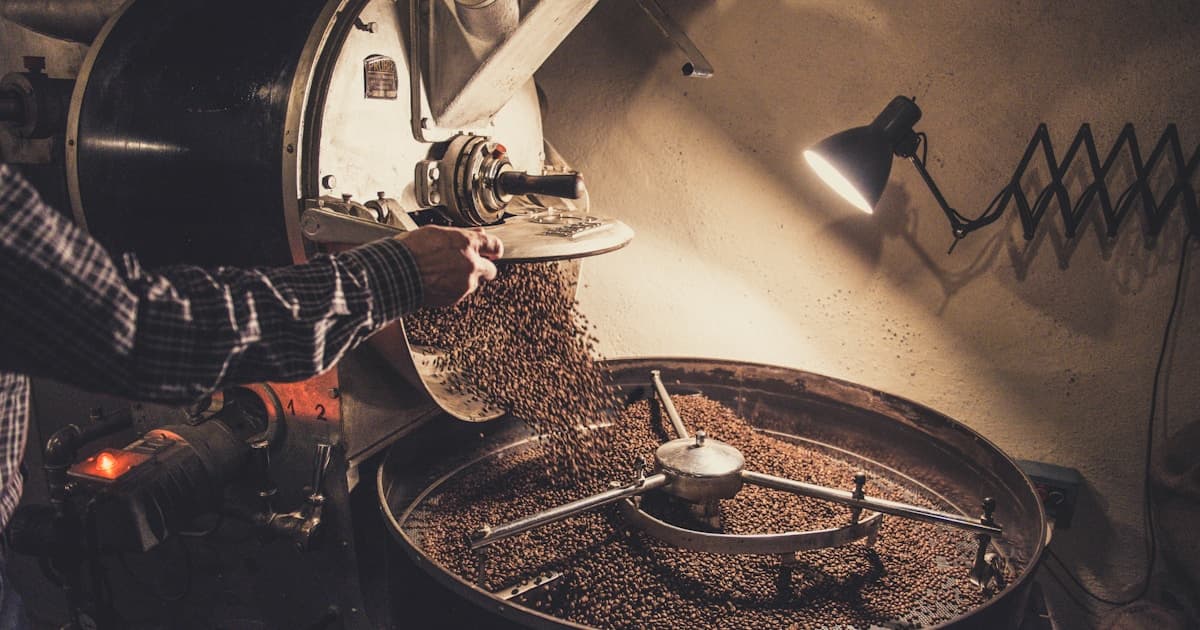
Roasting starts a faster and more familiar clock. Heat creates and releases a huge range of aromatic compounds, changes the bean’s structure and produces carbon dioxide. After roasting, coffee needs protection from oxygen, heat, moisture and light.
The Specialty Coffee Association’s overview of what “freshly roasted” coffee means draws on its Coffee Freshness Handbook and research on how roasted coffee changes over time. The practical point is that freshness is not a single magic day. Coffee degasses, aromas evolve, packaging matters, and the useful window depends on roast style and brewing.
Very fresh coffee can be difficult to brew evenly because escaping gas resists water. Filter coffee may settle after several days. Espresso often benefits from a longer rest because pressure makes excess gas especially disruptive. Later, aroma gradually softens and oxidation becomes more noticeable.
A roast date is therefore valuable, but “the newest possible bag” is not always the best bag to open immediately. A well-roasted coffee that has rested appropriately may taste sweeter and more coherent than the same coffee brewed hours after roasting.
The two clocks can also disagree:
- A current-crop green coffee can be roasted badly or sold after the roasted beans have faded.
- A well-stored previous-crop coffee can be freshly roasted and taste excellent.
- A coffee roasted yesterday can still be disappointing if the green coffee was damaged or the roast does not suit the brew method.
- A coffee roasted three weeks ago may remain vibrant in a sealed, high-barrier bag and be perfectly ready to brew.
Harvest freshness describes the agricultural raw material. Roast freshness describes the transformed product you take home. You need both, but neither replaces tasting and sound buying information.
A buyer’s five-question freshness check
You do not need a crop contract or a warehouse report to make a sensible choice. Use five questions online, at a specialty shop or when speaking with a roaster.
1. What is the roast date?
Look for a specific date rather than only a distant best-before date. The roast date tells you when the faster clock began. It does not tell you whether the coffee is ready today, but it gives you the information needed to plan.
2. Is the harvest or crop identified?
A harvest year, crop year or arrival note adds context. Crop labels can cross calendar years because cherries picked near the end of one year may be processed, exported and sold in the next. Do not reject a bag simply because the notation looks a year old; ask what the date refers to.
3. How specific is the origin?
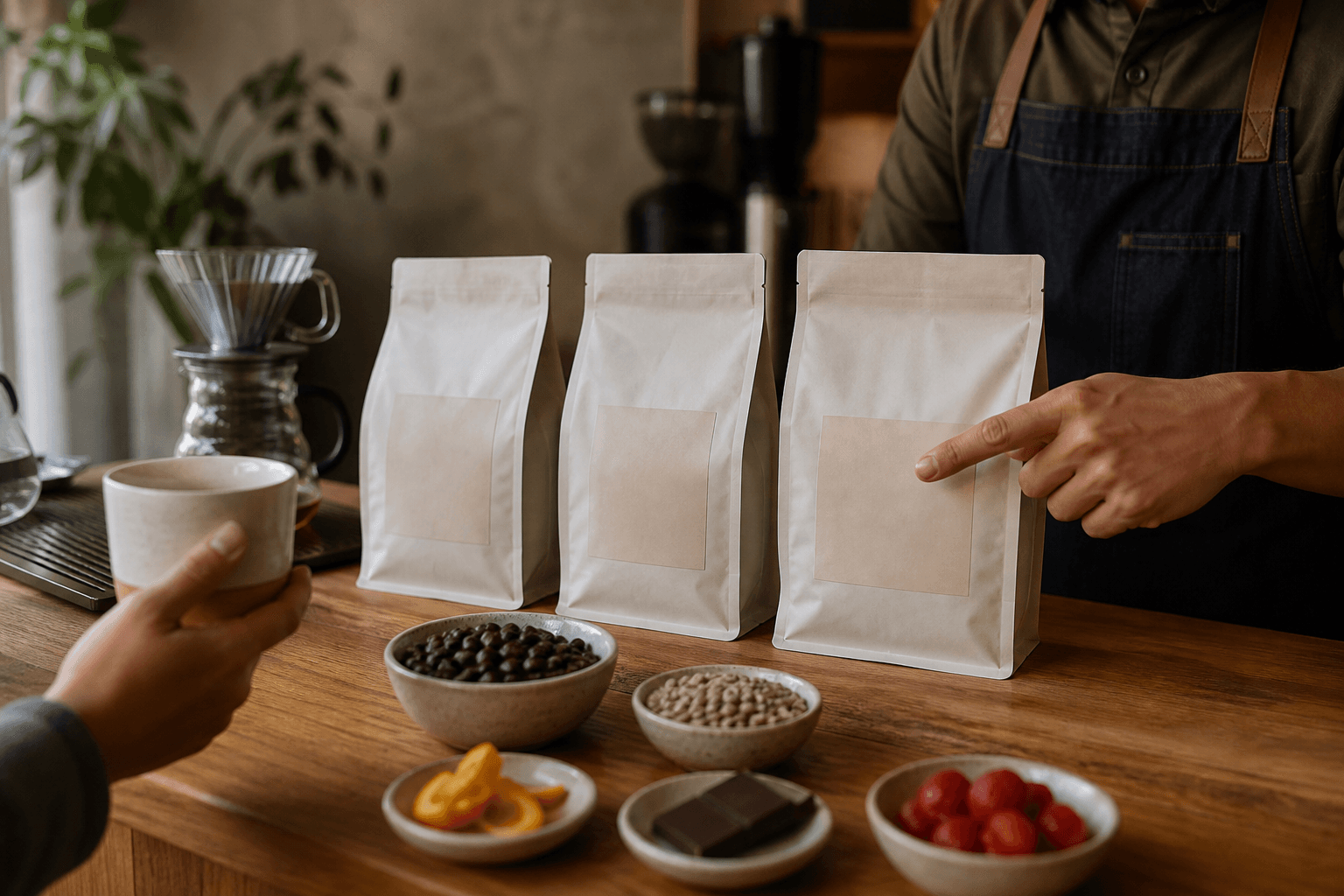
Country is a start. Region, producer, cooperative, community or lot gives you a better trail. Specificity helps explain why one Guatemalan coffee may arrive later than another and makes year-to-year comparison possible. Our guide to reading a Guatemalan coffee label shows how these details work together.
4. Does the seller explain storage or arrival?
You may not see warehouse conditions on every retail page, but a knowledgeable seller should understand when the coffee arrived and how it has been protected. Vacuum or hermetic green-coffee liners can slow environmental exchange before roasting. After roasting, a sealed barrier bag with a one-way valve helps release gas while limiting oxygen entry.
5. Does the cup still deliver?
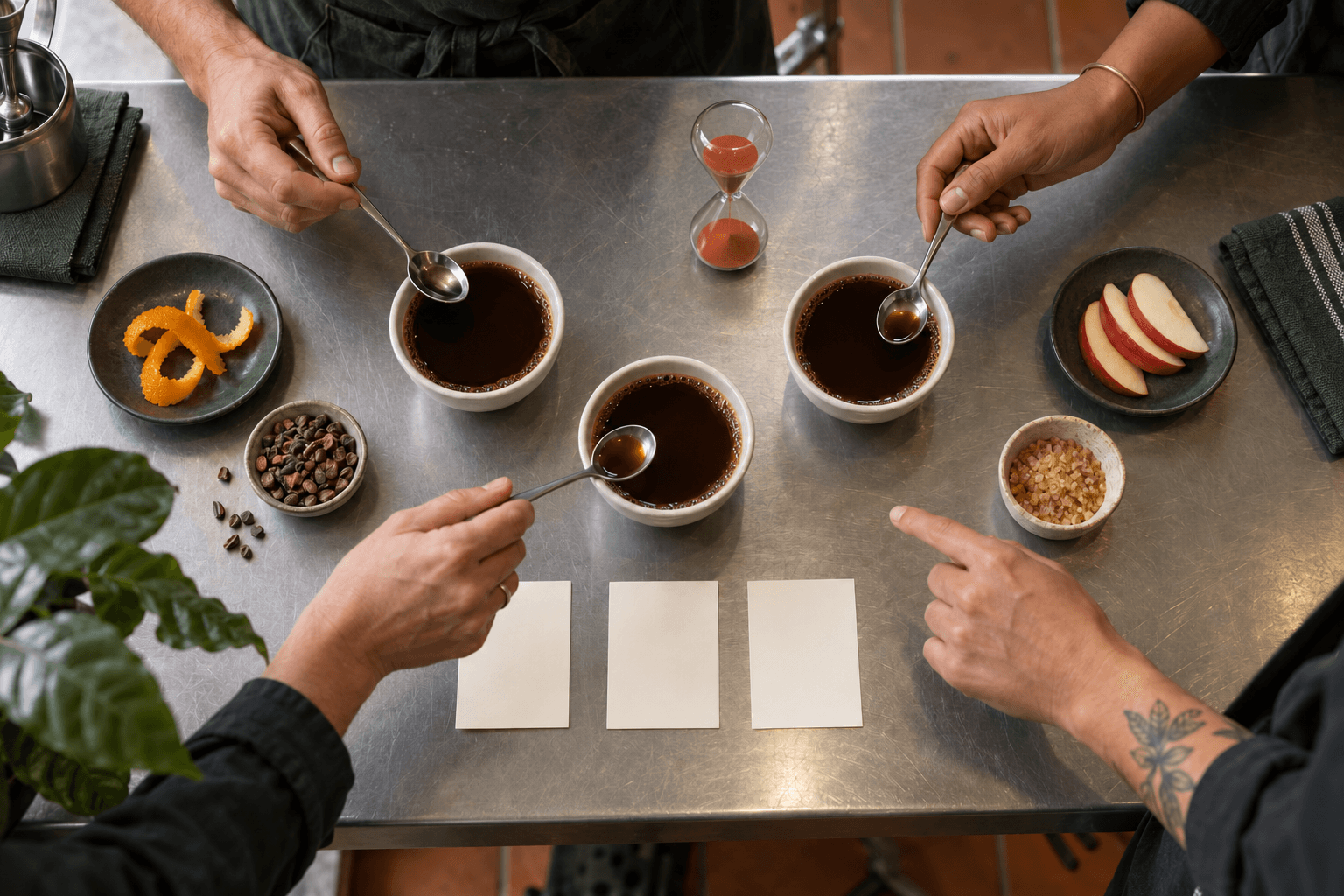
Dates are evidence, not the final verdict. Brew the coffee carefully and look for clear sweetness, recognisable acidity, pleasant texture and a clean finish. If it seems dull, first rule out stale grinding, unsuitable water, an unclean brewer and poor extraction before deciding that the crop is tired.
How to brew a newly roasted seasonal arrival
When a fresh Guatemalan harvest reaches a roaster, the temptation is to open it instantly. Give the coffee enough rest for your method, then use a simple first recipe that reveals structure without forcing intensity.
For a light-medium Guatemalan filter roast, start here:
- Coffee: 18 g
- Water: 300 g
- Ratio: 1:16.7
- Water temperature: 92–94°C / 198–201°F
- Grind: medium, adjusted for your brewer
- Target time: roughly 2:45–3:30
- Rinse the paper filter and preheat the brewer.
- Add the ground coffee and pour 55 g of water evenly over it.
- Wait 40–45 seconds. This first wetting is called the bloom; it helps release trapped gas.
- Pour steadily to 180 g, pause briefly, then continue to 300 g.
- Let the brew drain, swirl the cup and taste it hot, warm and cool.
If the bed swells aggressively and water struggles to enter the grounds, the coffee may need more rest. If the cup tastes sharply sour or hollow, grind finer. If it tastes bitter or drying, grind coarser. Change one variable at a time.
A new-season coffee is worth tasting across several weeks rather than on one ceremonial morning. Record the roast date, rest time and recipe. You may find the brightest aromatics early, greater sweetness later and a calmer, more integrated cup after additional rest.
Seasonality should guide you, not make you anxious
Wine language encourages coffee drinkers to hunt vintages, while delivery culture encourages them to demand everything immediately. Coffee needs a more relaxed approach.
The International Coffee Organization’s public market information places individual harvests inside a global system shaped by production, consumption, trade and changing market conditions. Your morning bag is connected to that system, but buying well does not require predicting it.
Use seasonality to ask better questions, not to turn coffee into a freshness contest. A roaster may buy enough of a stable Guatemalan lot to serve it for months because it performs beautifully and offers continuity. Another may rotate tiny lots quickly. Both approaches can be legitimate when the coffee remains well stored, well roasted and honestly described.
The strongest signal is coherence: origin information that makes sense, a roast date that fits your plan, packaging that protects the coffee, and flavour that matches the description without requiring imagination.
FAQ: Guatemalan coffee harvest and freshness
What months is coffee harvested in Guatemala?
The main harvest generally extends from late in the year into the early months of the next year. Exact timing varies by region, altitude, rainfall and farm, with warmer areas often starting earlier and cooler highland areas finishing later.
Is fresh-crop coffee always better?
No. Fresh crop is useful context, not a quality grade. Picking, processing, drying, green storage, roasting and brewing all matter. A carefully stored older crop can outperform a poorly handled new one.
Is harvest date more important than roast date?
They answer different questions. Harvest or crop information helps you understand the condition and season of the green coffee. Roast date helps you judge rest and ageing after roasting. For a retail buyer, the roast date is more immediately actionable, but the best transparency includes both.
How long should Guatemalan coffee rest after roasting?
There is no universal number. Many filter roasts become easier to brew after several days, while espresso may benefit from a longer rest. Roast development, packaging and personal taste matter, so use the roaster’s guidance and adjust from what you taste.
How should I store a seasonal coffee at home?
Keep it sealed, cool, dry and away from light, and grind only what you need. Avoid repeatedly opening a large container if you drink slowly. For practical options, read our guide to storing Guatemalan coffee without losing freshness.
The takeaway: read the journey, then taste the cup
Guatemalan coffee is seasonal long before it reaches your kitchen. Cherries ripen on different schedules across the country’s highlands and microclimates. Green coffee then passes through processing, drying, storage and export before roasting starts a second, faster freshness clock.
So check the crop when it is available, always check the roast date, and do not let either number think for you. The useful question is not “Is this the newest coffee?” It is “Has this coffee been handled well from harvest to brew, and does its timing suit how I want to drink it?”
Explore Kapalaj’s Guatemalan coffee selection, then tell us how you brew and when you plan to open the bag. We can help you choose a coffee and freshness window that fit the cup you actually want.