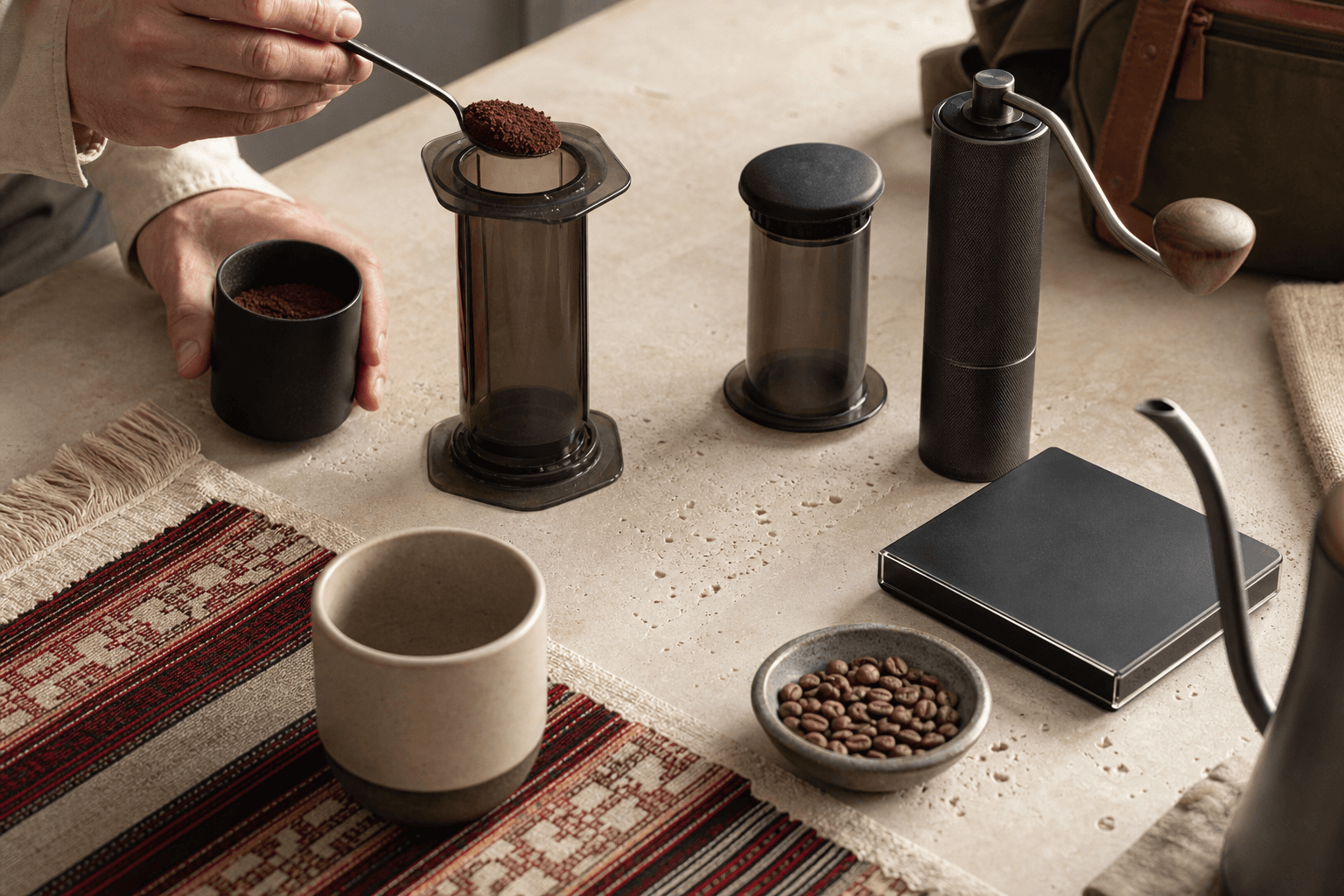
Some coffee setups ask for space, time, and a quiet morning. An AeroPress asks for a mug, a kettle, a small filter, and a few minutes of attention. That is why it has become one of the most useful tools in modern specialty coffee: it can make one cup that tastes deliberate without turning brewing into a performance.
That matters for Guatemalan coffee. A good single-origin Guatemalan coffee often carries the qualities home brewers are trying to protect: cocoa-like sweetness, rounded body, clean acidity, and a finish that can feel nutty, citrusy, or gently spiced depending on region and roast. Brew it too harshly and it becomes flat or bitter. Brew it too lightly and the sweetness stays locked away. The AeroPress gives you a forgiving middle path.
This guide is for international specialty coffee drinkers: people brewing before work in London, packing beans for a weekend in Copenhagen, making one careful cup in a US apartment kitchen, or comparing Central American origins beside Ethiopian, Colombian, and Kenyan coffees. The goal is simple: use Guatemalan coffee in an AeroPress to make a sweet, clear, satisfying cup without needing a full pour-over station.
Quick answer: is Guatemalan coffee good in an AeroPress?
Yes. Guatemalan coffee works especially well in an AeroPress because the brewer can emphasize sweetness and body while keeping the cup cleaner than a French press. Use a medium-fine grind, water just off the boil, a 1:15 to 1:16 ratio, and a gentle press to bring out chocolate, caramel, citrus, stone fruit, or spice notes without heavy bitterness.
If you usually brew pour-over coffee, the AeroPress will feel more compact and rounded. If you usually drink espresso, it will not copy pressure-brewed espresso, but it can give you a concentrated, structured cup that still shows origin character.
Why the AeroPress fits specialty coffee culture now
Third-wave coffee culture taught drinkers in the US, UK, EU, and Nordic markets to expect more from a small cup: origin detail, freshness, clear brewing language, and a cup profile they can repeat. CBI describes Europe as the world’s largest coffee consumption market and notes that value growth is connected to premiumisation rather than simply drinking more coffee (CBI European coffee demand). In specialty coffee, that premium value increasingly depends on traceability, origin stories, and clear sensory quality (CBI specialty coffee market potential).
In plain English: people are not only buying beans. They are buying the chance to taste something specific and learn from it.
The AeroPress supports that mindset because it is repeatable. The Specialty Coffee Association’s standards work emphasizes shared terminology, consistency, evaluation methods, and brewing performance across the coffee industry (SCA coffee standards). You do not need to brew like a competition barista, but you do need a few controllable variables: dose, grind, water, time, and agitation. The AeroPress makes those variables easy to adjust one at a time.
Why Guatemala is a strong origin for this brew method
Guatemala is not one flavor. Guatemalan Coffees, the origin platform associated with Anacafé, lists regions such as Antigua, Highland Huehue, Acatenango Valley, Traditional Atitlán, Rainforest Cobán, Fraijanes Plateau, New Oriente, and Volcanic San Marcos, and explains that varietals, microclimates, and growing conditions shape cup profiles (Guatemalan Coffees regions and profiles). That diversity is exactly why an AeroPress can be useful: it lets you explore region differences without committing to a large batch.
Compared with Colombian coffee, Guatemalan coffee can feel a little more cocoa-driven and structured, though both origins can be sweet and balanced. Compared with Ethiopian coffee, Guatemala is usually less floral and less tea-like, making it easier for drinkers who want clarity without high perfume. Compared with Kenyan coffee, Guatemala often lands softer: less blackcurrant snap, more chocolate, citrus, and spice. These are not fixed rules, but they are helpful reference points when choosing a bag.
AeroPress brewing tends to round sharp edges. That makes it a good match for Guatemalan coffees with lively acidity, especially high-grown lots from regions such as Huehuetenango or Acatenango. It also gives enough contact time to pull out the deeper sweetness many people associate with Antigua-style profiles: cocoa, toasted sugar, orange, and gentle spice.
The Kapalaj AeroPress recipe for Guatemalan coffee
Use this as a baseline, then adjust by taste. It is designed for a sweet, clean cup rather than a heavy, espresso-like concentrate.
Swipe the table sideways to see all columns.
| Variable | Starting point | Why it matters |
|---|---|---|
| Coffee | 15 g | Enough dose for structure without waste |
| Water | 230 g | A balanced 1:15.3 ratio |
| Grind | Medium-fine | Finer than V60, coarser than espresso |
| Water temperature | 92–96°C / 198–205°F | Hot enough for sweetness, not aggressively boiling |
| Brew time | 1:45–2:15 | Long enough for balance without dryness |
| Press | 25–35 seconds | Gentle pressure keeps bitterness down |
Step-by-step
- Rinse the paper filter and lock it into the cap. This reduces paper taste and helps the cap seal evenly.
- Add 15 g of freshly ground Guatemalan coffee to the chamber.
- Pour 60 g of water and swirl gently. Wait 30 seconds. This first wetting helps the grounds release trapped gas, especially if the coffee is fresh.
- Add water up to 230 g total.
- Stir once or twice, not vigorously. You want all the grounds wet, not a storm in the chamber.
- At around 1:45, attach the plunger and press slowly for 25–35 seconds. Stop when you hear the hiss.
- Taste before adjusting. Good brewing decisions start with the cup, not the recipe.
The cup should taste sweet first, then structured. Look for cocoa, caramel, brown sugar, orange, apple, stone fruit, almond, or soft spice. If the coffee tastes thin and lemony, extract more. If it tastes dry, woody, or harsh, extract less.
How to adjust the cup without guessing
AeroPress recipes can become strangely complicated, but most problems have simple fixes.
Swipe the table sideways to see all columns.
| What you taste | Likely cause | Next brew adjustment |
|---|---|---|
| Sour, sharp, hollow | Under-extraction: not enough flavor dissolved | Grind slightly finer, brew 20 seconds longer, or use hotter water |
| Bitter, dry, woody | Over-extraction or too much agitation | Grind slightly coarser, press more gently, or shorten brew time |
| Heavy but dull | Too much fine sediment or too concentrated | Use a paper filter, stir less, or add 10–20 g more water |
| Pleasant but weak | Ratio too dilute or grind too coarse | Use 16 g coffee or grind a little finer |
| Sweet but flat | Water may be too soft or stale coffee | Try fresher beans or filtered water with some mineral content |
Extraction simply means dissolving flavor from coffee into water. Under-extracted coffee often tastes sour because the easy acids arrived before enough sweetness. Over-extracted coffee tastes bitter or drying because the brew pulled too much from the grounds. With Guatemalan coffee, the target is usually the center: sweetness, clarity, and enough body to feel satisfying.
Upright or inverted?
The inverted AeroPress method became popular because it prevents early dripping and gives the brewer more control over immersion time. It can work beautifully, but it also adds risk: the brewer is upside down, full of hot water, and easy to knock over.
For most home brewers, the standard upright method is better. Place the AeroPress on a sturdy mug or server, add coffee, pour, steep, and press. If a little liquid drips through early, do not panic. Use a slightly finer grind or insert the plunger at an angle and pull up gently to create a light vacuum. You get most of the control without the drama.
If you already love the inverted method, keep using it. Just remember that method is less important than repeatability. A clear upright recipe you can repeat beats an adventurous recipe you cannot diagnose.
How AeroPress changes different Guatemalan profiles
Think of the AeroPress as a cup-shaping tool. It will not erase origin, but it will frame it differently from pour-over, French press, or espresso.
Antigua-style coffees often show cocoa, spice, citrus, and rounded sweetness. In an AeroPress, they can become deeply comforting without tasting dark.
Huehuetenango-style coffees can bring brighter fruit, crisp acidity, and highland clarity. In an AeroPress, reduce agitation and keep the press gentle so the cup stays clean rather than sharp.
Atitlán or Acatenango-style coffees may show citrus, floral hints, stone fruit, and layered sweetness. These can be excellent brewed slightly lighter: 15 g coffee, 240 g water, and a patient two-minute steep.
Naturals and honey-processed lots can taste fruitier and heavier. If your Guatemalan coffee is honey-processed or naturally processed, consider a coarser grind and shorter steep to keep the fruit lively instead of jammy. Washed coffees usually tolerate a slightly finer grind because their clean structure benefits from extra extraction.
AeroPress versus pour-over, French press, and espresso
Pour-over coffee is excellent when you want maximum clarity. It can make Guatemalan coffee taste elegant and transparent, especially if the roast is light and the region has bright acidity. But pour-over rewards careful pouring and punishes distraction.
French press is excellent when you want texture. It can make Guatemalan coffee feel round and dessert-like, but the metal filter lets fine particles into the cup. That can be lovely with chocolate notes and less ideal with delicate citrus.
Espresso is intense and equipment-dependent. Guatemalan coffee can be beautiful as espresso, especially in milk drinks, but small grind changes matter a lot.
AeroPress is the practical bridge. It gives more body than many pour-overs, more cleanliness than most French press cups, and more forgiveness than espresso. For a single-origin coffee you want to drink often, that balance is powerful.
A simple tasting exercise for one bag
If you want to understand a new bag of Guatemalan coffee, brew three AeroPress cups over three days and change only one variable each time.
Day one: baseline. Use the recipe above: 15 g coffee, 230 g water, medium-fine grind, 1:45 steep.
Day two: sweetness test. Keep the dose and water the same, but grind one click finer or steep 20 seconds longer. If the cup becomes sweeter and fuller, day one was under-extracted. If it becomes dry, return to the baseline.
Day three: clarity test. Keep the baseline grind, but use 240 g water and stir less. If the cup becomes cleaner and more aromatic, the coffee wanted a gentler brew. If it becomes weak, stay with the original ratio.
What to pair with AeroPress Guatemalan coffee
Because AeroPress cups are compact and balanced, they pair well with food that would overpower a very delicate filter coffee. Try cocoa-forward Guatemalan coffee with dark chocolate, toasted nuts, banana bread, or almond cake. For brighter highland lots, choose fruit, soft cheese, or lightly sweet bakes.
Buying checklist: what to look for
When choosing beans for AeroPress, look for these clues:
- Origin detail: Guatemala is good; region, producer, or cooperative is better.
- Roast level: Medium-light to medium is usually the easiest starting point.
- Process: Washed for clean sweetness; honey or natural for more fruit and texture.
- Tasting notes: Cocoa, caramel, citrus, apple, stone fruit, almond, or spice are all AeroPress-friendly.
- Freshness: Buy whole beans when possible and grind just before brewing.
- Purpose: If you want one daily cup, choose balance over extreme acidity.
FAQ
What grind size is best for Guatemalan coffee in an AeroPress?
Start medium-fine: finer than most pour-over coffee, but much coarser than espresso. If the cup tastes sour, go slightly finer. If it tastes bitter or dry, go slightly coarser.
Is AeroPress better than pour-over for Guatemalan coffee?
Neither is always better. Pour-over usually gives more clarity and aroma, while AeroPress gives more body and forgiveness. If you want one reliable cup with less fuss, AeroPress is often the easier choice.
Can I use dark-roasted Guatemalan coffee in an AeroPress?
Yes, but use a coarser grind, slightly cooler water, and a shorter steep. Darker roasts extract quickly and can become bitter if pressed too hard or brewed too long.
Does Guatemalan coffee work for travel brewing?
Yes. The AeroPress is light, durable, and compact, and Guatemalan coffee’s balance makes it forgiving with unfamiliar kettles, hotel rooms, shared kitchens, and office setups. Bring whole beans or freshly ground coffee in an airtight container.
What does Guatemalan AeroPress coffee taste like?
A well-brewed cup often tastes sweet, rounded, and clean, with notes such as cocoa, caramel, citrus, stone fruit, almond, or gentle spice. Region, roast, process, and freshness all shape the final cup.
Make one cup worth slowing down for
The best AeroPress recipe is not the most complicated one. It is the one you can repeat, taste, adjust, and enjoy. Guatemalan coffee gives you enough sweetness for comfort, enough acidity for energy, and enough origin character to keep the cup interesting.
If you want beans that make that single cup feel considered, explore Kapalaj’s Guatemalan coffees, learn more about where they come from, and choose a fresh bag from the Kapalaj shop for your next AeroPress brew.