
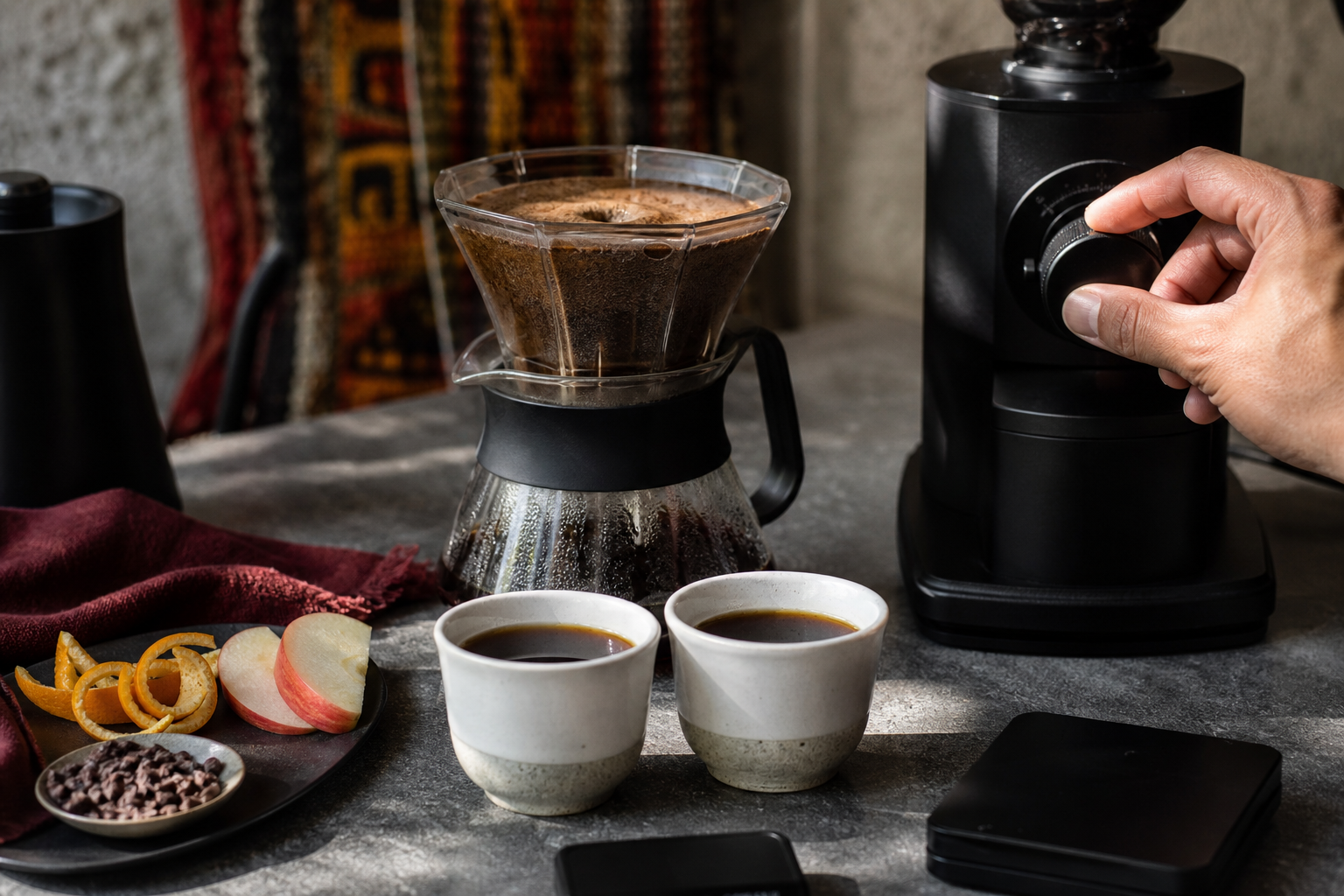
When Guatemalan Coffee Tastes Sour: How to Brew a Sweeter, More Balanced Cup
July 28, 2026 · 12 min read
A bright cup of coffee can be beautiful. Think red apple, orange, cherry, brown sugar, and the clean finish that makes a good single-origin coffee feel alive. But there is a line between bright and sour. Cross it, and the cup stops tasting like Guatemalan coffee with layered acidity and starts tasting thin, sharp, or unfinished.
This is one of the most common frustrations for people moving from darker supermarket blends into specialty coffee. You buy a carefully roasted bag, brew it with good intentions, and the result tastes more like lemon peel than chocolate-orange sweetness. The coffee is not necessarily bad. Very often, it is under-extracted: the water has not pulled enough sweetness and structure from the grounds.
Quick answer: why does Guatemalan coffee taste sour?
Guatemalan coffee usually tastes sour when the brew is under-extracted, the grind is too coarse, the water is too cool, the brew is too fast, or the coffee is roasted and brewed in a way that highlights acidity without enough sweetness. The fix is usually simple: grind a little finer, use hotter water, extend contact time, and keep your recipe consistent before changing the coffee itself.
A good Guatemalan coffee should not taste flatly sour. Many lots from Guatemala are prized in specialty coffee for balance: cocoa-like sweetness, citrus or apple-like brightness, gentle spice, and a clean finish. Your job as a brewer is to make the sweetness show up beside the acidity.
Why specialty coffee can taste sharper than expected
Third-wave coffee culture in the US, UK, EU, and Nordic countries has taught many drinkers to value clarity. Roasters often choose lighter roast profiles than traditional commercial coffee because lighter roasting can preserve origin character: the flavors shaped by variety, altitude, microclimate, processing, and freshness.
That shift is part of a larger market movement. CBI notes that the European coffee market offers particular opportunities for specialty and certified coffee, with value growth connected to premiumisation (CBI European coffee demand). In its specialty coffee market analysis, CBI also connects European specialty growth with cafés, origin stories, differentiated taste profiles, and consumer curiosity about how coffee is grown and brewed (CBI specialty coffee market potential).
The upside is more nuance. The downside is that lighter, cleaner coffees are less forgiving. A dark roast may taste roasted, bitter, and heavy even if the recipe is sloppy. A clean Guatemalan coffee will tell you more honestly what happened in the brew.
If it tastes sour, it is giving you information.
The plain-English version of extraction
Extraction simply means what water takes from coffee grounds.
At the beginning of a brew, water pulls out acids and lighter aromatic compounds quickly. These can taste lively, citrusy, floral, or sharp. As the brew continues, water extracts sweetness, soluble solids, and deeper flavor. Too little extraction tastes sour, salty, grassy, or hollow. Too much extraction can taste dry, bitter, woody, or harsh.
Balanced extraction is where brightness, sweetness, body, and finish meet. Body means the weight or texture of the coffee in your mouth: light like tea, round like juice, or heavier like cocoa. Acidity does not mean the coffee is chemically sour in a bad way; in coffee tasting, acidity often means pleasant brightness, like apple or citrus.
The Specialty Coffee Association publishes standards and protocols that help the industry use shared language for brewing, cupping, and coffee evaluation (SCA coffee standards). At home, you do not need to become a lab technician. But you do need one professional habit: change one variable at a time.
Why Guatemala is worth adjusting for
Guatemala is not a one-flavor origin. Guatemalan Coffees, the origin platform associated with Anacafé, highlights regional profiles including Antigua Coffee, Highland Huehue, Acatenango Valley, Traditional Atitlán, Rainforest Cobán, Fraijanes Plateau, New Oriente, and Volcanic San Marcos, and notes that varietals, microclimates, and growing conditions strongly influence taste (Guatemalan Coffees regions and profiles).
That diversity matters when troubleshooting. A Huehuetenango-style coffee may naturally show more lively fruit and acidity than a softer Brazilian natural. Antigua or Acatenango profiles can lean toward cocoa, spice, and structured sweetness. Compared with many Ethiopian coffees, Guatemalan coffee is often less floral and tea-like; compared with classic Kenyan profiles, it may feel less intensely blackcurrant-like and high-acid; compared with Colombia, it often shares a comfortable chocolate-and-fruit zone but with its own volcanic, highland structure.
So the goal is not to erase acidity. The goal is to turn sharpness into shape.
Sour or bright? A quick tasting check
Before changing your grinder, decide what you are actually tasting.
| What you taste | Likely meaning | First fix to try |
|---|---|---|
| Lemon juice, vinegar, green apple skin, salty finish | Under-extraction | Grind finer or brew longer |
| Citrus, red apple, orange peel, then caramel or cocoa | Balanced brightness | Keep the recipe and enjoy it |
| Thin body, fast drawdown, weak sweetness | Too coarse or too little contact time | Grind finer, slow the pour, or increase brew time |
| Heavy bitterness, dry tongue, smoky finish | Over-extraction or roast too dark | Grind coarser, lower agitation, or shorten brew time |
| Sour first sip but sweeter as it cools | Temperature perception and acidity | Taste at 60-65°C before judging |
A useful habit: let the coffee cool for five minutes before deciding. Very hot coffee can hide sweetness and exaggerate sharpness. Many specialty coffees become clearer and sweeter as they cool slightly.
The four fixes that solve most sour brews
1. Grind finer before changing everything else
A coarse grind lets water pass through too quickly. That often leaves sweetness behind in the coffee bed. If your Guatemalan pour-over coffee tastes sour and weak, move the grinder one or two notches finer and brew the same recipe again.
Do not jump from coarse to powder. Small changes are easier to taste. If the cup becomes sweeter, rounder, and more complete, you found the right direction. If it becomes bitter, dry, or stalls badly, you went too far.
For French press or immersion brewers, the same principle applies differently. You may not need a much finer grind; you may need more time before plunging or decanting.
2. Use hotter water
Light and medium-light specialty coffee often needs hotter water than people expect. If you brew with water that has cooled too much, extraction can stay shallow, especially with dense high-grown Arabica.
Try water just off the boil, around 94-96°C, for filter brewing. If the coffee is very dark or tastes roasty, you can go cooler. But for a clean Guatemalan coffee that tastes sour, hotter water often helps sweetness appear.
If you do not use a temperature-controlled kettle, boil the water, wait about 20-30 seconds, and brew. Consistency matters more than perfection.
3. Slow the brew down
A brew that finishes too quickly often tastes incomplete. For a typical hand brew, aim for steady contact rather than rushing the water through the grounds.
Pour gently. Make sure all grounds get wet in the bloom, which is the first short pour that lets trapped gas escape. If water channels through one side of the bed, it extracts unevenly: some grounds give too little, others too much.
For automatic filter brewers, check the grind and dose first. A good machine can still produce sour coffee if the grind is too coarse or the basket is under-filled.
4. Check your ratio
Ratio means coffee dose compared with water. A common filter starting point is 60 grams of coffee per liter of water, or 15 grams coffee to 250 grams water. If you use too little coffee, the cup may taste weak and sharp. If you use too much coffee and grind coarse to compensate, it may taste strong but still sour.
Here is a simple baseline for Guatemalan coffee at home:
| Brewer | Coffee | Water | Grind | Target |
|---|---|---|---|---|
| Pour-over or flat-bottom filter | 15 g | 250 g | Medium-fine | Sweet citrus, cocoa, clean finish |
| Automatic filter brewer | 60 g | 1 liter | Medium | Balanced batch brew for several cups |
| French press | 30 g | 500 g | Medium-coarse | Round body, lower sharpness |
| AeroPress-style immersion | 15 g | 220 g | Medium-fine | Concentrated sweetness, flexible body |
Treat this as a starting line, not a commandment. Different grinders, filters, water, and roast levels change the details.
A 10-minute sour-coffee test
If your bag tastes sour, do this before blaming the beans.
Brew two cups with the same coffee and water. Keep the dose and water amount identical. For cup one, use your current grind. For cup two, grind two steps finer and use slightly hotter water. Taste them side by side after both have cooled for a few minutes.
Ask four questions:
- Which cup smells sweeter?
- Which cup has more body?
- Does the acidity taste like fruit, or like sharpness without sweetness?
- Which finish makes you want another sip?
If the finer, hotter cup tastes sweeter and more complete, keep moving in that direction slowly. If both cups taste sour, extend contact time or check your water. If the finer cup tastes bitter and the original tastes sour, your issue may be uneven extraction: pouring, channeling, filter shape, or grinder consistency.
Do not ignore water
Water is most of the beverage, so it can make a good coffee taste strange. Very soft water can make acidity feel exposed. Very hard water can mute sweetness and leave the cup heavy or chalky. Chlorine or stale filter cartridges can add their own off-flavors.
If you want to go deeper, read Kapalaj’s guide to better water for Guatemalan coffee. For a quick test, brew the same recipe once with your usual tap water and once with a good bottled water that tastes clean and neutral. If the bottled-water cup is immediately sweeter, your recipe may not be the main problem.
Buying clues: choose the right Guatemalan coffee for your taste
Sometimes the brew is fine, but the coffee is not the style you wanted. If you prefer sweetness over high acidity, look for tasting notes such as milk chocolate, caramel, brown sugar, toasted almond, red apple, orange, or gentle spice. If you love a more vivid cup, notes like grapefruit, stone fruit, florals, or winey fruit may be welcome.
Processing matters too. Washed coffees are usually cleaned of fruit before drying, often giving a clearer cup with crisp acidity. Natural coffees dry with the fruit around the seed, often adding heavier fruit and body. Honey processing sits somewhere between, depending on how much fruit mucilage remains during drying.
For a first specialty bag, a washed or honey-processed Guatemalan coffee at a light-medium or medium roast is often a friendly choice. It gives enough origin character to be interesting without demanding a competition-level brew setup. You can explore current Kapalaj coffees through the shop, or learn more about Guatemala as an origin on Kapalaj’s origin page.
FAQ
Is Guatemalan coffee naturally sour?
No. Guatemalan coffee is often bright, but good brightness should come with sweetness, body, and a clean finish. If the cup tastes sharply sour, thin, or salty, the brew is probably under-extracted or the coffee is not matched to your taste preferences.
What grind size is best for Guatemalan pour-over coffee?
Start medium-fine: finer than French press, usually a little finer than standard automatic filter grind. If the cup tastes sour and drains quickly, grind finer. If it tastes bitter, dry, or drains very slowly, grind coarser.
Does light roast Guatemalan coffee need hotter water?
Often, yes. Light and medium-light roasts are denser and less soluble than darker roasts, so hotter water can help extract sweetness. Try water just off the boil for filter brewing, then adjust by taste.
How do I make Guatemalan coffee sweeter without adding sugar?
Use a consistent recipe, grind a little finer, brew with hotter clean water, and avoid rushing the contact time. Sweetness in coffee comes from balanced extraction, good green coffee, careful roasting, and freshness, not from actual sugar in the cup.
Is Guatemalan coffee good for beginners in specialty coffee?
Yes. Many Guatemalan coffees sit in a helpful middle ground: more origin character than a generic blend, often more chocolate-and-citrus balance than very floral Ethiopian coffees, and less aggressive acidity than many classic Kenyan profiles. That makes Guatemala a strong starting point for learning single-origin coffee.
Brew the sweetness Guatemala is known for
Sour coffee is frustrating, but it is also fixable. Start with grind, water temperature, contact time, and ratio. Taste slowly. Change one variable. Look for the moment when citrus becomes orange, sharpness becomes red apple, and the finish lands on cocoa or caramel instead of disappearing.
If you want Guatemalan coffee selected for balance, sweetness, and everyday brewability, explore Kapalaj’s current coffees and choose a bag that matches how you like to brew.