A coffee can arrive with a region, process and poetic tasting notes, yet the person serving it may still have only one line: “It’s our medium roast.” That is a training failure.
Useful coffee training needs neither a laboratory nor a vocabulary test. With a few controlled cups, a café, hotel or retail team can build clear, credible language in half an hour.
Guatemalan coffee is particularly good for this exercise. It can show cocoa, caramel, citrus, apple, stone fruit, spice, florals or deeper fruit depending on region, process, roast and brewing, while usually staying approachable enough for a mixed-experience group. One origin gives you a focused lesson without pretending that Guatemala tastes only one way.
Quick answer: how do you run coffee tasting training for staff?
Brew three cups with one meaningful difference between them, then taste silently before discussing sweetness, acidity, body and finish. Ask each person to choose the cup they would serve, explain why in ordinary language, and turn the team’s conclusion into one guest-friendly sentence.
For a 30-minute session, spend five minutes setting the purpose, ten minutes tasting, ten minutes comparing, and five minutes recording the preferred recipe and service phrase. Keep the coffee, water, cups and serving temperature as consistent as possible so the team learns from a real contrast rather than random variation.
Calibration is agreement, not conformity
Coffee professionals use calibration to bring people’s judgments closer together. It does not mean everybody must taste orange at the same moment. It means the group develops enough shared reference points to make consistent decisions: this cup is sweeter; that one is drier; this recipe has more body; that finish is cleaner.
The Specialty Coffee Association’s Coffee Value Assessment separates different kinds of information about coffee. Descriptive assessment records what a coffee is like. Affective assessment records how much someone likes it. Extrinsic assessment considers information outside the liquid itself, such as origin or processing. That distinction is liberating for a team.
A staff member can notice red-apple brightness but prefer the rounder cup. Another may miss the apple yet find the finish sweeter. Description and preference are related, but they are not the same question.
This is also why tasting should begin silently. The first confident person to say “grapefruit” can pull the whole room toward grapefruit. Write first; discuss second.
Why Guatemala makes a strong teaching origin
Guatemala is in Central America, but “Central American coffee” is too broad to describe one cup. Even “Guatemalan coffee” is only the beginning. The Guatemalan Coffees platform associated with Anacafé presents eight regional profiles: Antigua Coffee, Acatenango Valley, Traditional Atitlán, Rainforest Cobán, Fraijanes Plateau, Highland Huehue, New Oriente and Volcanic San Marcos. It also notes that varieties, microclimates and growing conditions influence taste, and that an individual coffee can be more complex than a regional profile suggests (Guatemalan Coffees regions and profiles).
That combination is ideal for training. A team can learn that origin matters without turning a region name into a flavour guarantee. Antigua may suggest structure, cocoa and spice; Huehuetenango may suggest brighter fruit and lively acidity. Producer decisions, variety, harvest, processing, roast, freshness, water and brewing still shape the cup in front of you.
Compared with a floral washed Ethiopian coffee or a heavier Brazil-led blend, many Guatemalan coffees offer familiar anchors such as cocoa, caramel, orange and apple, often with enough brightness to make recipe changes obvious. These are useful contrasts, not rankings.
CBI’s August 2026 overview of European specialty-coffee market potential stresses quality, origin, positioning and buyer relationships while cautioning that the segment has no single uniform definition. For hospitality, the practical lesson is simple: specific, defensible information beats inflated claims.
Set up the three-cup flight
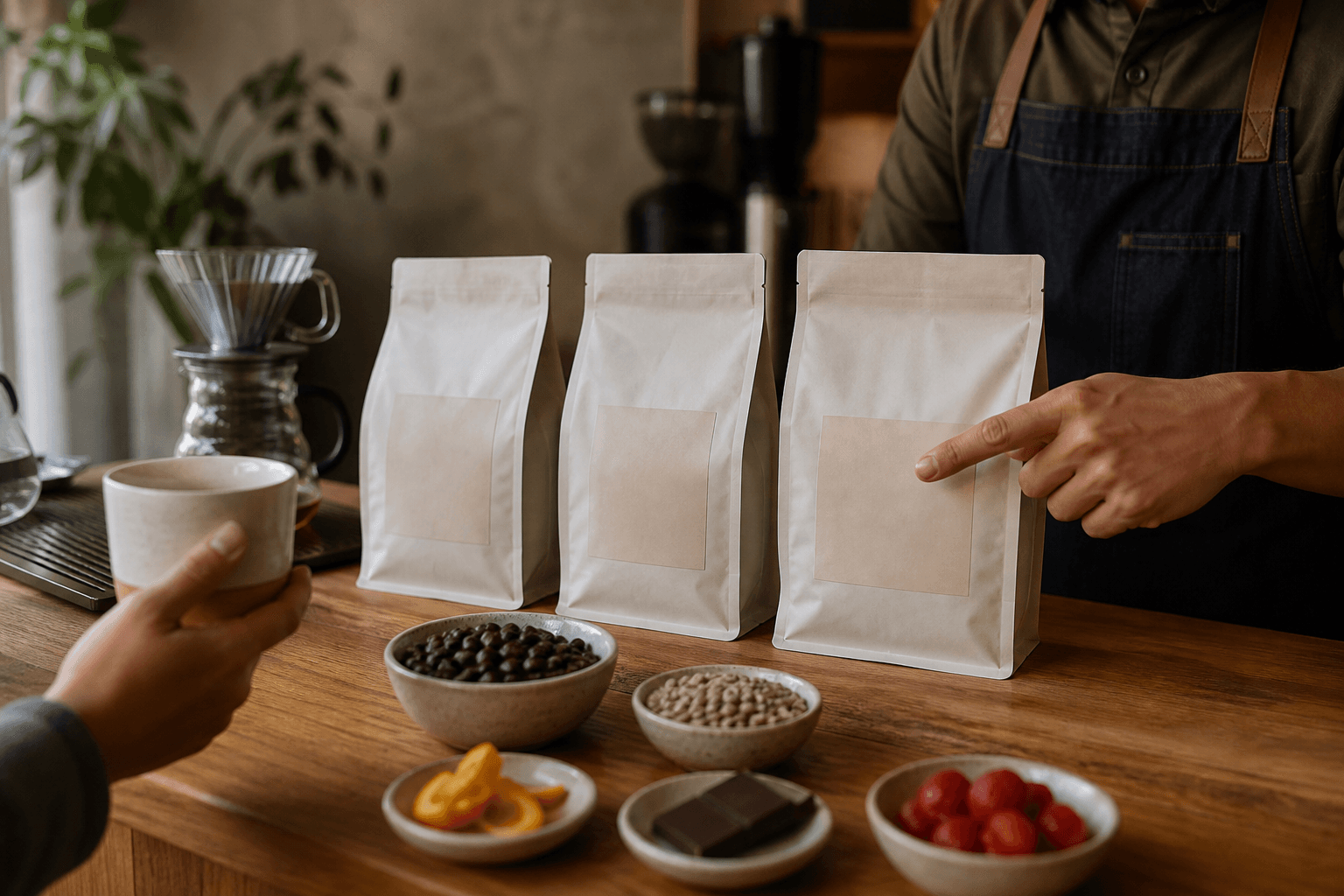
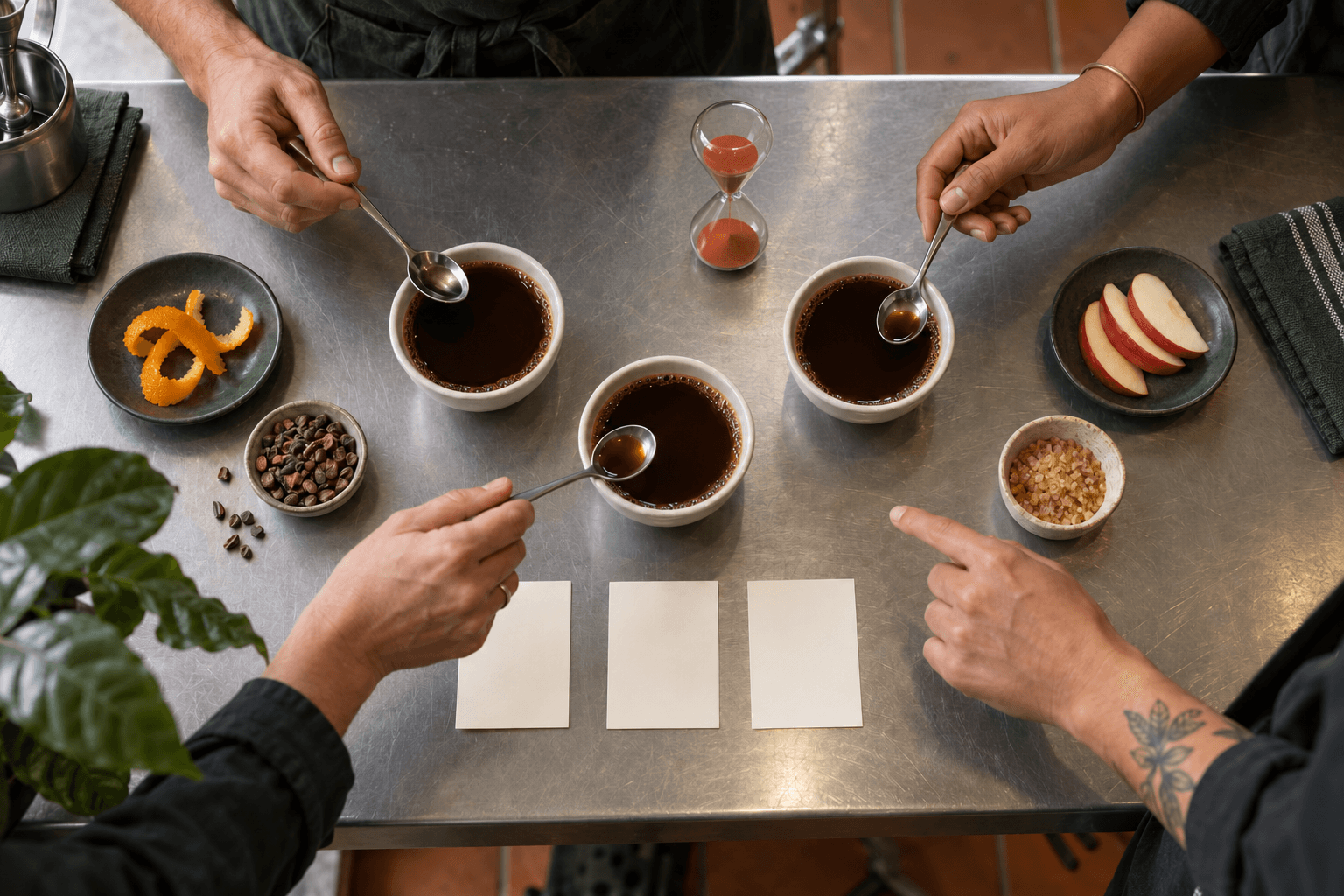
This exercise is not a formal professional cupping. It is a service calibration built for a short team meeting. Use identical cups or glasses and label their undersides A, B and C so the visible setup does not reveal the answer.
You need:
- one Guatemalan coffee, ideally rested after roasting and freshly ground
- a brewer that your team actually uses
- a grinder, scale and timer
- three identical serving cups
- water from the same source for every brew
- one spoon per person, or separate tasting cups for hygienic sipping
- blank paper or a simple tasting sheet
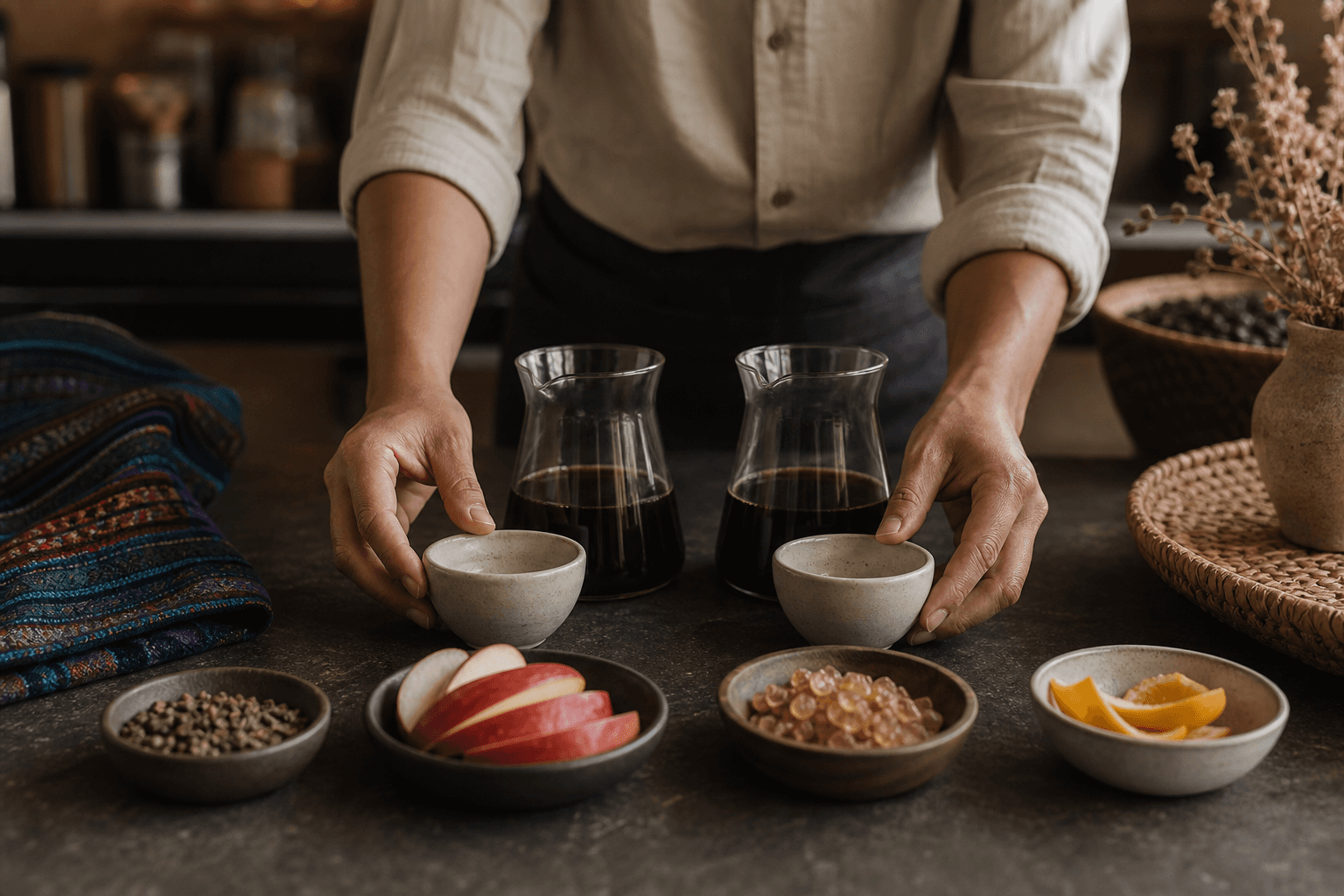
- optional sensory references such as orange peel, red apple, cacao nibs and brown sugar
Choose one comparison. Do not change everything at once.
Swipe the table sideways to see all columns.
| Flight | Cup A | Cup B | Cup C | What it teaches |
|---|---|---|---|---|
| Extraction | Slightly coarse grind | Current recipe | Slightly finer grind | How sourness, sweetness and dryness shift |
| Holding time | Freshly brewed | Held 20 minutes | Held 45 minutes | How service time changes aroma and finish |
| Roast choice | Light-medium | Medium | More developed | How origin character and roast flavour interact |
| Regional comparison | Antigua-style lot | Huehuetenango-style lot | Another Guatemalan region | Diversity within one country |
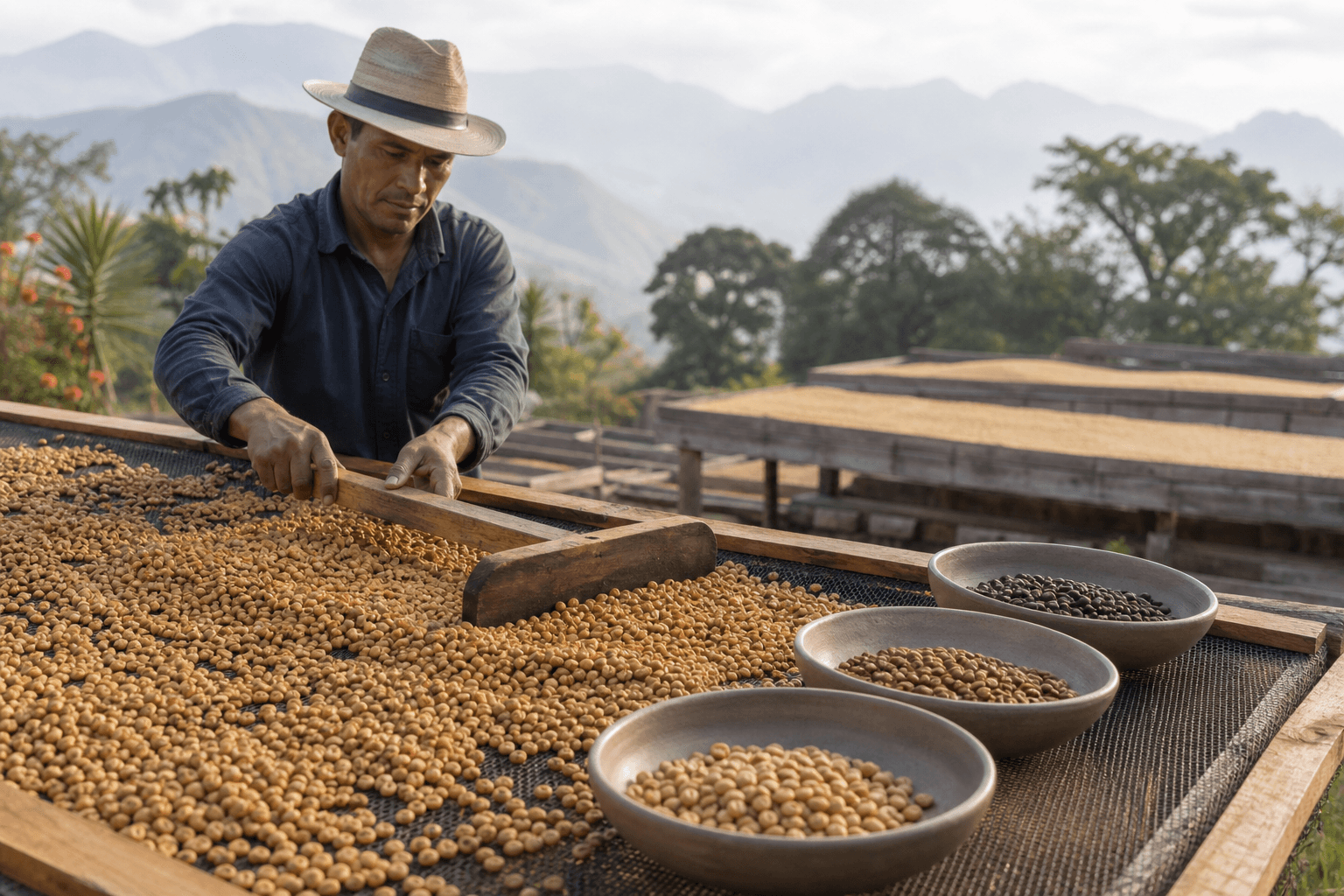
| Process comparison | Washed | Honey | Natural | How processing changes fruit, clarity and texture |
For the simplest first session, use the extraction flight. Keep dose, water and target yield fixed; change only the grind by a small, repeatable amount. To limit waste, make smaller batches at the same coffee-to-water ratio.
The 30-minute training plan
Minutes 0–5: give the tasting a job
Start with a service question, not a lecture. For example:
Which recipe gives us the sweetest, cleanest cup to serve black at breakfast?
Or:
Which of these three cups can every team member recommend in one honest sentence?
Briefly show the country, region if known, process, roast date and roaster’s notes. These are clues, not answers to copy.
Define four terms in plain English:
- Sweetness is the impression of caramel, ripe fruit, honey or sugar without actual sugar being added.
- Acidity is brightness or liveliness, like apple or citrus; pleasant acidity is not the same as harsh sourness.
- Body is the cup’s texture or weight, from tea-like to round and creamy.
- Finish is what remains after swallowing: clean, sweet, dry, bitter, short or lingering.
Minutes 5–15: taste without performing
Serve equal amounts at similar temperatures. Smell first, then taste each cup twice: once for instinct and once for comparison.
Each person writes four short observations:
- Which cup seems sweetest?
- Which cup has the cleanest finish?
- Which cup has the most comfortable acidity?
- Which cup would you choose for the service brief?
Avoid demanding exact flavour notes. “Bright and juicy” is useful. “Dry at the end” is useful. “Reminds me of red apple” is useful. “I do not like it” becomes more useful when followed by a reason: too sharp, too heavy, too bitter, too thin.
The World Coffee Research Sensory Lexicon contains 110 aroma, flavour and texture attributes with intensity references. Staff need not memorise it; the useful principle is that sensory words become more reliable when tied to shared references.
Put a slice of red apple or a piece of orange peel beside the cups. Smell it, then return to the coffee. The goal is not to force a match. It is to give “apple-like” or “citrus-like” a common meaning.
Minutes 15–25: compare evidence, then preference
Reveal one cup at a time. Ask for observations before votes.
A useful discussion order is:
- What changed from A to B?
- What changed from B to C?
- Which differences can several people recognise?
- Which cup best fits the service question?
- Is the favourite cup also the most practical cup?
The most aromatic cup may fade after 30 minutes in a thermal server; the heaviest may suit milk but feel dull black. Good hospitality coffee is the cup that performs its assigned job.
If the team disagrees, do not manufacture consensus. Record the split and taste again at a cooler temperature. Coffee changes as it cools: sweetness may become clearer, acidity more obvious, and roast bitterness easier to notice.
Minutes 25–30: create the service sentence
End with language the team can use immediately. Build one sentence from three parts:
Origin + cup character + useful recommendation
For example:
“This is a Guatemalan coffee with cocoa-like sweetness, red-apple brightness and a clean finish; it is a good choice if you enjoy balanced black coffee.”
Or, for a breakfast room:
“We serve a sweet, medium-bodied Guatemalan coffee that works well black and still has enough cocoa character for milk.”
Do not repeat every claim on the bag. Do not promise that every guest will taste the same fruit. A service sentence should open a door, not test the customer.
Write down the winning recipe, grinder setting, brew time, holding limit and sentence. Training that leaves no record becomes folklore by the next shift.
A simple tasting sheet that people will actually use
Long forms can make beginners hunt for the “correct” answer. Use a compact sheet:
Swipe the table sideways to see all columns.
| Question | A | B | C |
|---|---|---|---|
| Sweetness: low / medium / high | |||
| Acidity: soft / lively / sharp | |||
| Body: light / round / heavy | |||
| Finish: clean / dry / bitter | |||
| One flavour association | |||
| Best for our service? Why? |
This leaves room for precision without excluding newer staff. If a coffee suddenly tastes drier than last week, check grind, water, cleanliness, freshness and holding time rather than blaming “the beans” in the abstract.
For more service context, see Kapalaj’s guide to Guatemalan coffee at hotel breakfast. Teams working with larger brewers can pair the exercise with our café batch-brew guide.
Turn tasting into better buying
A calibration flight also helps buyers write a sharper brief.
Instead of asking a supplier for “something premium,” you can ask for:
- a sweet Guatemalan coffee that remains clean after 30 minutes in a server
- enough body for milk without a dark, smoky roast
- a washed regional lot with cocoa structure and gentle citrus
- traceable origin details staff can explain accurately
- a roast and supply rhythm that can remain consistent through the service period
The exercise can expose a mismatch: a beautiful hand-brew coffee may be too delicate for a breakfast urn, or a fruit-forward natural may not fit the house profile.
None of those conclusions insults the coffee. They make the buying decision more specific.
Home brewers can use the same approach before buying several similar bags. Keep one recipe stable, taste two Guatemalan regions or processes side by side, and write down which features you want again. Our guide to Guatemala’s coffee regions can help you frame the comparison without treating a region name as a guarantee.
Common training mistakes
Changing too many variables. If coffee, roast, grind, water and brewer all change, the flight becomes entertainment rather than calibration.
Reading tasting notes aloud first. This encourages suggestion. Let people taste before revealing the full note list.
Rewarding exotic vocabulary. A clear “sweet, round, slightly dry” observation is more valuable than an unsupported paragraph about tropical flowers.
Confusing preference with quality. Someone can recognise that a cup is clean and well extracted while preferring a heavier style.
Ignoring temperature. Taste warm and again as the cups cool. A single hot sip hides useful information.
Ending without a decision. Record the recipe, service limit and guest-facing sentence, or the exercise will not improve tomorrow’s coffee.
Turning Guatemala into one flavour. Use regional language as orientation, then describe the actual lot and cup.
FAQ: coffee tasting training for staff
Do staff need professional coffee qualifications to join?
No. The session is designed for mixed experience levels. Professional sensory education can go much deeper, but a useful service team can begin with sweetness, acidity, body, finish and a clear comparison.
How many coffees should a beginner tasting flight include?
Three is enough. It creates a meaningful contrast without exhausting attention. For a first session, using one coffee with three grind settings is often more educational than serving three unrelated origins.
Can I run the exercise with espresso?
Yes, but espresso changes quickly and requires tighter control. Start with filter or batch brew if the team is new to calibration. For espresso, keep dose and yield fixed, serve promptly, and compare one variable at a time.
What does Guatemalan coffee usually taste like?
Many Guatemalan coffees show some combination of cocoa, caramel, citrus, apple, stone fruit, spice, florals or deeper fruit. Region, variety, process, roast and brewing all matter, so these are common directions rather than promises.
How often should a hospitality team calibrate?
Taste whenever a new coffee arrives, when the recipe changes, and when service quality drifts. A short weekly check can be useful in a busy operation, but consistency matters more than turning training into a ritual nobody uses.
Give the next shift a shared language
The best result of a tasting is not the cleverest note. It is a team that can recognise when the coffee is sweet and clean, notice when it has drifted, and help a guest choose without hiding behind jargon.
Explore Kapalaj’s Guatemalan coffees and origin approach, then use one bag to run the 30-minute flight with your team or tasting group. Brew three controlled cups, agree on the job they must do, and leave the next shift a recipe and a sentence they can trust.