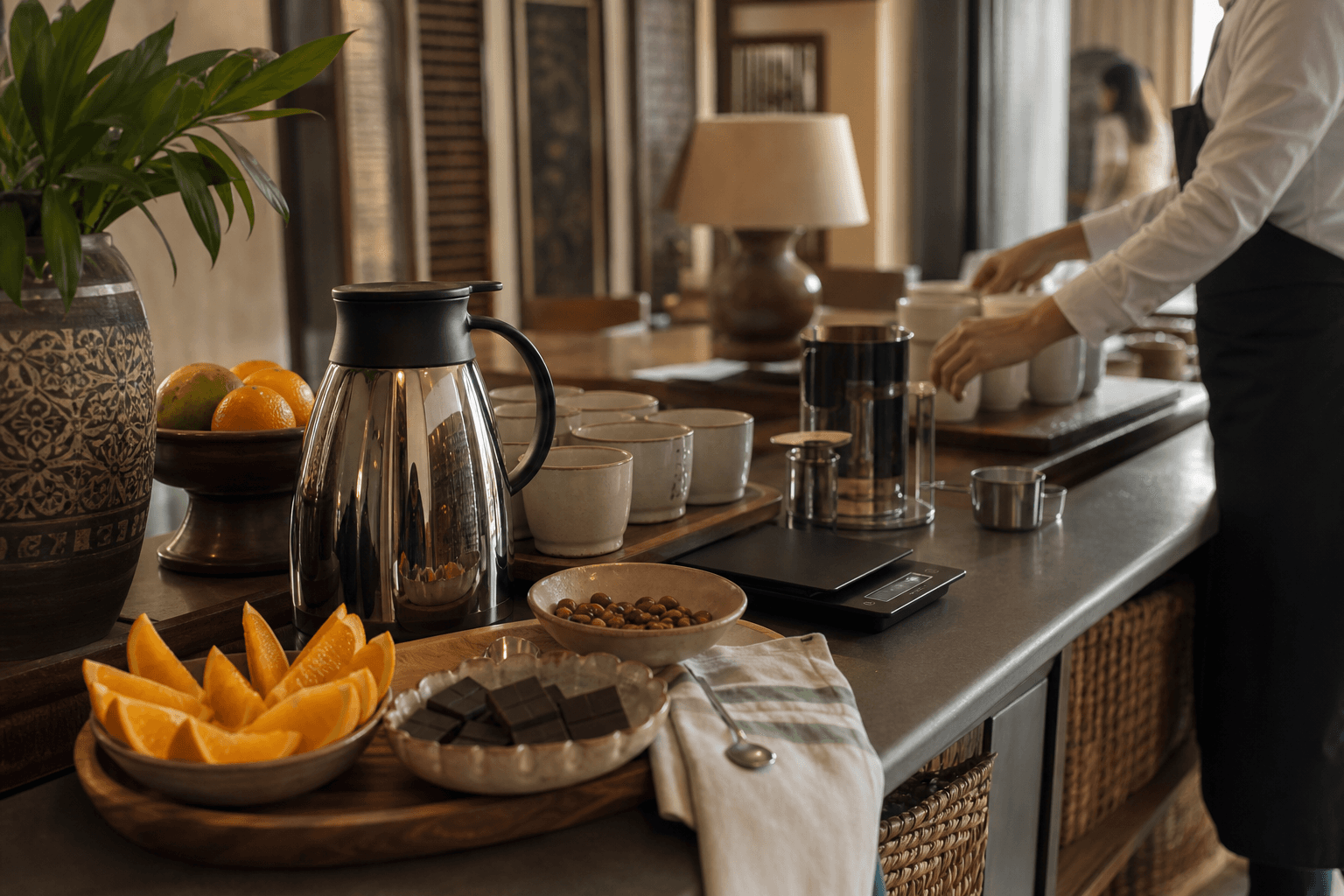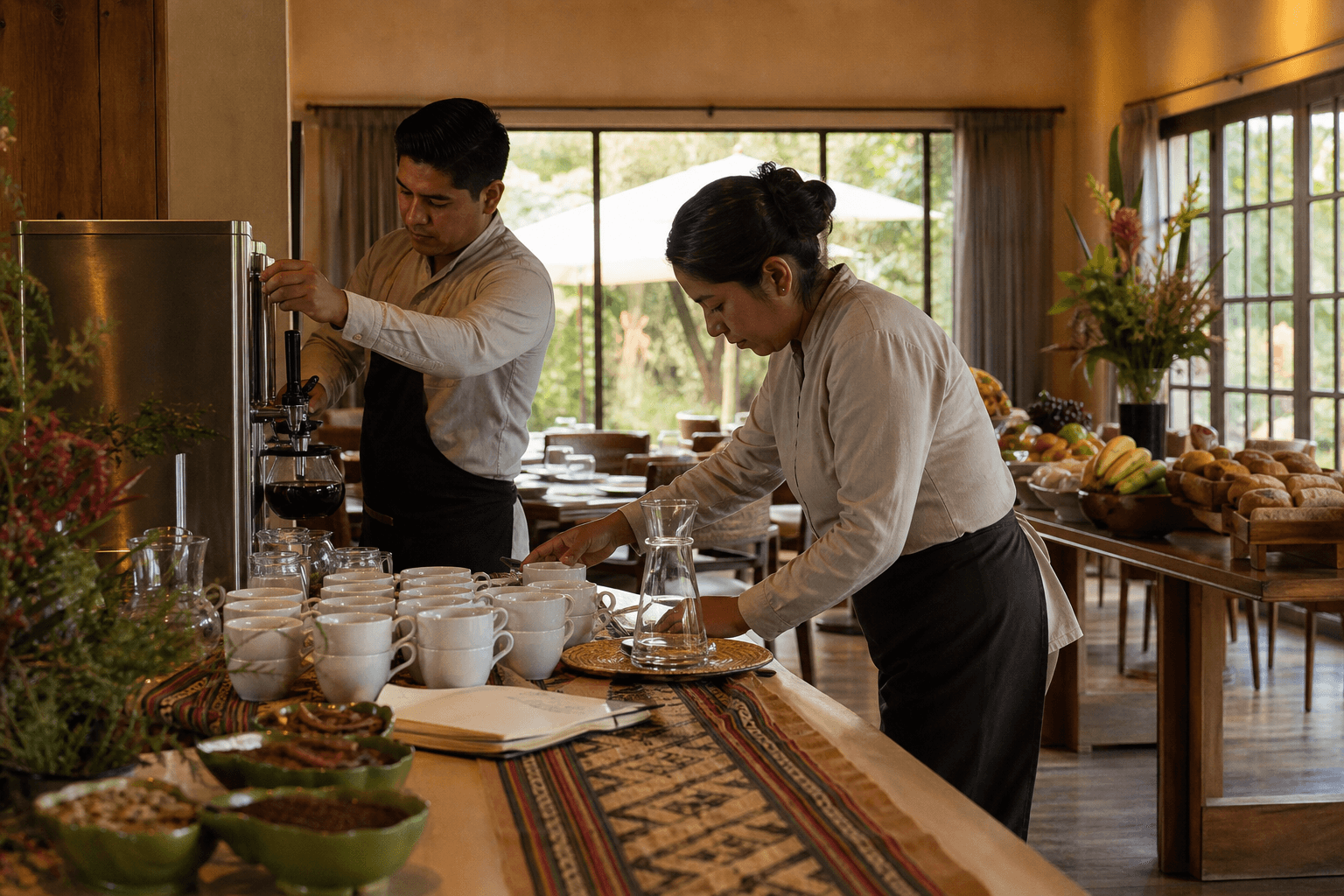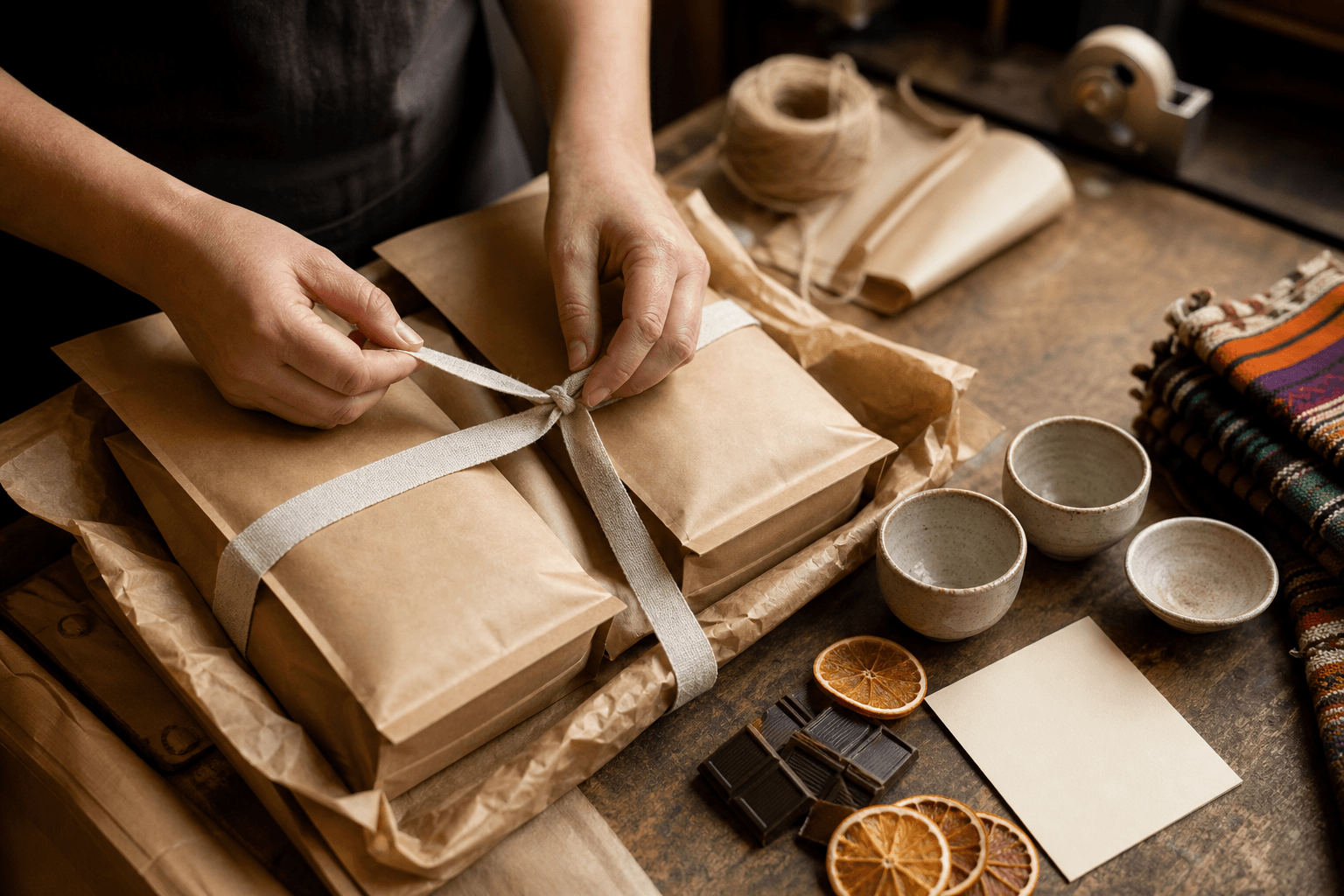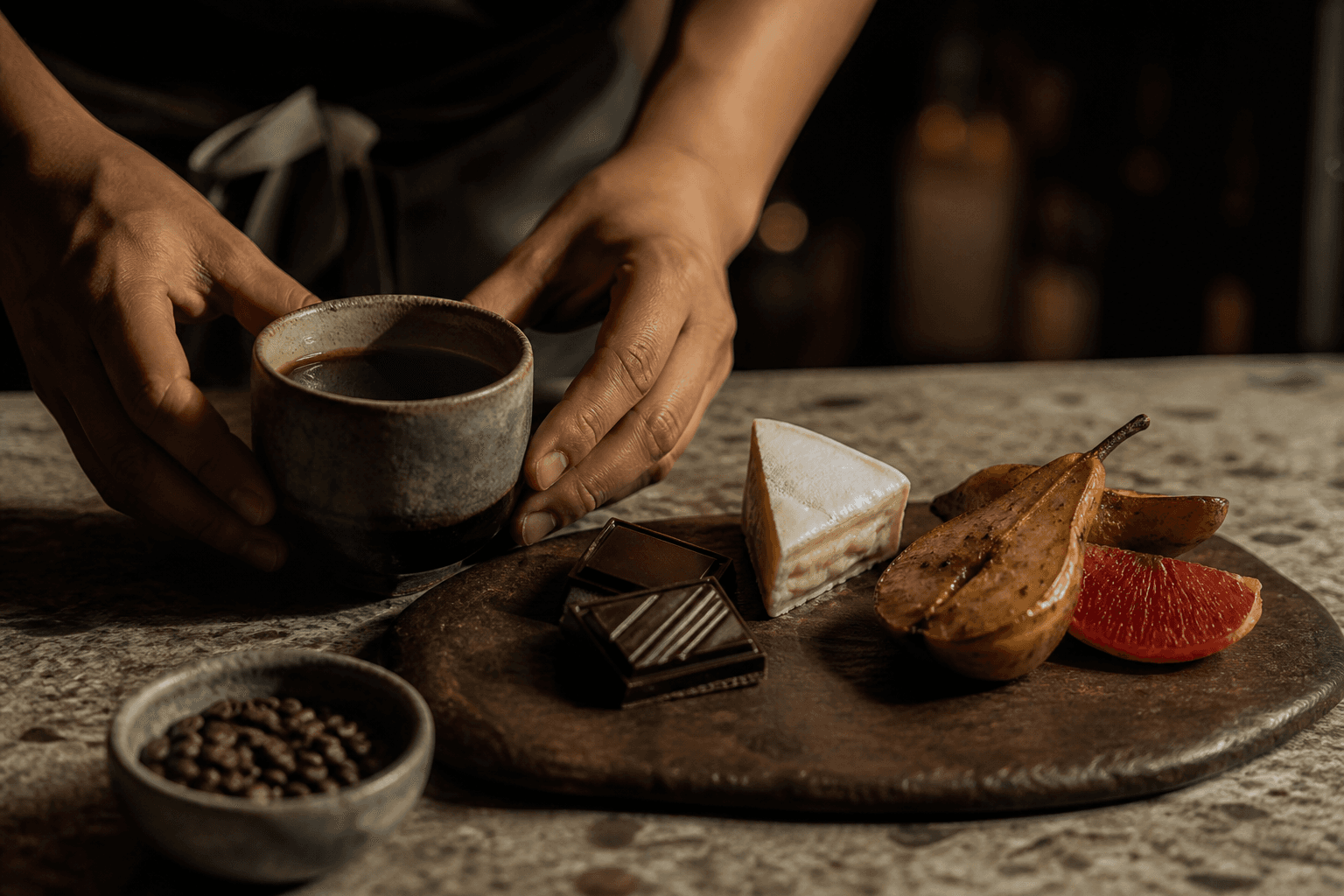
Dessert is where coffee often gets treated as an afterthought. The plates are careful, the wine list is thoughtful, the chocolate has a cocoa percentage, the cheese has a region, and then the coffee arrives as “just coffee.” For anyone who loves specialty coffee, that feels like a missed opportunity.
A well-chosen Guatemalan coffee can make the last course feel more complete. Its familiar notes of cocoa, caramel, citrus, red fruit, and gentle spice can echo dessert without making the table feel heavier. For home brewers, restaurants, cafés, and hotels serving international guests, it is one of the easiest ways to turn the final cup into a small origin experience rather than a routine caffeine finish.
This guide explains why Guatemalan coffee works so well with chocolate, cheese, and fruit; how it compares with Colombian, Ethiopian, Kenyan, and Brazilian coffees; and how to brew it so the pairing tastes clean, sweet, and deliberate.
Quick answer: is Guatemalan coffee good with dessert?
Yes. Guatemalan coffee is especially useful with dessert because many lots combine chocolate-like sweetness, balanced acidity, and a clean finish. That makes it strong enough for dark chocolate and caramel, bright enough for fruit, and gentle enough for cheese.
For the best result, choose a medium-light to medium roasted single-origin coffee from Guatemala, brew it a little cleaner than usual, and match the dessert to the coffee’s dominant note: cocoa with chocolate, citrus with fruit, and brown sugar or spice with baked desserts.
Why dessert coffee matters in specialty culture
Third-wave coffee culture has taught drinkers in the US, UK, EU, and Nordic markets to ask better questions: Where is this coffee from? How was it processed? Who produced it? What should I taste? Those questions no longer belong only at the morning pour-over bar. They matter at the end of a meal too.
CBI’s European specialty coffee research describes specialty coffee as a premium segment shaped by quality, differentiation, origin storytelling, traceability, and demand for distinctive taste profiles (CBI specialty coffee market potential). Dessert service is exactly where those ideas become tangible. A guest might not want a lecture about processing after dinner, but they can understand a simple sentence: “This Guatemalan coffee has cocoa and orange notes, so it works beautifully with the chocolate tart.”
The Specialty Coffee Association’s standards and best-practice resources have also helped make brewing language more consistent internationally, from water temperature and extraction to sensory evaluation (SCA coffee standards). In plain English, extraction means how much flavor the water pulls from the ground coffee. Too little tastes sour or thin; too much tastes bitter and drying. Dessert makes that balance even more important because sugar, fat, salt, and acidity on the plate can exaggerate flaws in the cup.
Why Guatemala is the right origin for the job
Guatemala is not a single flavor. It is a country of varied coffee regions, altitudes, microclimates, soils, varieties, and processing traditions. Guatemalan Coffees, the origin platform associated with Anacafé, presents regions such as Antigua, Highland Huehue, Acatenango Valley, Traditional Atitlán, Fraijanes Plateau, Rainforest Cobán, New Oriente, and Volcanic San Marcos as distinct profiles shaped by geography and climate (Guatemalan Coffees regions and profiles).
For dessert, that range matters because you can choose a Guatemalan coffee by role rather than only by country name. Antigua often suggests chocolate, spice, and structure. Huehuetenango can bring brighter fruit, citrus, and crisp sweetness. Atitlán and Acatenango may offer depth, volcanic-soil associations, and layered acidity. The exact cup always depends on farm, variety, processing, roast, and brew method, but Guatemala gives buyers a wide pairing vocabulary. Kapalaj’s origin page is a useful place to explore that regional context.
Compared with Colombian coffee, Guatemalan coffee often feels a little more cocoa-spiced and mountain-structured. Compared with Ethiopian coffee, it is usually less floral and tea-like, which can make it easier beside chocolate and dairy. Compared with Kenyan coffee, it is often less sharply blackcurrant-bright and more softly balanced; compared with Brazil, it can bring more acidity and origin definition.
That is why Guatemalan coffee is such a useful bridge. It gives specialty-coffee drinkers enough complexity to stay interested, while giving dessert guests enough familiar sweetness to feel at home.
The dessert pairing principle: echo, lift, or contrast
A good coffee pairing does one of three things.
Echo means the coffee repeats a flavor already in the dessert. Cocoa-toned Guatemalan coffee with dark chocolate is the obvious example. The cup does not compete; it deepens the same idea.
Lift means the coffee adds brightness. A Guatemalan coffee with orange, apple, or red-fruit acidity can make cheesecake, panna cotta, or pear tart feel less heavy.
Contrast means the coffee brings structure against richness. A clean filter brew can balance cheese, caramel, nuts, or buttery pastry because it finishes drier than the food.
In specialty coffee, “acidity” means the lively fruit-like quality that makes a cup feel fresh, not unpleasant sourness. “Body” means texture or mouthfeel. With dessert, you usually want enough body to stand beside fat and sugar, but enough acidity to keep the final sip clean.
A practical Guatemalan coffee pairing table
Use this as a starting point, not a rulebook. The best pairing is always the one that tastes good at your table.
Swipe the table sideways to see all columns.
| Dessert or food | What to look for in the coffee | Why Guatemalan coffee works |
|---|---|---|
| Dark chocolate tart | Cocoa, caramel, orange peel, medium body | Echoes chocolate while citrus keeps the finish lively |
| Milk chocolate or praline | Brown sugar, almond, soft spice | Adds structure so the pairing does not become too sweet |
| Cheesecake or crème fraîche dessert | Citrus, red apple, clean washed profile | Cuts through dairy and refreshes the palate |
| Soft cheese such as brie or camembert | Cocoa, stone fruit, gentle acidity | Balances fat without fighting the cheese |
| Aged cheese | Deeper roast sweetness, dried fruit, spice | Stands up to salt and intensity |
| Pear, apple, or stone-fruit tart | Honey, caramel, baked apple, orange | Extends the fruit notes and adds warmth |
| Citrus dessert | Sweet citrus, panela, light chocolate | Supports acidity without making it sharp |
| Nut cake or almond pastry | Nougat, toasted nuts, caramel | Turns the coffee into a clean, unsweetened counterpoint |
If you are serving only one coffee across several desserts, choose balance over drama. A clean washed or gently honey-processed Guatemalan coffee with cocoa, citrus, and brown sugar notes will usually work better than a wildly fermented natural coffee. The goal is not to make the coffee the loudest thing on the table. The goal is to make the whole final course feel intentional.
How to brew dessert coffee so it tastes polished
For dessert, avoid brewing coffee too strong, too hot, or too bitter. A heavy cup can make chocolate feel muddy; a thin cup can disappear beside sugar and fat. Start with a clean filter recipe and adjust from there.
A simple dessert filter recipe
- Coffee: 30 g freshly ground Guatemalan coffee
- Water: 500 g filtered water
- Ratio: 60 g coffee per litre of water
- Grind: medium, slightly finer than coarse sea salt
- Water temperature: about 92–94°C / 198–201°F
- Brew time: 3:00–4:00 minutes for a manual pour-over coffee, or according to your brewer
- Serving temperature: let the coffee cool for 3–5 minutes before pairing
Cooling matters. Very hot coffee hides sweetness and emphasizes bitterness. As the cup cools, you can taste more fruit, chocolate, and aromatic detail. If the pairing tastes bitter, grind a little coarser, shorten the brew, or use slightly cooler water. If it tastes sour or hollow, grind finer or increase contact time. If it tastes good alone but flat beside dessert, serve a smaller cup.
For restaurants, hotels, and cafés: make the story short
Dessert coffee should not require a seminar. The service language can be simple:
- “This is a Guatemalan single-origin coffee with cocoa and citrus notes; it is great with the chocolate dessert.”
- “The coffee has enough brightness for the cheesecake, but it finishes clean rather than sharp.”
- “If you usually choose espresso after dinner, this filter cup is lighter but still has chocolate depth.”
That kind of explanation fits modern hospitality because it gives guests a reason to care without slowing down service. It also helps staff avoid vague language like “premium” or “smooth.” Specific words are more useful: cocoa, orange, red apple, caramel, clean, round, structured.
For batch brew, keep the same 60 g/L baseline and taste the coffee with the actual dessert before service. If the dessert is very sweet, a slightly brighter coffee may work better. If the dessert is sharp or citrus-heavy, a rounder cocoa-toned coffee may feel calmer.
Should you use espresso with dessert?
Espresso can be excellent with dessert, especially with chocolate, caramel, and nuts. But it is concentrated, intense, and fast, so it can overwhelm delicate fruit or turn bitter against sugar if the shot is over-extracted.
Filter coffee gives you more room. A well-brewed Guatemalan filter coffee can show cocoa, citrus, and fruit in a softer way, which makes it easier to pair with cheese, fruit, and lighter desserts. Espresso is the after-dinner punctuation mark. Filter coffee is the conversation.
If you do serve Guatemalan coffee as espresso, aim for sweetness rather than maximum intensity. A shot that tastes like dark chocolate, orange, and brown sugar will pair better than one pushed into smoky bitterness.
How to choose a bag for dessert pairings at home
When buying single-origin coffee for dessert, read the bag like a menu.
Choose washed Guatemalan coffee for clarity, citrus, cocoa, and a clean finish with cheesecake, fruit tarts, and rich chocolate. Choose honey-processed Guatemalan coffee for more texture, ripe fruit, and round sweetness with pear, stone fruit, nut pastry, and milk chocolate. Choose a slightly deeper roast if the dessert is dense, bitter, or nutty, but avoid going so dark that origin character disappears.
Freshness still matters. Use whole beans when possible and grind just before brewing. If you buy pre-ground coffee, store it airtight, cool, and away from light.
A two-bite tasting exercise
Here is a simple way to learn pairings without overthinking.
First, taste the coffee alone and write down three plain words: maybe cocoa, orange, and caramel. Then take one bite of dessert and taste the coffee again. Ask three questions:
- Did the coffee become sweeter or more bitter?
- Did the dessert feel lighter or heavier?
- Did the finish make you want another sip?
If the answer to the third question is yes, the pairing is working. If not, change one variable: a different dessert, a different brew strength, a different serving temperature, or a coffee with a different dominant note.
FAQ
What dessert goes best with Guatemalan coffee?
Dark chocolate, chocolate tart, pear tart, almond cake, cheesecake, and soft cheese are all strong matches. Look for Guatemalan coffee with cocoa, citrus, caramel, red apple, or brown-sugar notes.
Is Guatemalan coffee better with chocolate or fruit?
It can work with both. Cocoa-toned lots are excellent with chocolate, while brighter coffees from regions such as Huehuetenango can be lovely with fruit desserts. Match the dominant tasting note in the coffee to the plate.
Should dessert coffee be brewed stronger?
Not necessarily. Brew it clean first. A 60 g/L filter recipe is a good baseline. If the dessert is very rich, serve a smaller cup rather than making the coffee harsh or bitter.
Is espresso or filter coffee better after dinner?
Espresso is intense and works well with chocolate, caramel, and nuts. Filter coffee is more versatile with fruit, cheese, and lighter desserts because it shows acidity and aroma more gently.
Why choose Guatemalan coffee instead of Colombian or Ethiopian coffee for dessert?
Guatemalan coffee often offers a practical middle ground: more cocoa and structure than many floral Ethiopian coffees, more lift than many Brazilian coffees, and a slightly spiced Central American profile that works across chocolate, fruit, and dairy.
Make the final cup part of the experience
Dessert is not the end of the meal; it is the last impression. When the coffee is chosen with the same care as the chocolate, cheese, or fruit on the plate, guests notice. They may not know every region of Guatemala, but they can taste when the cup has sweetness, balance, and purpose.
Explore Kapalaj’s Guatemalan specialty coffees and choose a bag that turns your next dessert course into a cleaner, warmer, more memorable final cup: shop Kapalaj coffees.