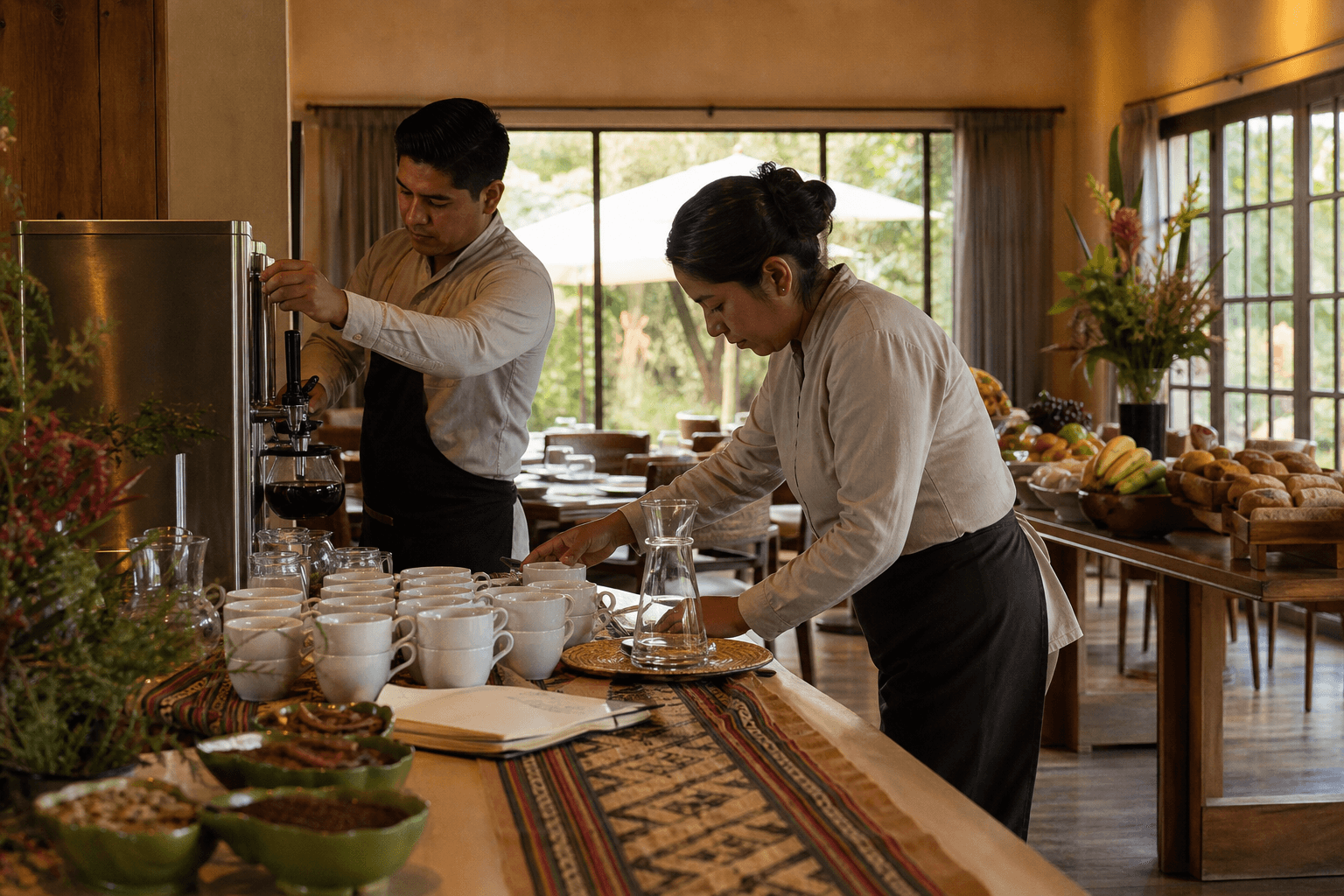
A good coffee gift should not feel like a panic purchase from the airport shelf. It should feel considered: fresh enough to brew beautifully, specific enough to tell a story, and versatile enough that the recipient can actually enjoy it at home. That is where Guatemalan coffee can be unusually useful.
For international specialty coffee drinkers, a bag of single-origin coffee is more than a pleasant object. It is a small invitation: taste this place, try this brew method, notice this kind of sweetness. The challenge is that coffee gifts can easily become too vague — “premium blend,” “strong roast,” “luxury beans” — or too niche for the person receiving them. Guatemalan coffee sits in a generous middle ground. It can be expressive without being intimidating, sweet without being flat, and origin-focused without requiring the recipient to own a competition-level pour-over setup.
Quick answer: why is Guatemalan coffee a good gift?
Guatemalan coffee makes a strong specialty coffee gift because it often combines chocolate-like sweetness, citrus or stone-fruit brightness, a structured body, and clear origin character. In plain English: it tends to taste special, but still familiar enough for people who drink espresso, filter coffee, French press, or batch brew. Look for fresh whole beans, a clear region or producer story, and tasting notes that match the recipient’s usual preferences.
If you are buying for someone who already loves Ethiopian or Kenyan coffees, choose a brighter Guatemalan lot with citrus, apple, or floral notes. If they usually prefer Colombian, Brazilian, or classic espresso profiles, choose a rounder Guatemalan coffee with cocoa, caramel, nuts, or red fruit.
Why coffee gifts are changing in specialty culture
Third-wave coffee culture has changed what a “nice coffee” means. In the US, UK, EU, and Nordic markets, many buyers now look for freshness dates, roast style, traceability, brew recipes, and origin details rather than only a decorative tin. CBI’s overview of European coffee demand describes Europe as a major global coffee market and points to premiumisation as a driver of value growth (CBI European coffee demand). Its specialty coffee analysis also highlights traceability, transparency, origin storytelling, and out-of-home coffee culture as important parts of the specialty segment (CBI specialty coffee market potential).
That matters for gifting because modern coffee buyers are not just giving caffeine. They are giving a better morning ritual, a small sensory education, or a way to bring café-quality brewing home. A gift that names the origin, explains the cup profile, and gives a simple brewing direction feels more thoughtful than a generic “gourmet coffee” label.
Guatemala is especially well suited to this role because it offers both clarity and range. Guatemalan Coffees, the origin platform associated with Anacafé, presents distinct regional profiles such as Antigua Coffee, Highland Huehue, Acatenango Valley, Traditional Atitlán, Rainforest Cobán, Fraijanes Plateau, New Oriente, and Volcanic San Marcos, connecting cup character to microclimates, varieties, and growing conditions (Guatemalan Coffees regions and profiles). For a gift buyer, that means you can choose a coffee with a real sense of place instead of a vague luxury claim.
Start with the recipient, not the label
The easiest mistake is to shop for the most impressive-sounding bag rather than the person who will drink it. Specialty coffee language can be beautiful, but it can also hide practical questions: do they own a grinder? Do they drink milk drinks? Do they brew one cup at a time or a pot for the whole house? Do they enjoy bright acidity, or do they describe sharp coffee as “sour”?
A better gift starts with the recipient’s normal coffee life.
Swipe the table sideways to see all columns.
| Recipient type | What to choose | Why Guatemalan coffee works |
|---|---|---|
| Curious beginner | Medium-light to medium roast, clear cocoa and citrus notes | Familiar sweetness with a visible step into single-origin coffee |
| Pour-over enthusiast | Washed Guatemalan coffee with citrus, apple, or floral hints | Clean structure and enough acidity to reward careful brewing |
| Espresso drinker | Sweet, balanced lot with chocolate, caramel, red fruit, or nut notes | Good body and sweetness without losing origin character |
| French press or batch brew household | Rounder profile with cocoa, brown sugar, stone fruit, or spice | Forgiving and satisfying in larger brews |
| Food lover | Coffee with chocolate, orange, dried fruit, or baking-spice notes | Easy to pair with dessert, cheese, breakfast, or dark chocolate |
| Sustainability-minded buyer | Traceable lot with producer, region, or direct-trade information | A clearer story than anonymous commodity coffee |
If you are unsure, choose balance. A beautifully roasted Guatemalan coffee with cocoa sweetness, gentle citrus, and a clean finish is rarely the wrong answer. It gives the recipient something interesting to notice without pushing them into a wild flavor profile they may not enjoy.
Whole bean, ground coffee, or subscription?
Whole bean is usually best for specialty coffee because aroma fades quickly once coffee is ground. Grinding just before brewing gives the recipient more sweetness, fragrance, and clarity. If they own a grinder, buy whole beans.
If they do not own a grinder, ground coffee can still be thoughtful — but match the grind to the brew method. Filter grind for drip brewers and pour-over, coarser grind for French press, finer grind for moka pot or espresso-style brewing. A subscription is ideal for someone who already drinks coffee daily and wants fresh single-origin coffee without shopping each time.
Read tasting notes like a gift clue
Tasting notes are not added flavors. They are comparisons that help describe what the coffee naturally reminds people of. When a bag says chocolate, orange, red apple, caramel, or almond, it does not mean those ingredients were put into the coffee. It means trained tasters found those sensory echoes in the cup.
For gifting, tasting notes are useful because they translate preference into a choice:
- Chocolate, caramel, hazelnut, brown sugar: safest for classic coffee drinkers, espresso fans, and people who dislike sharp acidity.
- Orange, apple, pear, stone fruit: good for filter brewers who enjoy sweetness with lift.
- Floral, tea-like, citrus zest: better for experienced specialty drinkers, especially fans of Ethiopian or Kenyan coffees.
- Dried fruit, spice, dark chocolate: lovely for after-dinner coffee, winter gifting, and food pairings.
Guatemalan coffee often shines in the overlap between comfort and complexity. Compared with many Brazilian coffees, it usually brings more acidity and origin detail. Compared with some Ethiopian coffees, it may feel less floral but more cocoa-toned and grounded. Compared with Kenyan coffees, it is often less intensely bright, making it easier for a wider range of recipients. Compared with Colombian coffee, Guatemala can feel similarly approachable but with a distinctive volcanic, highland, or regional structure when the lot is carefully sourced.
Choose a roast level that fits the moment
Roast level is one of the most practical gift decisions. A very light roast can be beautiful, but it may taste underdeveloped or sharp to someone used to traditional dark coffee. A very dark roast can feel familiar, but it may hide the origin character that makes the gift special.
For most coffee gifts, a light-medium or medium roast is the sweet spot. It preserves enough Guatemalan origin character — citrus, cocoa, red fruit, spice, clean sweetness — while giving enough body for everyday brewing. If the recipient drinks black filter coffee, lean lighter. If they drink milk drinks, moka pot, or espresso, lean slightly more developed.
In specialty coffee, extraction means how much flavor water pulls from the grounds. Lighter roasts often need more careful brewing to taste sweet. More developed roasts are easier for casual brewing but may lose some delicate aroma.
The practical gift set: beans plus a simple brewing card
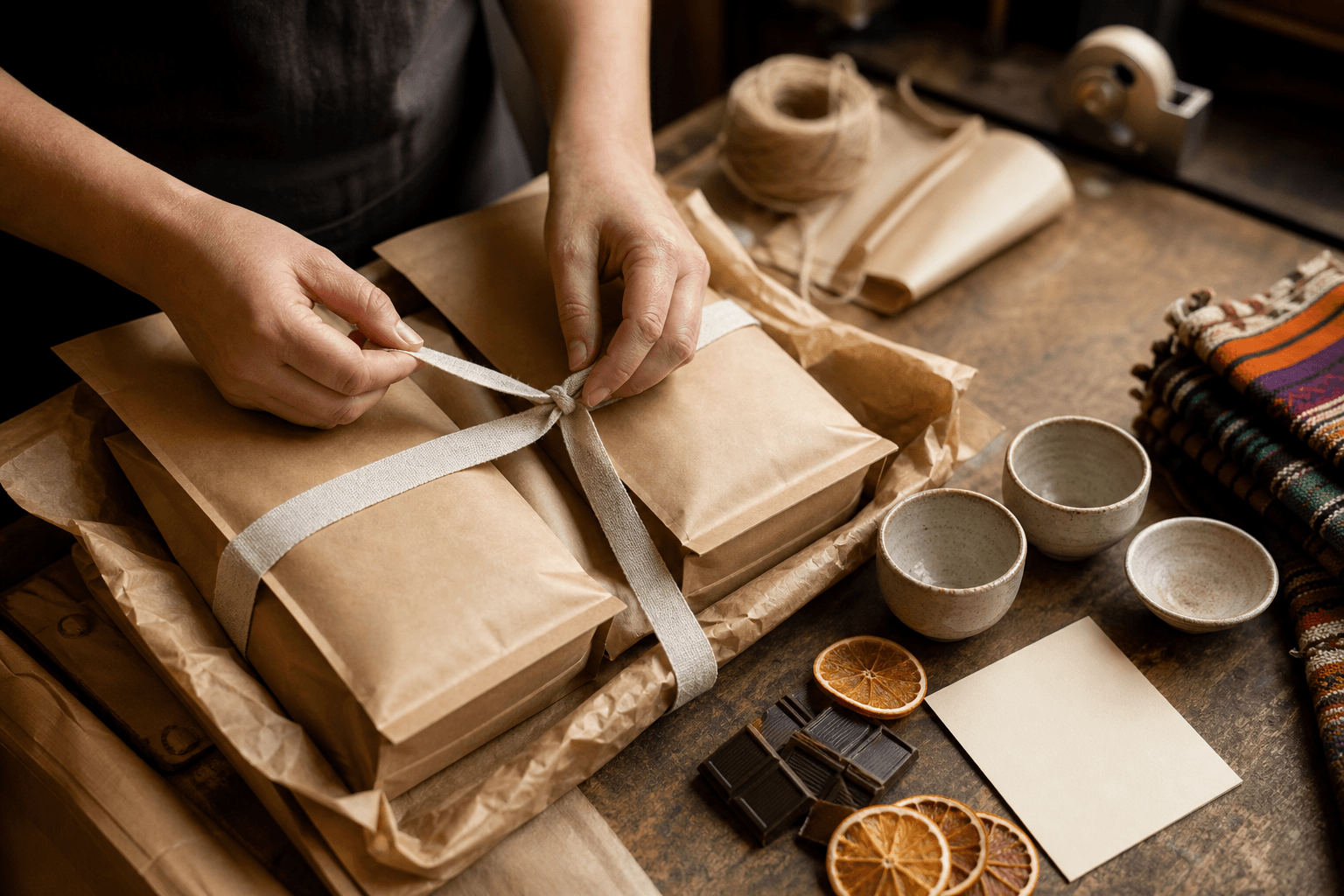
The most useful coffee gift is not only the bag. It is the bag plus a little confidence. Add a simple note with one brew recipe and one tasting prompt, and the gift becomes much easier to enjoy.
For a balanced Guatemalan filter brew, try this:
Simple filter recipe
- Coffee: 18 g whole-bean Guatemalan coffee, ground medium-fine
- Water: 300 g, just off the boil
- Ratio: 1 part coffee to about 16.5 parts water
- Brew time: around 2:45–3:30 for pour-over, depending on brewer and grind
- Taste target: sweet cocoa or caramel first, then citrus or fruit lift, then a clean finish
If the cup tastes bitter and dry, grind a little coarser or use slightly cooler water. If it tastes weak, thin, or sour, grind a little finer or extend contact time. The Specialty Coffee Association publishes standards and shared terminology that help professionals speak consistently about brewing, cupping, and coffee quality (SCA coffee standards), but the home version can be simple: change one variable at a time and taste what improves.
For a recipient who does not want a recipe, include a tasting prompt instead: “Try this first without milk. Notice whether the sweetness feels more like chocolate, caramel, orange, or red apple as it cools.” That one sentence can turn a normal cup into a small tasting experience.
Pair Guatemalan coffee with something specific
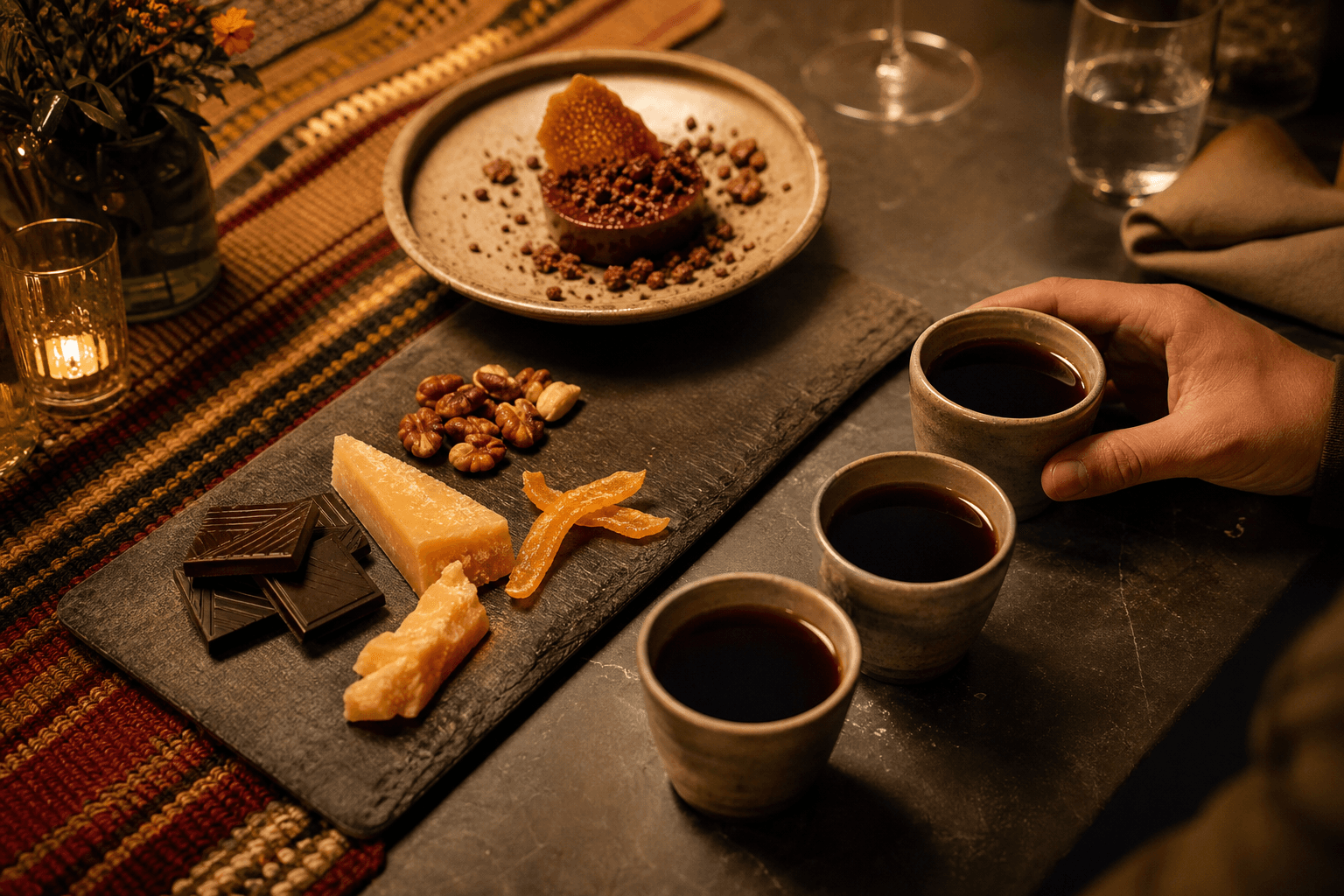
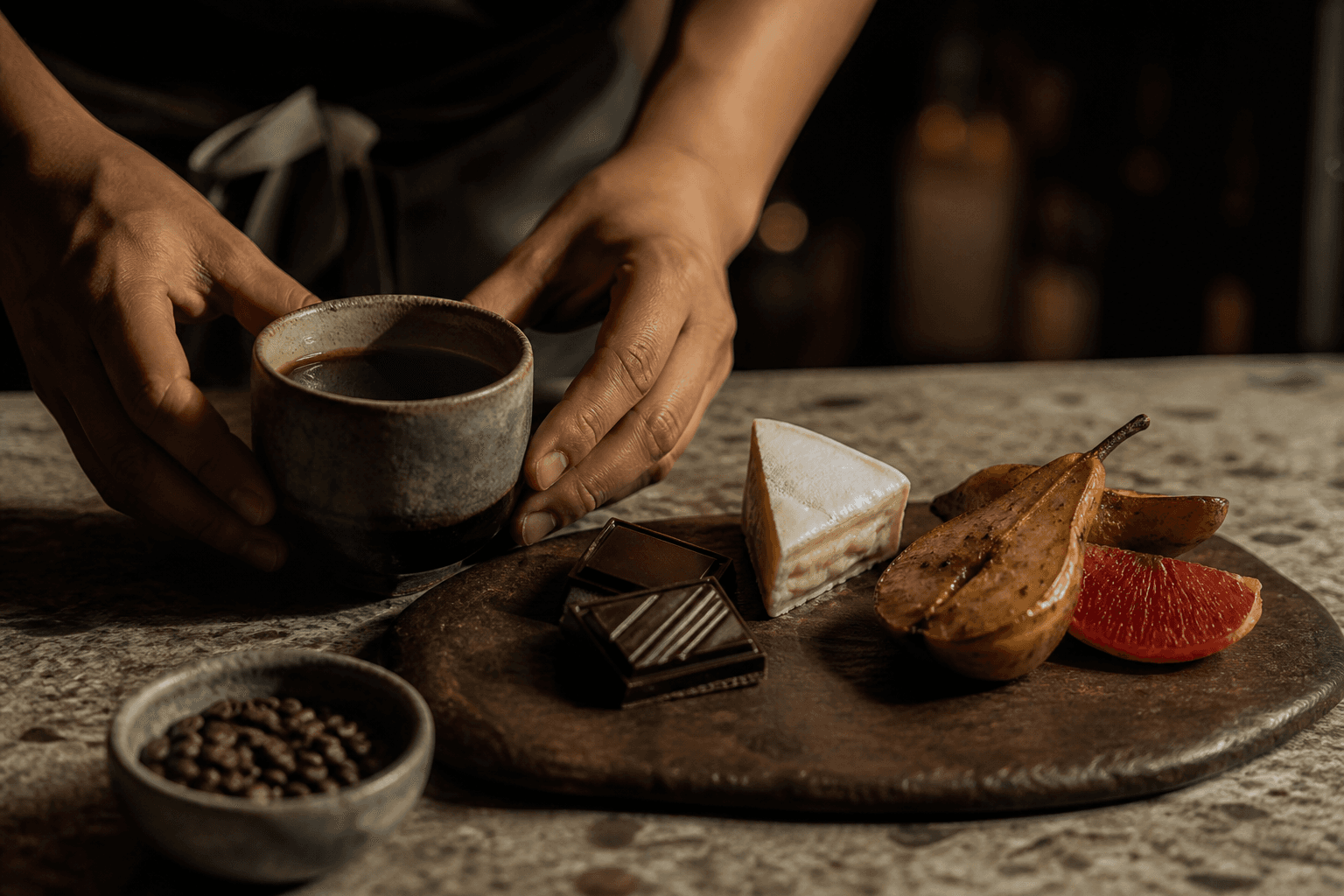
Coffee gifts feel more personal with a pairing. Guatemalan coffee is useful here because its common flavor range — cocoa, citrus, caramel, stone fruit, nuts, and gentle spice — works with food rather than fighting it.
Good pairings include:
- Dark chocolate with orange or sea salt for coffees with cocoa and citrus notes.
- Aged cheese or nutty hard cheese for rounder coffees with caramel, almond, or spice.
- Panettone, brioche, or cardamom buns for a festive breakfast gift.
- Dried mango, apricot, or fig for lots with red fruit or stone-fruit notes.
- Plain butter biscuits or shortbread when you want the coffee itself to lead.
Avoid pairing a delicate, bright coffee with a very sweet dessert that overwhelms it. If the coffee is the gift’s main character, choose food that echoes one note rather than shouting over the whole cup.
What to look for before you buy
A polished package is nice, but the best signs are practical. Before buying Guatemalan coffee as a gift, check for:
- Roast date or freshness guidance. Coffee is an agricultural product, not a shelf-stable ornament.
- Whole-bean option. Best if the recipient has a grinder.
- Origin detail. Region, farm, cooperative, producer, altitude, or process all help tell the story.
- Roast and flavor clarity. “Chocolate, orange, caramel” is more helpful than “premium and strong.”
- Brew-method fit. Espresso drinkers and pour-over brewers may prefer different profiles.
- Traceability. Direct trade coffee or clearly sourced single-origin lots make the gift feel connected to real producers, not anonymous supply chains.
- A realistic amount. One fresh 250 g bag can be better than a large stale bundle.
This is also where Kapalaj’s Guatemala focus matters. A general coffee gift box may offer variety, but a focused single-origin choice can offer depth: a clearer origin story, a more coherent cup profile, and a better chance that the recipient understands what makes the coffee distinct.
FAQ: buying Guatemalan coffee as a gift
Is Guatemalan coffee good for people new to specialty coffee?
Yes. Guatemalan coffee is often a friendly entry point because it can combine familiar chocolate or caramel sweetness with enough citrus, fruit, or spice to feel special. Choose a balanced light-medium or medium roast rather than the most experimental lot.
Should I buy whole bean or ground Guatemalan coffee as a gift?
Buy whole bean if the recipient owns a grinder. If they do not, ground coffee is fine when matched to their brew method. Ask for filter grind, French press grind, or espresso grind rather than choosing a generic grind.
What does Guatemalan coffee taste like?
Many Guatemalan coffees show cocoa, caramel, brown sugar, orange, apple, stone fruit, spice, or floral hints. The exact cup depends on region, variety, altitude, process, roast, freshness, and brewing.
Is Guatemalan coffee better for pour-over or espresso?
It can work for both. Washed, brighter lots are often excellent for pour-over coffee, while rounder profiles with chocolate, caramel, and red fruit can make sweet espresso or milk drinks.
How soon should someone drink gifted coffee?
For best flavor, specialty coffee is usually most enjoyable within weeks of roasting, not months. Store it sealed, cool, dry, and away from light; grind only what you need just before brewing.
A gift that invites better coffee, not more clutter
The best coffee gift does not need to be complicated. It needs freshness, a clear flavor direction, a real origin story, and a small practical bridge between the bag and the cup. Guatemalan coffee gives you all four: approachable sweetness, specialty depth, regional identity, and enough versatility for different brew methods.
If you want a gift that feels personal rather than generic, choose a Guatemalan single-origin coffee that matches the recipient’s routine — filter, espresso, French press, office pot, or slow weekend pour-over — and include one simple tasting note or brew suggestion. That small detail is often what turns a bag of beans into a memorable cup.
Explore Kapalaj’s Guatemalan coffees in the Kapalaj shop, or choose a coffee subscription for a fresh, origin-focused gift that keeps arriving after the first bag is finished.