
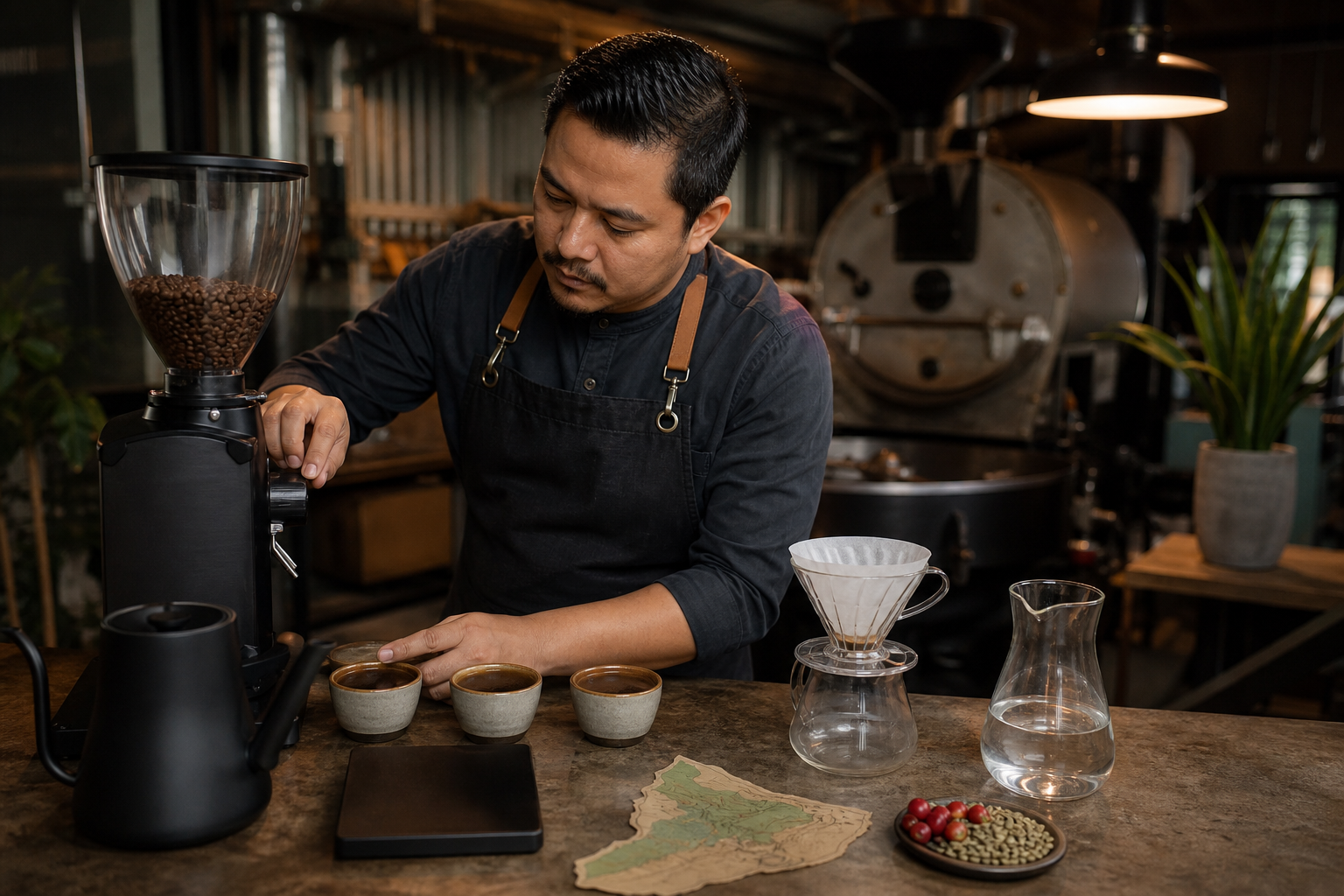
When Coffee Tastes Flat: A Pour-Over Guide to Guatemalan Coffee Balance
June 2, 2026 · 12 min read
When Coffee Tastes Flat: A Pour-Over Guide to Guatemalan Coffee Balance
Flat coffee is one of the most frustrating problems in home brewing because it does not always taste obviously wrong. It is not burnt. It is not sharply sour. It may even smell promising. But in the cup it feels muted: the chocolate note disappears, the citrus never opens, and the finish falls away before you have understood what the coffee was trying to say.
For international specialty coffee drinkers, this is where Guatemalan coffee can be a useful teacher. A good Guatemalan single-origin coffee often has enough sweetness, body, and clean acidity to show you whether your pour-over technique is working. When the brew is right, it can taste composed and lively. When the brew is flat, the problem is often not the origin. It is grind, water, freshness, dose, or extraction.
This guide is for the home brewer who wants a more expressive cup without turning breakfast into a laboratory. We will use Guatemala as the lens because its coffees sit in a helpful middle ground: more structured than many Brazilian coffees, often less floral than Ethiopian coffees, usually calmer than a bright Kenyan, and still full of origin character when brewed well.
Quick answer: why does pour-over coffee taste flat?
Pour-over coffee usually tastes flat when it is under-extracted, brewed with water that is too soft or too cool, ground too coarse, too old, or poured in a way that does not evenly wet the coffee bed. In plain English, the brew has not pulled enough sweetness, aroma, and structure from the grounds.
Guatemalan coffee is especially useful for troubleshooting because a balanced cup should show cocoa-like sweetness, gentle fruit or citrus, and a rounded finish. If those qualities vanish, adjust one variable at a time: grind a little finer, use hotter water, check freshness, and keep your brew ratio consistent.
Why this matters now: better coffee has become a home expectation
Specialty coffee is no longer limited to a few city cafés. CBI notes that European specialty coffee demand is growing, helped by coffee shops that introduce consumers to new varieties, taste profiles, and origin stories (CBI specialty coffee market report). That café learning travels home. A drinker who has enjoyed a clean Colombian filter, an Ethiopian natural, or a Kenyan batch brew now expects their own kitchen pour-over to taste like more than hot brown water.
Europe is also a major coffee market: CBI describes Europe as the world’s largest green coffee market and reports that it accounted for 30.7% of global coffee consumption in 2023/2024 (CBI demand report). In the US, UK, EU, and Nordic specialty scenes, the conversation has shifted from “strong or mild?” to “Which origin, roast, process, water, and brew method?”
That shift can feel intimidating. The good news is that flat coffee is usually fixable. You do not need competition-level equipment. You need a reliable recipe, a few sensory cues, and a coffee that gives clear feedback. Guatemalan coffee does that beautifully.
What “balance” means in Guatemalan coffee
In specialty coffee, balance means that sweetness, acidity, body, aroma, and finish support each other. Acidity is brightness, not sourness. Body is texture, not strength. Extraction is the process of dissolving flavour from ground coffee into water.
Many washed Guatemalan coffees are loved because they make these ideas easy to taste. You may notice cocoa, brown sugar, orange, red apple, toasted almond, gentle spice, or stone fruit. The cup can feel sweet and grounded, but not heavy. That is different from a classic Brazilian profile, which may lean more nutty and low-acid; different from Ethiopia, which may be more floral, tea-like, or berry-toned; and different from Kenya, where blackcurrant-like acidity can be vivid and intense.
Guatemala’s diversity matters too. Guatemalan Coffees, the origin platform from Anacafé, lists regional profiles including Antigua, Acatenango Valley, Atitlán, Cobán, Fraijanes Plateau, Highland Huehue, New Oriente, and Volcanic San Marcos, and highlights how microclimate and growing conditions shape taste (Guatemalan Coffees regional profiles). In practice, that means “Guatemalan coffee” is not one flavour. But many lots share a useful combination of sweetness, structure, and clarity.
If your pour-over hides all of that, something in the brew is flattening the coffee.
A practical pour-over recipe for Guatemalan coffee
Use this as a baseline, not a law. The point is to make changes visible.
| Variable | Starting point | Why it helps |
|---|---|---|
| Coffee | 20 g | Enough to taste clearly without wasting beans |
| Water | 320 g | A 1:16 ratio: balanced for many light-to-medium roasts |
| Water temperature | 93–96°C | Hot enough to extract sweetness and aroma |
| Grind | Medium-fine | Finer than batch brew, coarser than espresso |
| Total brew time | 2:45–3:30 | A useful range for most cone drippers |
| Bloom | 40 g for 30 seconds | Lets trapped gas escape and helps even extraction |
A simple pouring plan:
- Rinse the filter and preheat the dripper.
- Add 20 g coffee and level the bed.
- Pour 40 g water for the bloom. Wait 30 seconds.
- Pour to 160 g slowly, keeping the stream gentle and centered.
- Pour to 240 g after about 1:30.
- Finish at 320 g by about 2:15.
- Let the brew draw down, then taste after it cools for a minute.
The Specialty Coffee Association publishes coffee standards and protocols that help the industry use shared language around brewing, cupping, and evaluation (SCA coffee standards). At home, you do not need to copy a lab protocol. But using repeatable measurements gives you the same advantage: when the cup changes, you know why.
If the cup tastes flat, change this first
The most common mistake is changing too many things at once. Treat the coffee like a conversation. Ask one question, listen, then adjust.
1. Grind a little finer
Flatness often comes from under-extraction. The water passes through the coffee but does not dissolve enough sweetness and aromatic compounds. A slightly finer grind increases contact and usually brings more sweetness, more body, and a clearer finish.
Move in small steps. If your grinder has numbered settings, shift one or two clicks finer. If the brew suddenly tastes harsh or drying, you went too far.
2. Use hotter water
Light and medium specialty roasts usually need enough heat to open up. If you are brewing at 88–90°C, try 93–96°C. A washed Guatemalan coffee with cocoa and citrus notes can taste dull when the water is too cool, especially if the grind is also coarse.
Boiling water is not automatically a problem, particularly in a kettle that loses heat as you pour. What matters is the taste: hot enough for sweetness, not so aggressive that the cup turns bitter and thin.
3. Check your water
Water is the invisible ingredient. Very soft water can make coffee taste hollow. Very hard water can mute acidity and leave the cup heavy. If your coffee smells good but tastes strangely empty, try a different water source for one brew: filtered tap water, a low-mineral bottled water, or a remineralised brewing water.
This is especially noticeable with Guatemalan coffee because its balance depends on both sweetness and brightness. Bad water can flatten the brightness before you ever get to taste the origin.
4. Look at freshness and storage
Old coffee can brew “correctly” and still taste tired. If the bag has been open for weeks, or stored near heat, light, or strong smells, the aromatics fade. Keep beans sealed, cool, dry, and away from sunlight. Grind just before brewing.
Fresh does not mean seconds after roasting. Many specialty coffees taste better after a short rest, when excess roast gas has settled. But once opened, treat the bag with care. Aroma is part of what you paid for.
5. Pour for even extraction, not drama
Beautiful pouring does not guarantee good extraction. A high, aggressive stream can dig channels in the bed. A timid pour can leave dry pockets. Aim for calm, even wetting. If one side of the coffee bed stays pale and dry, the brew will taste incomplete.
A gentle swirl after the bloom can help. So can pouring in steady circles that include the full bed without constantly washing grounds up the filter walls.
How to choose Guatemalan coffee for pour-over
For pour-over coffee, look for a roast and lot that match what you want to learn.
Choose a washed Guatemalan coffee if you want clarity: cocoa, citrus, apple, floral hints, and a clean finish. Washed processing means the fruit is removed before drying, which often gives a cleaner, more transparent cup.
Choose a natural Guatemalan coffee if you want more fruit weight and aroma. Natural processing means the coffee dries with the fruit still around the seed. It can produce berry, tropical fruit, or wine-like notes, though it also needs careful roasting and brewing to stay balanced.
Choose a honey-processed coffee if you want something between those worlds. Some fruit mucilage remains during drying, which can add sweetness and texture while keeping more structure than many naturals.
Region can help guide your expectations. Antigua and Acatenango often suit drinkers who like cocoa, spice, and polished sweetness. Huehuetenango can be excellent for people who want fruit clarity and highland brightness. Atitlán may bring freshness and lift. These are starting points, not guarantees; variety, harvest, process, roast, and producer skill all matter.
If you are buying your first bag, avoid chasing the most exotic tasting note. Choose the coffee whose description sounds brewable: sweet, clean, balanced, traceable, roasted for filter, and specific about origin.
A tasting checklist: balanced or flat?
Use this after your next brew.
| What you taste | Likely meaning | Next adjustment |
|---|---|---|
| Watery, short finish, little sweetness | Under-extracted | Grind finer or brew hotter |
| Sour, sharp, lemony without sweetness | Under-extracted or uneven | Grind finer, improve bloom, pour more evenly |
| Bitter, dry, papery | Over-extracted or stale filter | Grind coarser, reduce agitation, rinse filter well |
| Heavy but muted | Water or roast mismatch | Try different water or lighter roast |
| Sweet cocoa, gentle fruit, clean finish | Balanced | Keep the recipe and repeat |
The concrete takeaway: if your Guatemalan pour-over tastes flat, first grind one step finer and keep everything else the same. If sweetness improves but the cup is still muted, raise water temperature or test different water. Do not change dose, dripper, kettle, and recipe all at once.
Where Kapalaj fits into the question
At Kapalaj, we care about Guatemalan coffee because it connects craft, origin, and everyday drinking. The point is not to make every cup complicated. The point is to make a cup that tastes alive: sweet enough to enjoy without analysis, clear enough to teach you something, and traceable enough to feel connected to real producers and places.
If you are comparing origins, Guatemala is a strong “home base” for specialty coffee. Ethiopia can teach aroma and florality. Kenya can teach acidity and intensity. Colombia can teach range and sweetness. Brazil can teach body and comfort. Guatemala can teach balance: how a single-origin coffee can feel both approachable and layered.
That is why it works so well for pour-over. It rewards attention, but it does not demand perfection. When you dial it in, the cup gives back.
For more origin context, explore Kapalaj’s guide to Guatemalan coffee regions, or browse our latest single-origin Guatemalan coffees when you are ready to brew this guide with a fresh bag.
FAQ: Guatemalan coffee for pour-over
Is Guatemalan coffee good for pour-over?
Yes. Guatemalan coffee is excellent for pour-over because many lots combine sweetness, body, and clean acidity. A well-brewed cup can show cocoa, citrus, apple, toasted nuts, spice, or stone fruit while staying balanced and easy to drink.
What grind size should I use for Guatemalan pour-over coffee?
Start with a medium-fine grind: finer than batch brew, coarser than espresso. If the coffee tastes flat, watery, or too short, grind slightly finer. If it tastes bitter, dry, or harsh, grind slightly coarser.
Why does my pour-over coffee taste weak even with enough coffee?
Weak-tasting pour-over often comes from under-extraction, not too little coffee. The grind may be too coarse, the water too cool, the pouring uneven, or the beans too old. Keep your ratio steady and adjust grind first.
Which Guatemalan coffee region is best for filter brewing?
There is no single best region, but Huehuetenango, Antigua, Acatenango, and Atitlán can all be excellent for filter brewing. Choose by flavour goal: Huehuetenango for clarity and fruit, Antigua or Acatenango for cocoa and spice, Atitlán for freshness and lift.
Should Guatemalan coffee be light roast or medium roast?
For pour-over, a light-to-medium roast usually preserves more origin character. Very dark roasting can hide regional nuance behind roast bitterness. The best choice is a roast that keeps sweetness, acidity, and body in balance.
Brew the next cup with purpose
Flat coffee is not a failure. It is feedback. With a fresh Guatemalan coffee, a steady recipe, and one careful adjustment at a time, you can move from muted to sweet, from vague to expressive, from “fine” to memorable.
Ready to taste that balance for yourself? Explore Kapalaj’s single-origin Guatemalan coffees and choose a fresh bag for your next pour-over session.