
Guatemalan Coffee Tasting Notes: How to Taste Chocolate, Citrus, and Origin Character
May 26, 2026 · 11 min read
Guatemalan Coffee Tasting Notes: How to Taste Chocolate, Citrus, and Origin Character
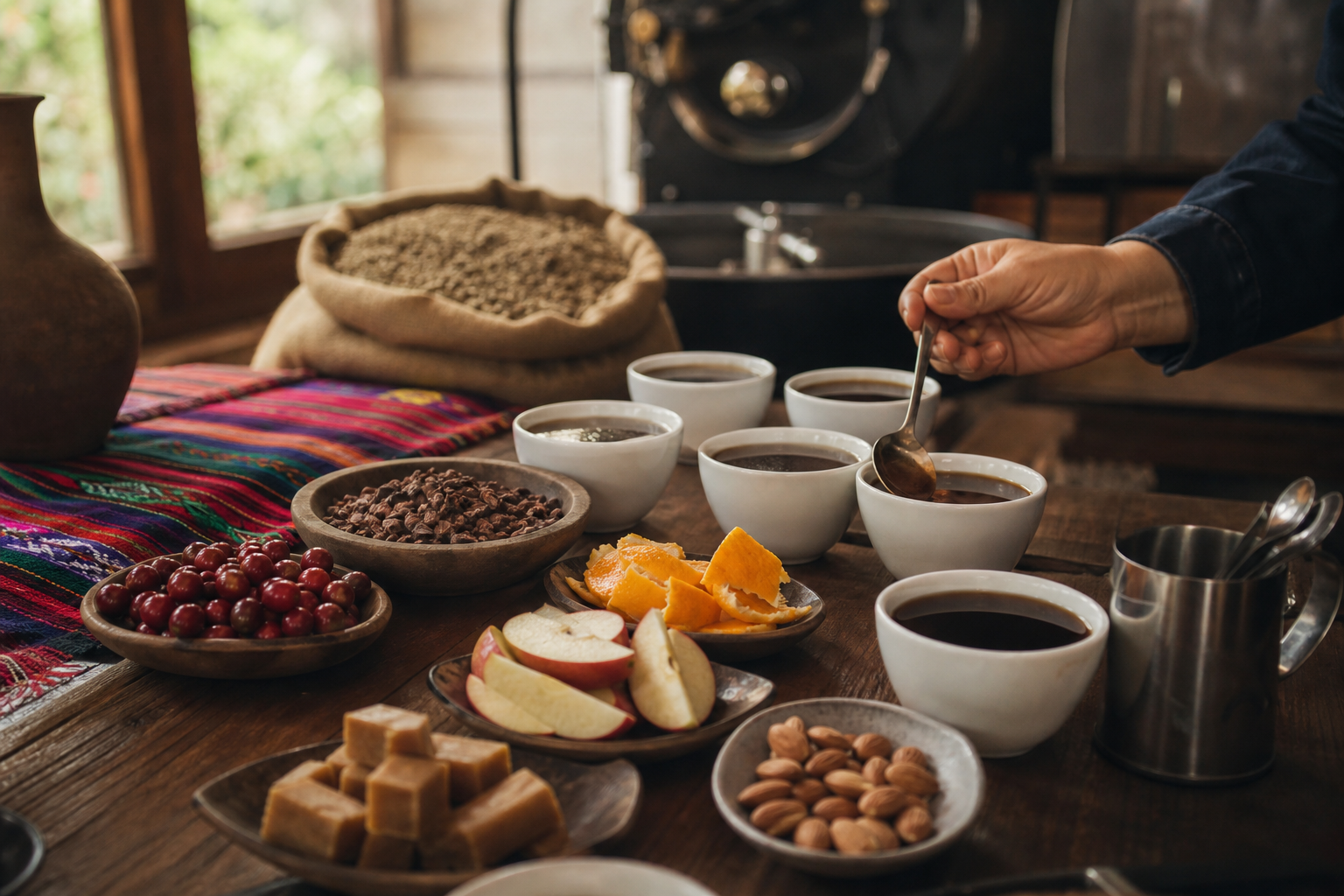
A good bag of Guatemalan coffee often sounds delicious before you even open it: milk chocolate, orange, red apple, panela, almond, plum, baking spice. Those notes are part of what makes Guatemala so loved in specialty coffee. But they can also be confusing. Are you supposed to taste an actual orange? Is “chocolate” a flavour, an aroma, or just a roaster trying to sound poetic?
The short answer: tasting notes are guideposts, not ingredients. They describe the flavours, aromas, texture, and aftertaste that trained tasters notice in coffee. For international drinkers exploring single-origin coffee in the US, UK, Europe, and beyond, Guatemalan coffee is one of the most rewarding origins to learn with because it is expressive without being intimidating. It often has enough sweetness and body to feel familiar, while still giving you the fruit, acidity, and regional detail that make specialty coffee exciting.
If you have brewed a cup and wondered whether you are “getting it,” this guide is for you. We will unpack the common tasting notes in Guatemalan coffee, explain the specialist language in plain English, compare Guatemala with origins such as Ethiopia, Colombia, and Kenya, and give you a practical tasting method you can use at home.
Quick answer: what does Guatemalan coffee taste like?
Guatemalan coffee is usually known for balanced sweetness, medium-to-full body, clean acidity, and flavour notes such as cocoa, caramel, orange, red apple, stone fruit, almond, and gentle spice. In plain English, many Guatemalan coffees taste sweet and structured rather than thin or sharp.
The exact cup depends on region, variety, process, roast, and brew method. A washed Huehuetenango may taste bright and citrusy, while an Antigua or Acatenango coffee may feel deeper, with chocolate, spice, and a rounded finish. That balance is why Guatemalan coffee works so well for pour-over coffee, espresso, and everyday filter brewing.
Why tasting notes matter in specialty coffee
In third-wave coffee culture, tasting notes do more than decorate a bag. They help buyers, cafés, home brewers, and roasters talk about quality with more precision. Instead of saying a coffee is simply “strong” or “mild,” we can describe sweetness, acidity, body, aroma, and finish.
Here are a few terms worth demystifying:
- Acidity means brightness or liveliness, not stomach acid. Think orange, apple, grape, or currant rather than vinegar.
- Body means texture: how heavy, creamy, tea-like, or syrupy the coffee feels in your mouth.
- Sweetness is the impression of sugar-like roundness. Coffee has almost no sugar after brewing, but it can remind you of caramel, honey, fruit, or chocolate.
- Finish is what stays after you swallow: clean citrus, cocoa dryness, spice, fruit, or roastiness.
- Process means how the coffee cherry was handled after harvest. Washed coffees are usually clean and precise; natural coffees can taste fruitier and heavier; honey-process coffees often sit between the two.
For Guatemalan coffee, tasting notes are especially useful because the origin is not one-dimensional. Guatemala is often described as balanced, but balance does not mean boring. It means the cup can hold several ideas at once: cocoa and citrus, sweetness and structure, comfort and complexity.
The core flavour family of Guatemalan coffee
Most specialty Guatemalan coffee sits somewhere inside four overlapping flavour families. Not every coffee will show all of them, but learning these patterns makes the origin easier to understand.
| Flavour family | Common notes | What it feels like in the cup |
|---|---|---|
| Chocolate and sugar | Cocoa, milk chocolate, caramel, panela, brown sugar | Sweet, rounded, comforting, often with a clean finish |
| Fruit and citrus | Orange, red apple, plum, peach, cherry, grape | Bright but usually controlled; more juicy than sour when brewed well |
| Nuts and spice | Almond, hazelnut, cinnamon, baking spice | Adds depth and warmth, especially in medium roasts |
| Floral or herbal detail | Light florals, fresh herbs, tea-like hints | More subtle than Ethiopia, but present in some high-grown lots |
If a roaster lists “cocoa, orange, and red apple,” try not to search for three separate flavours at once. Taste the coffee in stages. The aroma may suggest cocoa. The first sip may feel like red apple. The finish may leave orange peel or brown sugar. Tasting notes are often a sequence, not a single moment.
Guatemala compared with Ethiopia, Colombia, and Kenya
Useful comparisons help you buy better coffee. If Ethiopia, Colombia, and Kenya are already familiar names to you, Guatemala can be placed between them in a practical way.
Ethiopian coffee is often prized for floral aromatics, tea-like body, jasmine, bergamot, and berry notes. It can be dazzling in pour-over, especially for drinkers who enjoy fragrance and delicacy. Guatemalan coffee is usually less floral, but often fuller and more grounded, with chocolate and citrus in better balance.
Colombian coffee can share Guatemala’s caramel sweetness and everyday versatility. Many Colombian lots are friendly, rounded, and easy to brew. Guatemala often brings a slightly more cocoa-spice profile, with highland structure and a crisp finish that feels particularly good in filter coffee and espresso.
Kenyan coffee is famous for blackcurrant, grapefruit, wine-like acidity, and intensity. It can be thrilling, but not always gentle. Guatemala rarely has that same electric acidity. Instead, it often gives you a calmer style of brightness: orange, apple, plum, or mild tropical fruit supported by sweetness.
That is why Guatemalan coffee is a smart origin for people moving from classic café flavours into single-origin coffee. It offers enough familiarity to be welcoming and enough detail to reward careful tasting.
How the coffee regions of Guatemala shape flavour
Guatemala’s coffee regions are shaped by altitude, rainfall, soil, temperature, and local farming traditions. Anacafé, Guatemala’s national coffee association, describes several recognized regional identities through the country’s origin program, including Antigua, Huehuetenango, Acatenango, Atitlán, Cobán, Fraijanes, Oriente, and San Marcos (Anacafé and Guatemalan Coffees).
For drinkers, the most important point is not to memorize every region. It is to understand why regional context matters.
Huehuetenango is often associated with high elevation, crisp acidity, fruit clarity, and sweetness. A good washed Huehuetenango can be excellent as pour-over coffee because it gives structure without losing brightness.
Antigua is widely known for coffees with chocolate, spice, and a composed acidity. If you like cups that feel classic but refined, Antigua is an easy region to love.
Acatenango can show a beautiful mix of cocoa, citrus, stone fruit, and volcanic-soil depth. It is a strong choice for drinkers who want Guatemalan character without sacrificing clarity.
Atitlán coffees often bring lively acidity, fruit, and a sense of freshness, shaped by the lake environment and surrounding highlands.
Cobán tends to be influenced by cloudier, wetter conditions, which can produce softer, more aromatic coffees with a different kind of delicacy.
These are helpful tendencies, not rigid rules. Farm, harvest, process, and roast can change the cup as much as the region. But when you see region information on a bag, it gives you a clue about what to look for.
For a broader introduction to Kapalaj’s relationship with Guatemala, you can explore our origin story at Kapalaj Origin.
A practical home tasting method for Guatemalan coffee
You do not need a professional cupping lab to taste better. You need consistency, curiosity, and a simple way to compare what you are drinking.
Try this method with a Guatemalan single-origin coffee:
- Smell the dry grounds. Before brewing, notice whether the aroma leans cocoa, nutty, fruity, floral, or spicy.
- Brew cleanly. For pour-over, start with 15 g coffee to 250 g water, medium grind, and water just off the boil. Aim for a total brew time around 2:45–3:30, then adjust by taste.
- Taste hot, warm, and cool. Coffee changes as it cools. Chocolate and body often show early; fruit and acidity become clearer as the cup warms down.
- Use reference foods. Smell orange peel, red apple, cocoa nibs, brown sugar, or almonds beside the cup. You are training memory, not cheating.
- Write one sentence. Avoid long tasting essays. Try: “Sweet cocoa aroma, orange-like brightness, medium body, clean brown-sugar finish.”
If the cup tastes sharp and thin, your brew may be under-extracted, meaning the water did not dissolve enough flavour from the grounds. Grind slightly finer, brew a little longer, or use hotter water. If it tastes dry, bitter, or hollow, it may be over-extracted or roasted darker than you prefer; grind coarser or shorten the brew.
Buying guide: how to choose Guatemalan coffee by tasting notes
When shopping for Guatemalan coffee online or in a specialty café, read the label like a brewer.
Choose cocoa, caramel, almond, and spice notes if you want a comforting daily cup, espresso-friendly sweetness, or coffee that pairs well with breakfast and milk.
Choose orange, apple, plum, cherry, or stone fruit notes if you want a brighter single-origin coffee for pour-over or batch brew.
Choose natural or honey-process Guatemalan coffees if you enjoy more fruit, sweetness, and texture. Choose washed coffees if you prefer clarity, clean acidity, and a more transparent view of the region.
Choose light to light-medium roasts for more origin detail. Choose medium roasts when you want more chocolate, body, and approachability. Very dark roasts can be enjoyable, but they usually make origin differences harder to taste.
If you want to compare options, browse Kapalaj coffees and look at the flavour notes before choosing the brew method. If espresso is your focus, our guide to Guatemalan coffee for espresso goes deeper into dialing in sweetness and structure.
What to pair with Guatemalan coffee
Because Guatemalan coffee often combines chocolate sweetness with citrus or fruit brightness, it pairs beautifully with food. Try it with almond croissants, dark chocolate, banana bread, orange cake, cinnamon buns, or aged cheese. For a lighter washed coffee, fruit tarts and butter pastries can highlight the acidity. For a deeper, cocoa-driven lot, chocolate desserts and toasted nuts are natural partners.
The goal is not to make coffee complicated. It is to notice how flavour works. A cup with orange-like acidity can make a pastry taste brighter. A coffee with cocoa and spice can make chocolate feel deeper. This is the same thinking used by good cafés, restaurants, and hotels when they choose coffees for a menu.
FAQ: Guatemalan coffee tasting notes
Is Guatemalan coffee fruity or chocolatey?
It can be both. Many Guatemalan coffees combine chocolate, caramel, or brown sugar notes with fruit notes such as orange, apple, plum, or cherry. The balance depends on region, process, roast, and brewing.
Is Guatemalan coffee good for pour-over coffee?
Yes. Guatemalan coffee is excellent for pour-over because it often has clean sweetness, medium body, and enough acidity to stay lively. Washed coffees from Huehuetenango, Acatenango, Antigua, or Atitlán can be especially rewarding.
What makes Guatemalan coffee different from Colombian coffee?
Both origins can be sweet and balanced, but Guatemalan coffee often leans toward cocoa, citrus, spice, and highland structure. Colombian coffee is extremely diverse, though many lots taste rounded, caramel-like, and broadly approachable.
What does “single-origin Guatemalan coffee” mean?
Single-origin coffee means the coffee comes from one identifiable origin rather than being blended from many places. It may refer to one country, region, cooperative, farm, or lot. The more specific the traceability, the easier it is to connect flavour with place and producer.
Why do my tasting notes not match the bag?
Your water, grinder, recipe, cup temperature, and palate all affect what you taste. Use the notes as a direction, not a test. If the bag says orange and cocoa, ask whether the cup feels bright and sweet; you do not need to identify the exact same words every time.
Taste Guatemala with more confidence
Learning Guatemalan coffee tasting notes is really learning how to listen to a cup: sweetness first, then acidity, body, aroma, and finish. Once you understand that language, every brew becomes more useful, whether you are choosing beans for home, building a café menu, or comparing Guatemala with other specialty coffee origins.
Explore Kapalaj’s Guatemalan coffees and choose a bag by the flavour notes you want to learn next—cocoa and caramel, citrus and apple, or a bright single-origin cup that shows Guatemala’s origin character clearly.