
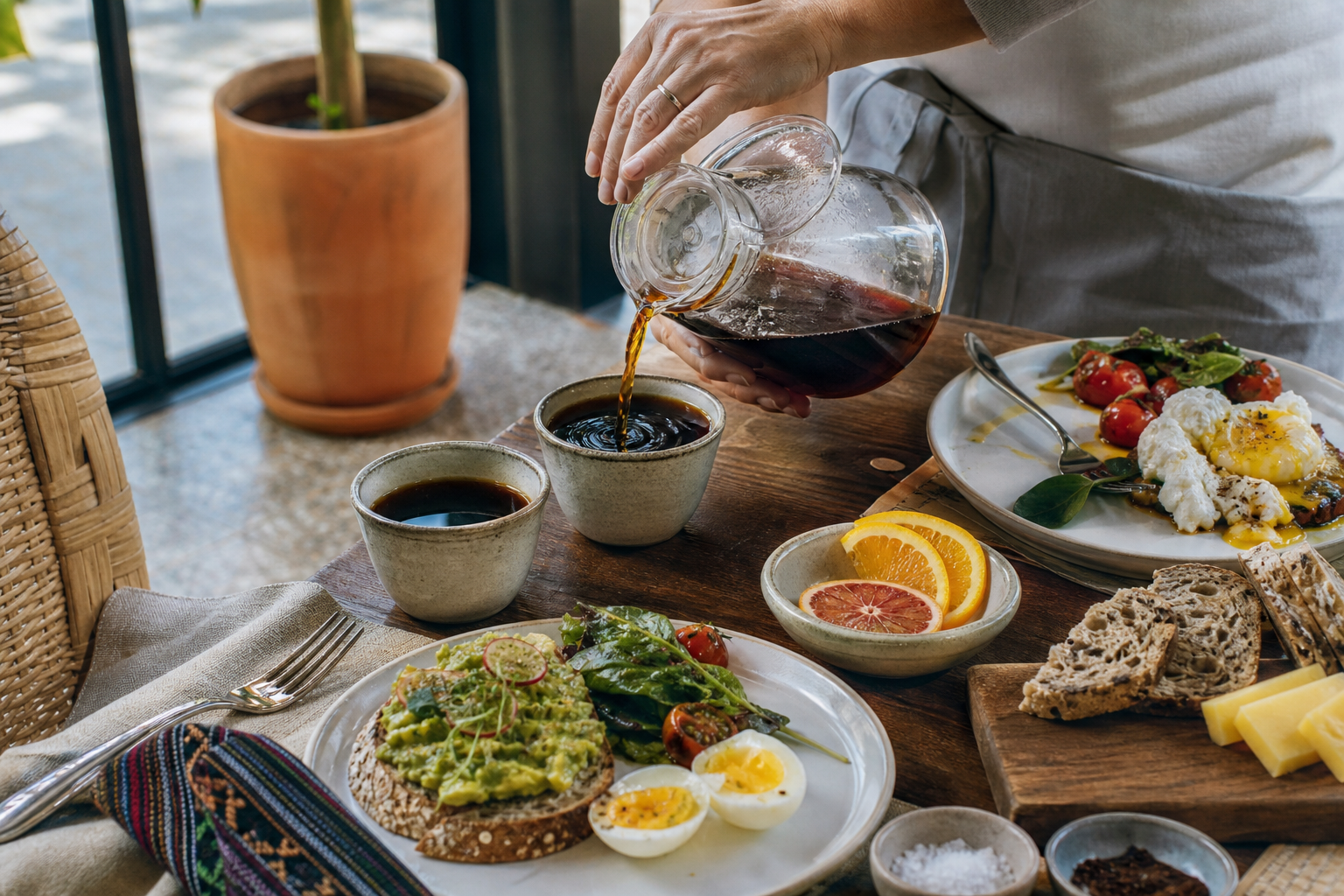
Coffee for Savory Brunch: How Guatemalan Coffee Balances Eggs, Avocado, and Weekend Food
July 23, 2026 · 12 min read
Brunch is a hard coffee test. Dessert is easy: chocolate, caramel, cream, and pastry already speak the language of roasted sweetness. Savory food is less forgiving. Eggs can make coffee taste metallic. Avocado can flatten acidity. Smoked fish, cheese, tomatoes, sourdough, and herbs can push a delicate cup into the background or make a dark roast feel heavy.
A well-chosen Guatemalan coffee has the structure many savory pairings need: enough sweetness to stay round, enough acidity to cut through fat, and enough body to feel satisfying beside food. For international specialty coffee drinkers in the US, UK, EU, and Nordic markets, it can be a practical bridge between origin-led coffee and the way people actually eat on weekends, in cafés, in hotels, and at home.
Quick answer: is Guatemalan coffee good with savory brunch?
Yes. Guatemalan coffee is often excellent with savory brunch because many lots combine cocoa-like sweetness, citrus or apple-like brightness, and a clean finish. That balance helps the coffee stand up to eggs, avocado, cheese, tomatoes, seeded bread, and lightly spiced dishes without tasting bitter or thin.
If you are choosing one single-origin coffee for a brunch table, look for Guatemalan coffee with tasting notes such as milk chocolate, caramel, orange, red apple, toasted nuts, brown sugar, or gentle spice. Brew it as clean filter coffee or a balanced batch brew rather than pushing it too dark, too strong, or too smoky.
Why brunch changes the coffee question
Third-wave coffee culture often teaches us to taste coffee on its own: black, clean, and carefully brewed. That helps us notice origin, processing, roast, acidity, sweetness, and mouthfeel. But most people drink coffee with breakfast, friends, a hotel buffet, a café plate, or a slow weekend table.
This matters commercially too. CBI describes Europe as a major coffee-consuming market where premiumisation, traceability, and specialty coffee experiences shape demand (CBI European coffee demand). CBI also links specialty coffee growth to coffee shops, differentiated taste profiles, and origin stories (CBI specialty coffee market potential).
Food service is part of that story. A café, hotel, office breakfast, or home brewer needs coffee that still tastes intentional when it meets butter, salt, herbs, acidity, fat, bread, and protein.
Guatemala is useful here because it is rarely a one-note origin. It can be comforting without being dull, bright without being sharp, and sweet without needing syrup.
The pairing logic: fat, salt, acid, and sweetness
You do not need sommelier language to pair coffee with food. Start with four simple forces.
Fat softens and coats the palate. Eggs, avocado, cheese, butter, olive oil, and smoked fish all add fat. Coffee needs enough acidity and clarity to refresh the mouth after those foods.
Salt makes sweetness more noticeable, but it can also make bitterness feel harsher. A clean Guatemalan filter coffee with caramel, chocolate, citrus, or red apple notes usually handles salt better than an aggressively dark roast.
Acid appears in tomatoes, citrus, pickles, fermented bread, yogurt, and some hot sauces. If the food is already acidic, you do not always want the sharpest possible coffee. You want brightness with sweetness behind it.
Sweetness is the bridge. Coffee does not contain sugar in the way juice does, but a good roast and brew can taste sweet: brown sugar, ripe fruit, milk chocolate, honey, or toasted nuts. Sweetness lets savory food and coffee meet rather than fight.
This is why Guatemalan coffee can be so versatile. Compared with many Ethiopian coffees, it is often less floral and tea-like, which can make it easier with eggs and cheese. Compared with classic Kenyan profiles, it is usually less sharply blackcurrant-like and high-acid. Compared with Brazil, it often has more lift and origin detail. Compared with Colombia, it may sit in a similar comfort zone, but with Guatemala’s own mix of cocoa, citrus, spice, and highland structure.
What makes Guatemala especially useful at the brunch table
Guatemala has several recognised coffee-growing regions, each shaped by altitude, microclimate, soil, rainfall, varieties, and local processing traditions. Guatemalan Coffees, the origin platform associated with Anacafé, highlights regions including Antigua Coffee, Highland Huehue, Acatenango Valley, Traditional Atitlán, Rainforest Cobán, Fraijanes Plateau, New Oriente, and Volcanic San Marcos (Guatemalan Coffees regions and profiles).
For pairing, the important point is not to memorise every region. It is to understand the range.
Antigua- and Acatenango-style profiles can be excellent when you want structure, chocolate, spice, and a composed finish. Huehuetenango-style coffees can bring more fruit clarity and lively acidity. Atitlán, Fraijanes, San Marcos, Cobán, and other profiles vary widely, but the best lots often show the clean sweetness and layered acidity that make specialty coffee interesting with food.
Plain English version: Guatemala gives you options without forcing you into extremes. You can serve one coffee to a table of people who eat differently and still have the cup make sense.
A practical savory brunch pairing guide
Use this as a starting point. It is not a rulebook; it is a way to think before you brew.
| Brunch food | Choose Guatemalan coffee with... | Why it works |
|---|---|---|
| Soft eggs, omelette, or scrambled eggs | Milk chocolate, caramel, toasted nuts, low bitterness | Eggs can exaggerate metallic or burnt notes, so sweetness and a clean finish matter |
| Avocado toast | Citrus, red apple, brown sugar, medium body | Acidity lifts the richness while sweetness keeps the cup from feeling sour |
| Tomatoes, herbs, or shakshuka-style dishes | Orange, red fruit, spice, clean acidity | The coffee should meet the food’s brightness without becoming harsh |
| Sourdough, rye, or seeded bread | Cocoa, nuts, molasses, gentle spice | Toasted grain flavours echo roast sweetness and make the cup feel deeper |
| Mild cheese or buttered toast | Caramel, hazelnut, apple, rounded body | Fat needs a coffee that refreshes but does not dominate |
| Smoked fish or salty brunch plates | Clean washed profile, citrus peel, cocoa, structured finish | Clean acidity cuts through salt and smoke better than heavy roast bitterness |
| Fruit, yogurt, or granola on the side | Apple, citrus, honey, floral hints if balanced | A brighter lot can connect with fruit while still serving the savory plate |
If the table has both sweet and savory food, choose the middle: washed or honey-processed Guatemalan coffee with cocoa, citrus, apple, caramel, and a light-medium to medium roast. Extremely floral coffees may disappear beside eggs and cheese. Very dark roasts may dominate the table and make fresh ingredients taste less vivid.
Brew method: keep it clean, not weak
For brunch, the best coffee is usually clean enough to refresh the palate and strong enough to be noticed.
Pour-over coffee can be beautiful, especially if you are serving two or three people and want clarity. But brunch service often rewards repeatability. A good batch brew, automatic filter brewer, or carefully made French press can be more relaxed and more hospitable than one person standing over a kettle while the food gets cold.
The Specialty Coffee Association publishes standards and protocols that help the coffee world use shared language around brewing, cupping, green coffee, and evaluation (SCA coffee standards). At home, you do not need to turn brunch into a lab. But borrowing one professional habit helps: control your recipe.
A reliable starting point for Guatemalan brunch coffee:
- Coffee: 60 grams per litre of water, or 30 grams for 500 ml
- Grind: medium for filter; slightly coarser if the cup is bitter
- Water: fresh, clean-tasting water, not heavily chlorinated
- Brew target: sweet, clear, medium-bodied, and easy to drink black
- Serve: in smaller cups or warm mugs so people can refill while the food is warm
If the coffee tastes sharp beside food, choose a rounder coffee or slightly reduce brew strength. If it tastes bitter, grind coarser, shorten contact time, or check that the roast is not too dark for the food.
Washed, honey, or natural: what works with savory food?
Processing describes what happens to the coffee cherry after harvest.
Washed coffee means the fruit is removed before drying. Washed Guatemalan coffee often tastes clean, structured, and transparent. For savory brunch, this is usually the safest choice because the cup stays refreshing with eggs, cheese, toast, and vegetables.
Honey-processed coffee means some sticky fruit layer remains on the seed during drying. It can add body, sweetness, and fruit depth. A honey-processed Guatemalan coffee can be excellent with brunch if the fruit character is ripe and controlled.
Natural coffee dries with the fruit still around the seed. Natural lots can be exciting, with berry or tropical notes, but they can also feel too heavy beside savory food. Use them when the menu has fruit, yogurt, pancakes, or sweet-spicy dishes.
For Kapalaj’s editorial perspective, washed or clean honey-processed Guatemalan coffee is the most useful brunch starting point. It keeps the origin readable and the table balanced.
How cafés, hotels, and home hosts can use this
If you run a café or hospitality service, savory brunch is a chance to make specialty coffee feel less intimidating. Instead of saying only “single-origin Guatemala,” connect the coffee to the plate.
Try menu language like:
Guatemalan filter coffee with cocoa, citrus, and red apple notes — chosen to stay clean and sweet with eggs, avocado, cheese, and sourdough.
That single sentence does three things. It names the origin. It gives the guest sensory expectations. And it explains why the coffee belongs with the food.
Hotels can use a similar logic at breakfast. Many premium hotel breakfasts still serve coffee as an afterthought: hot, dark, and anonymous. A traceable Guatemalan batch brew can make the service feel more considered without requiring every guest to become a coffee expert.
Home brewers can do the same thing more simply: choose one balanced bag, brew enough for the table, and taste the coffee once with the food. Notice whether the cup feels sweeter, sharper, heavier, or cleaner. That is how pairing skill builds.
If you want to explore the origin more deeply, Kapalaj’s Guatemala origin page gives context on the country, growing regions, and why traceability matters. If you are choosing beans for home brewing or a shared table, start with Kapalaj’s single-origin coffee selection.
A concrete takeaway: the two-sip brunch test
Here is the easiest way to learn whether your coffee works with savory food.
First, sip the coffee on its own. Ask: does it taste sweet, bitter, sharp, flat, or balanced?
Then take one bite of the richest food on the table — egg yolk, avocado, cheese, buttered toast, or smoked fish — and sip again.
If the coffee becomes sweeter and cleaner, the pairing is working. If it turns metallic, burnt, or hollow, the roast may be too dark, the brew may be over-extracted, or the coffee may be too delicate for the plate. If the food makes the coffee taste sour, choose a sweeter profile or brew with slightly more body next time.
This small test is more useful than memorising pairing rules. It teaches your palate what balance feels like in real life.
FAQ: Guatemalan coffee and savory food pairing
What foods pair best with Guatemalan coffee?
Guatemalan coffee often pairs well with eggs, avocado toast, sourdough, mild cheese, roasted tomatoes, nuts, dark chocolate, and citrus-led dishes. For savory brunch, look for coffees with cocoa, caramel, apple, orange, nut, or gentle spice notes.
Is Guatemalan coffee better with sweet or savory brunch?
It can work with both. Sweet brunch highlights chocolate, caramel, and fruit notes, while savory brunch shows whether the coffee has balance, clarity, and enough acidity to refresh the palate. Washed Guatemalan coffee is especially useful when the table includes savory food.
Should I brew Guatemalan coffee as pour-over coffee for brunch?
Pour-over coffee is excellent when you want clarity and are serving a small group. For a larger table, a clean batch brew or automatic filter brewer may be better because it is consistent, warm, and easier to share.
Which Guatemalan coffee region is best for food pairing?
There is no single best region. Antigua and Acatenango-style coffees often work well with richer foods because of chocolate, spice, and structure. Huehuetenango-style coffees can be excellent when you want more fruit clarity and lift.
Does milk coffee work with savory brunch too?
Yes, especially with eggs, bread, and cheese. But if the meal already includes a lot of fat, black filter coffee can feel cleaner and more refreshing. If you prefer milk drinks, choose Guatemalan coffee with cocoa, caramel, nuts, and enough body.
Bring Guatemala to the weekend table
Savory brunch asks coffee to do more than smell good in the cup. It has to work with real food, real people, and real service. Guatemalan coffee is one of the most reliable specialty origins for that job because it brings sweetness, structure, acidity, and comfort without losing origin character.
Next time you plan a weekend table, choose coffee the way you choose bread, cheese, citrus, or eggs: with purpose.
Explore Kapalaj’s Guatemalan single-origin coffees, or contact Kapalaj for help choosing a balanced coffee for brunch, hospitality service, or your next shared table.