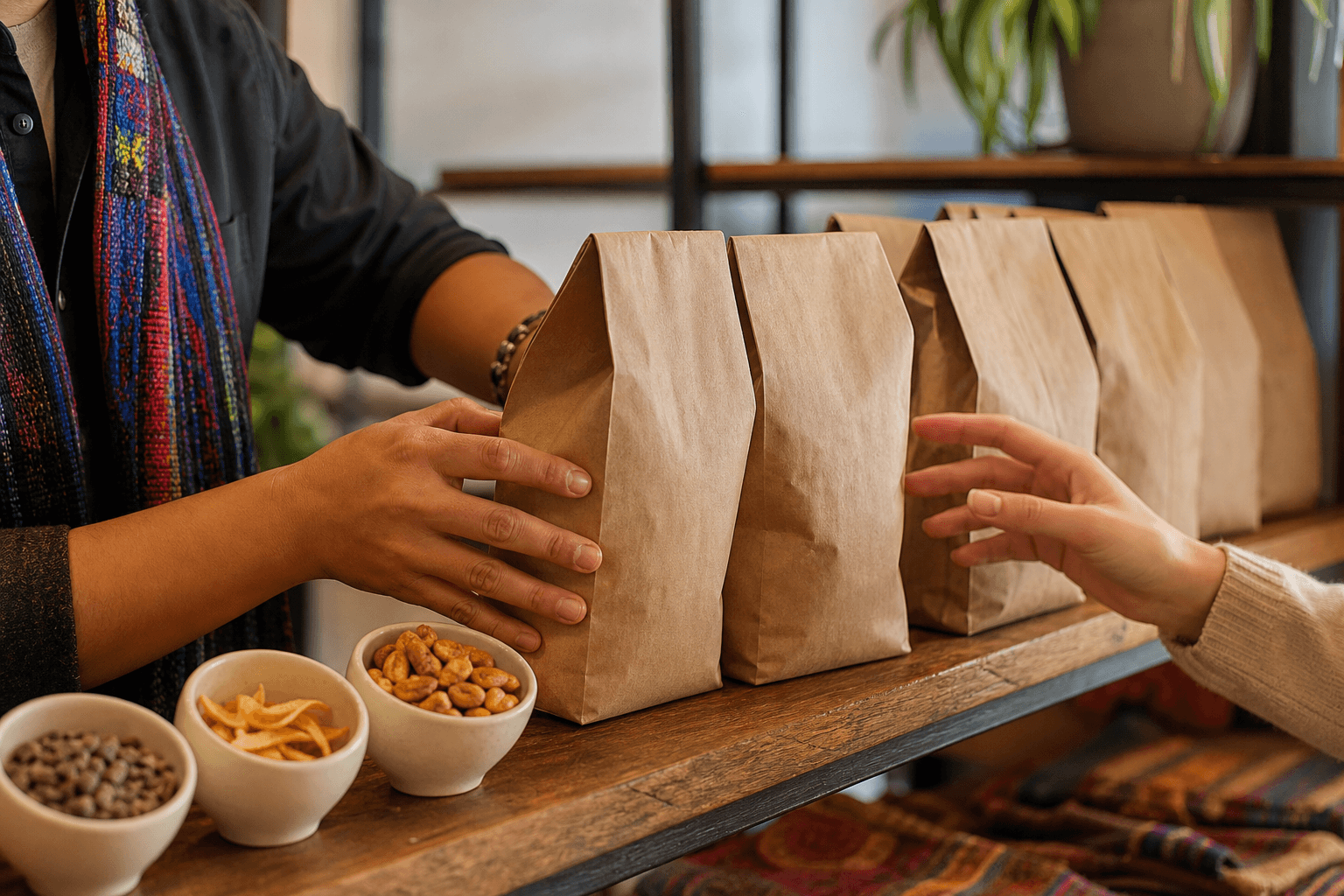
A customer standing in front of a specialty coffee shelf is rarely asking only, “Which bag is best?” More often, they are trying to solve a quieter problem: Will I like this at home? Will it work with my brewer? Is it worth paying more than the supermarket bag? That is where Guatemalan coffee gives retailers, cafés, hotel shops, and coffee educators a useful advantage.
Guatemala is familiar enough to feel safe, but layered enough to teach. It can offer cocoa sweetness, citrus lift, stone-fruit softness, spice, and a clean highland structure without forcing the customer into extreme acidity or experimental processing on their first step into single-origin coffee. For international specialty coffee drinkers in the US, UK, EU, and Nordic markets, that balance makes Guatemala one of the strongest origins for retail storytelling: not because it needs a long speech, but because it can be explained clearly in thirty seconds.
Quick answer: how should retailers explain Guatemalan coffee?
Retailers should describe Guatemalan coffee as a traceable, highland single-origin coffee that often combines chocolate-like sweetness with bright fruit, a rounded body, and a clean finish. In plain language: it is a good choice for customers who want specialty coffee that tastes distinctive but still feels balanced and brewable at home. The most useful retail conversation connects origin, roast, process, and brew method to the customer’s actual habit.
Instead of saying “complex acidity” and watching eyes glaze over, say: “If you like coffee with cocoa sweetness, a little orange or apple brightness, and enough structure for filter or espresso, this is a strong place to start.”
Why this matters on the modern specialty shelf
Specialty coffee has moved from niche roaster counters into grocery stores, design hotels, office kitchens, subscription boxes, and high-end food retail. That is good news, but it also creates a communication problem. A wall of beautiful bags can be intimidating if the customer does not know how to translate region names, process terms, roast levels, or tasting notes into a cup they will enjoy.
European market research from CBI notes that Europe remains a major coffee market and that value growth is connected with premiumisation — people paying more for quality, story, and differentiation rather than simply more volume (CBI European coffee demand). CBI’s specialty coffee analysis also highlights traceability, transparency, and origin storytelling as important parts of the specialty segment (CBI specialty coffee market potential).
That does not mean every customer wants a lecture. It means retail teams need short, accurate explanations that build confidence.
The retail sentence that works
Here is a simple shelf-to-counter sentence:
“This Guatemalan coffee is for someone who wants a sweet, clean single-origin cup — think cocoa, citrus, and gentle fruit — with enough balance for everyday brewing.”
That sentence does four things. It names the origin. It gives sensory clues. It sets an expectation of balance. And it tells the customer how the coffee fits into daily life.
You can then adjust the conversation depending on the buyer:
Swipe the table sideways to see all columns.
| Customer question | Useful retail answer |
|---|---|
| “Is it fruity?” | “Yes, but usually in a balanced way: more orange, apple, or stone fruit than intense berry or floral notes.” |
| “Is it strong?” | “Strength comes from recipe and dose. This origin is often rich and structured, so it can taste satisfying without being roasted very dark.” |
| “Will it work for espresso?” | “Many Guatemalan coffees do, especially if the roast is developed for sweetness and body. Expect chocolate, caramel, and citrus rather than a very floral shot.” |
| “Is it good for pour-over?” | “Yes. A pour-over coffee recipe can show the clean finish and fruit notes clearly, especially with a medium-fine grind and good water.” |
| “Why is it more expensive?” | “You are paying for traceability, careful picking and processing, smaller lots, and a clearer connection to origin — not just caffeine.” |
This is where retailers earn trust. The goal is not to impress the customer with vocabulary. The goal is to help them make a better choice.
Guatemala as a bridge between familiar and adventurous
A good specialty shelf usually includes different origin personalities. Ethiopian coffees may lead with florals, bergamot, jasmine, peach, or tea-like delicacy. Kenyan coffees often bring blackcurrant-like acidity, grapefruit, tomato-leaf complexity, or a very bright structure. Brazilian coffees commonly offer nut, chocolate, lower acidity, and a comforting base for espresso blends. Colombian coffees can span caramel sweetness, citrus, red fruit, and high-elevation clarity.
Guatemalan coffee sits in a useful middle lane. It can be more vivid than many classic chocolate-and-nut profiles, but less polarising than very floral or sharply acidic coffees. That makes it especially useful for customers who are ready to leave commodity coffee behind but do not yet know whether they like “funky,” “winey,” “anaerobic,” or “ultra-light” styles.
For a retailer, Guatemala can be the “confidence origin”: something special, but not strange.
Explain the regions without turning the shelf into a geography class
The coffee regions of Guatemala are one reason the origin is so useful. Guatemalan Coffees, the origin platform associated with Anacafé, presents regional profiles such as Antigua Coffee, Highland Huehue, Acatenango Valley, Traditional Atitlán, Rainforest Cobán, Fraijanes Plateau, New Oriente, and Volcanic San Marcos, and connects cup character to microclimate, varieties, and growing conditions (Guatemalan Coffees regions and profiles).
On a shelf, however, region detail should help the customer choose — not overwhelm them. Try translating regions into decision cues:
- Antigua: often a good cue for structure, sweetness, cocoa, spice, and classic balance.
- Huehuetenango: useful when a customer likes brighter fruit, elegant acidity, and a lifted finish.
- Acatenango or Atitlán: good entry points for customers interested in volcanic highland character, sweetness, and layered acidity.
- Cobán: worth explaining when the coffee has a softer, humid-climate profile or a distinctive aromatic character.
These are not guarantees. Coffee is shaped by variety, farm, altitude, harvest, processing, roasting, and brewing. Region names work best as honest clues: “This is the direction of the cup,” not “This region always tastes exactly like this.”
If customers want to go deeper, point them to Kapalaj’s Guatemala origin guide, which gives the broader context behind region, producer, and landscape.
Make traceability feel practical, not moralistic
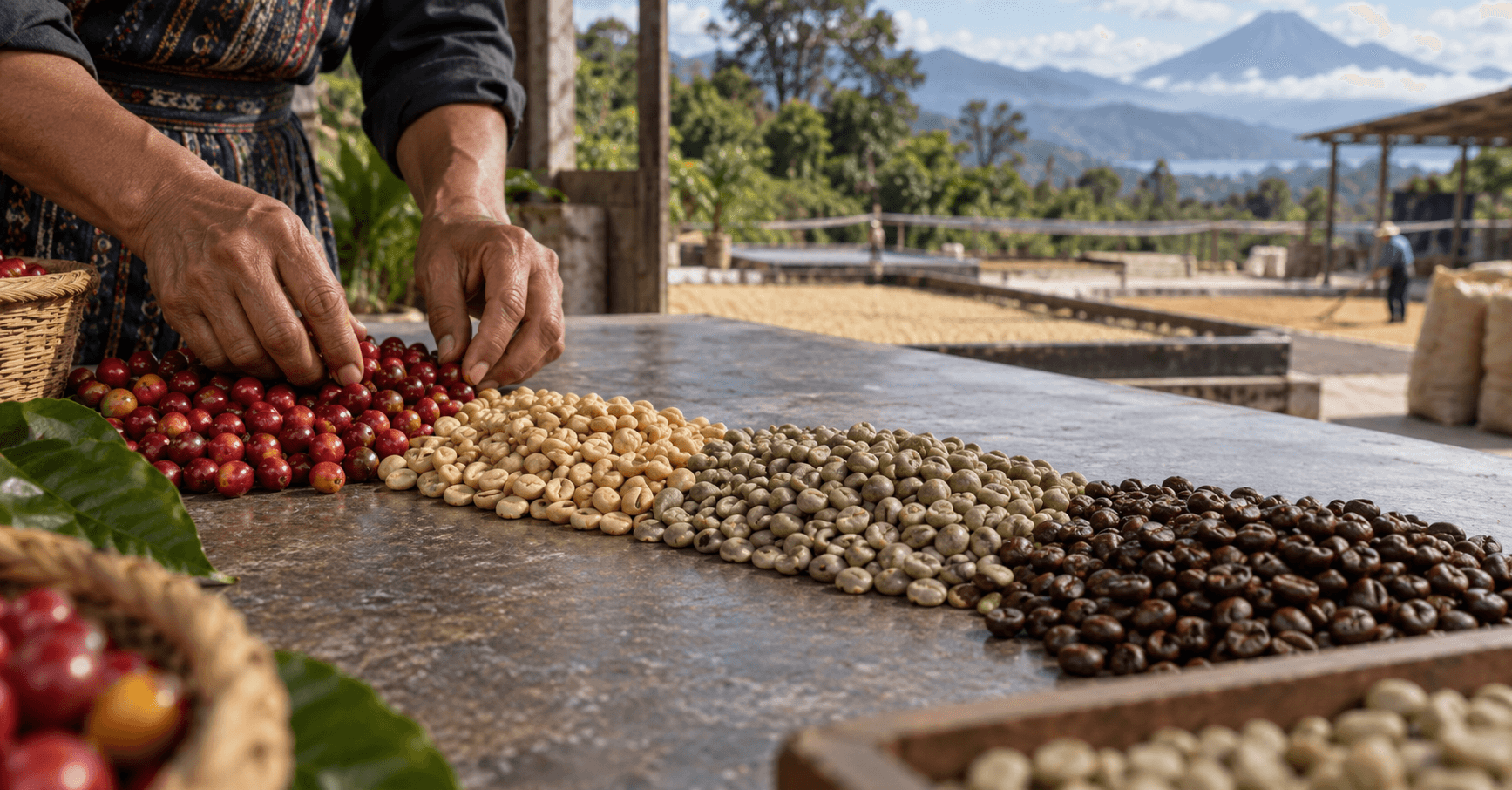
Traceability is one of the most important words in specialty coffee, but it can sound abstract. In plain English, traceability means the coffee can be followed more clearly back to where it was grown, processed, exported, roasted, or selected. It gives buyers more information than a generic country label.
For the customer, the practical value is simple: traceability helps them repeat what they like. If they enjoy a washed Guatemalan coffee from Huehuetenango with orange and cacao notes, they can look for similar clues next time. If they prefer a rounder Antigua-style profile, they can remember that too.
A good retail line is: “Traceable does not automatically mean better, but it gives us more clues — and better clues help you buy coffee you actually enjoy.”
For customers ready to shop, Kapalaj’s single-origin coffee selection is designed around that kind of origin-first choice.
Use tasting notes as a compass, not a promise
Tasting notes can be one of the most helpful tools on a coffee bag, and one of the easiest to misunderstand. When a bag says “cacao, orange, red apple,” it does not mean flavouring has been added. It means the coffee naturally reminds the taster of those foods.
Retailers should explain tasting notes as a compass. They point in a direction.
- Chocolate, cacao, caramel: expect sweetness, roast depth, and a comforting base.
- Orange, apple, citrus: expect brightness or acidity. In coffee, acidity means liveliness, not sourness.
- Stone fruit or red fruit: expect a softer fruit impression, sometimes more aromatic or juicy.
- Spice: expect warmth, structure, or a lingering finish.
- Clean finish: expect the cup to end clearly rather than feeling muddy or heavy.
This framing helps customers avoid disappointment. They are not buying an orange-flavoured drink. They are buying a coffee whose natural balance may remind them of cocoa and citrus when brewed well.
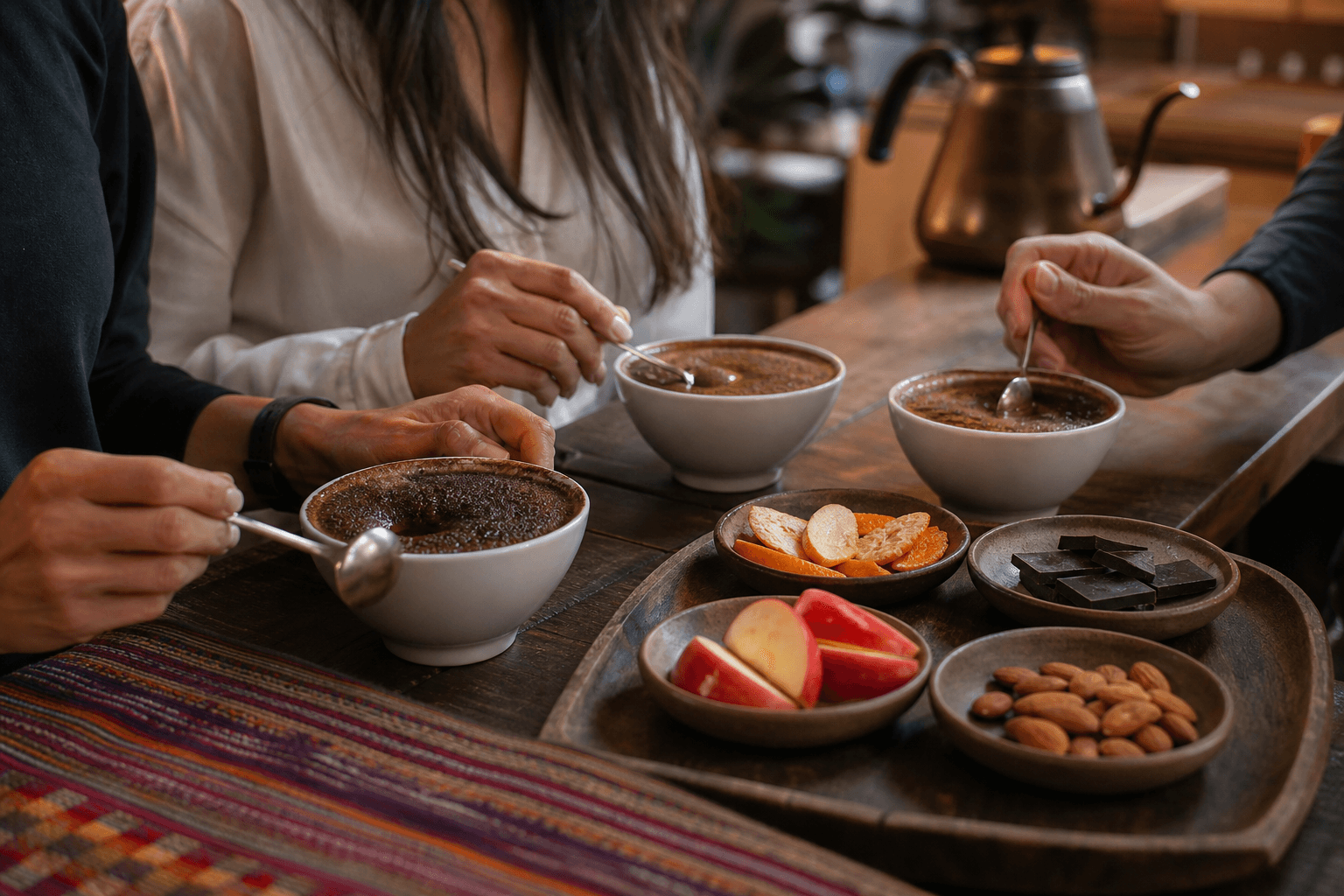
A simple staff tasting exercise
Retail teams sell better when they taste together. You do not need a formal lab. The Specialty Coffee Association publishes standards and protocols that help the industry evaluate coffee consistently (SCA coffee standards), but a retail team can use a simplified version for everyday training.
Try this 20-minute exercise before opening or during a quiet period:
- Brew one Guatemalan coffee and one contrasting origin, such as Ethiopia, Kenya, Colombia, or Brazil.
- Use the same brew ratio for both. For filter coffee, start around 60 grams of coffee per litre of water.
- Taste hot, warm, and cooler. Coffees often reveal sweetness and fruit more clearly as they cool.
- Ask each staff member for one texture word, one sweetness word, and one finish word.
- Turn those words into customer language.
For example, “medium body, cacao sweetness, orange finish” becomes: “This is a clean but comforting cup — sweet like cocoa, with a little citrus lift at the end.”
That is better retail language than “high-grown washed Arabica with complex acidity,” even if the technical statement is true.
How to match Guatemalan coffee to brew methods
Customers often shop by equipment. Meet them there.
For filter machines and batch brew: choose a balanced washed Guatemalan coffee with enough sweetness and body to hold up in a larger brew. This is useful for offices, hotel lounges, retail tasting stations, and homes where coffee is shared.
For pour-over coffee: recommend a coffee with clear acidity and a clean finish. A light-to-medium roast can show citrus, apple, florals, or layered sweetness more clearly. Encourage customers to grind fresh and avoid water that tastes flat or heavily chlorinated.
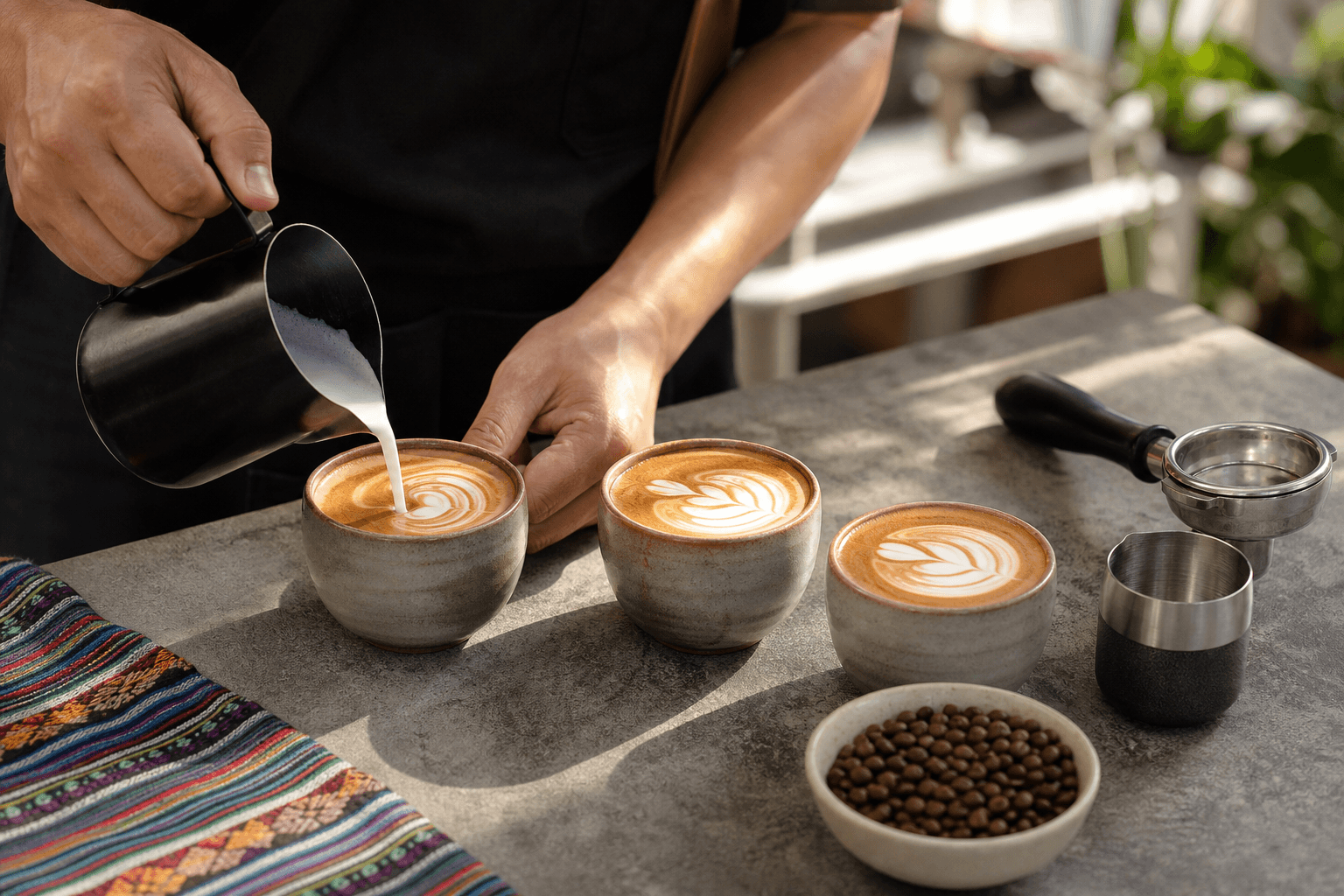
For espresso: look for sweetness, body, and roast development. Guatemalan coffee can be excellent in espresso when the shot is dialled for balance: not too sour, not too bitter, with chocolate and fruit working together.
For French press: choose a profile with rounded body and cocoa sweetness. Remind customers to grind coarse and decant after brewing so the cup does not become heavy or harsh.
For cold brew: Guatemala can work beautifully when the goal is sweetness without syrup. Chocolate, nut, and orange-peel notes often come through well in a slow extraction.
This brew-method framing is especially useful in third-wave retail because it respects both sides of the conversation: the customer’s practical setup and the coffee’s origin character.
What cafés, hotels, and offices can learn
Retail language also matters in B2B settings. A hotel breakfast menu, office coffee station, café retail shelf, or restaurant after-dinner service all need the same thing: specialty coffee that feels better, not more confusing.
A useful service note is simple: “A sweet highland coffee from Guatemala with cocoa, citrus, and a clean finish.” Buyers planning coffee for hospitality or teams can start with Kapalaj’s business coffee page.
The best retail story is specific, short, and true
The strongest way to sell Guatemalan coffee is not to claim it is universally the best. It is to explain why it fits a particular drinker.
For the customer who wants sweetness without a dark roast, Guatemala makes sense. For the customer who likes Colombia but wants a different highland profile, it is a natural comparison. For the customer who finds some Ethiopian coffees too floral or some Kenyan coffees too sharp, Guatemala can offer clarity with more comfort.
That is the retail opportunity. Not hype. Translation.
FAQ
Is Guatemalan coffee good for beginners in specialty coffee?
Yes. Many Guatemalan coffees balance sweetness, body, and brightness, which makes them approachable for people moving from supermarket coffee into specialty coffee.
What does Guatemalan coffee usually taste like?
Guatemalan coffee often shows cocoa, caramel, citrus, apple, stone fruit, spice, and a clean finish. The exact cup depends on region, variety, process, roast, freshness, and brewing method.
Is Guatemalan coffee better than Colombian coffee?
Not universally better — different. Colombian coffee can be very balanced and sweet, while Guatemalan coffee often brings highland structure, cocoa sweetness, citrus lift, and regional variety.
What should I ask before buying Guatemalan coffee?
Ask where it comes from, how it was processed, how it was roasted, what brew method it suits, and what tasting notes the seller actually tasted.
Can Guatemalan coffee work for both espresso and filter?
Yes, but roast style matters. A roast developed for espresso may emphasise chocolate, body, and sweetness, while a filter roast may highlight clarity, citrus, and fruit. Ask the retailer which brew method the coffee was roasted for.
Choose the bag you can explain
A specialty shelf should not make coffee feel harder to buy. It should make better coffee easier to understand. Guatemalan coffee gives retailers and drinkers a rare combination: origin depth, sensory clarity, and everyday brewability.
If you want to taste that balance for yourself, explore Kapalaj’s Guatemalan single-origin coffees and choose a bag that matches how you actually brew, drink, and share coffee.