You do not need a lab coat, a score sheet, or a competition table to taste coffee more clearly. You need a few bowls, hot water, a spoon, and the patience to compare one cup with another. That is why cupping — the simple tasting method used by roasters, buyers, producers, and educators — is one of the fastest ways to understand Guatemalan coffee at home.
For specialty coffee drinkers in the US, UK, EU, and Nordic markets, coffee has become more than a morning habit. People want to know where a coffee came from, why one single-origin coffee tastes like cocoa and orange while another tastes like blackcurrant or jasmine, and how to buy better beans without being buried in jargon. Cupping gives you a practical answer. It slows the coffee down just enough for you to taste origin, roast, freshness, and brewing potential side by side.
Quick answer: how do you cup Guatemalan coffee at home?
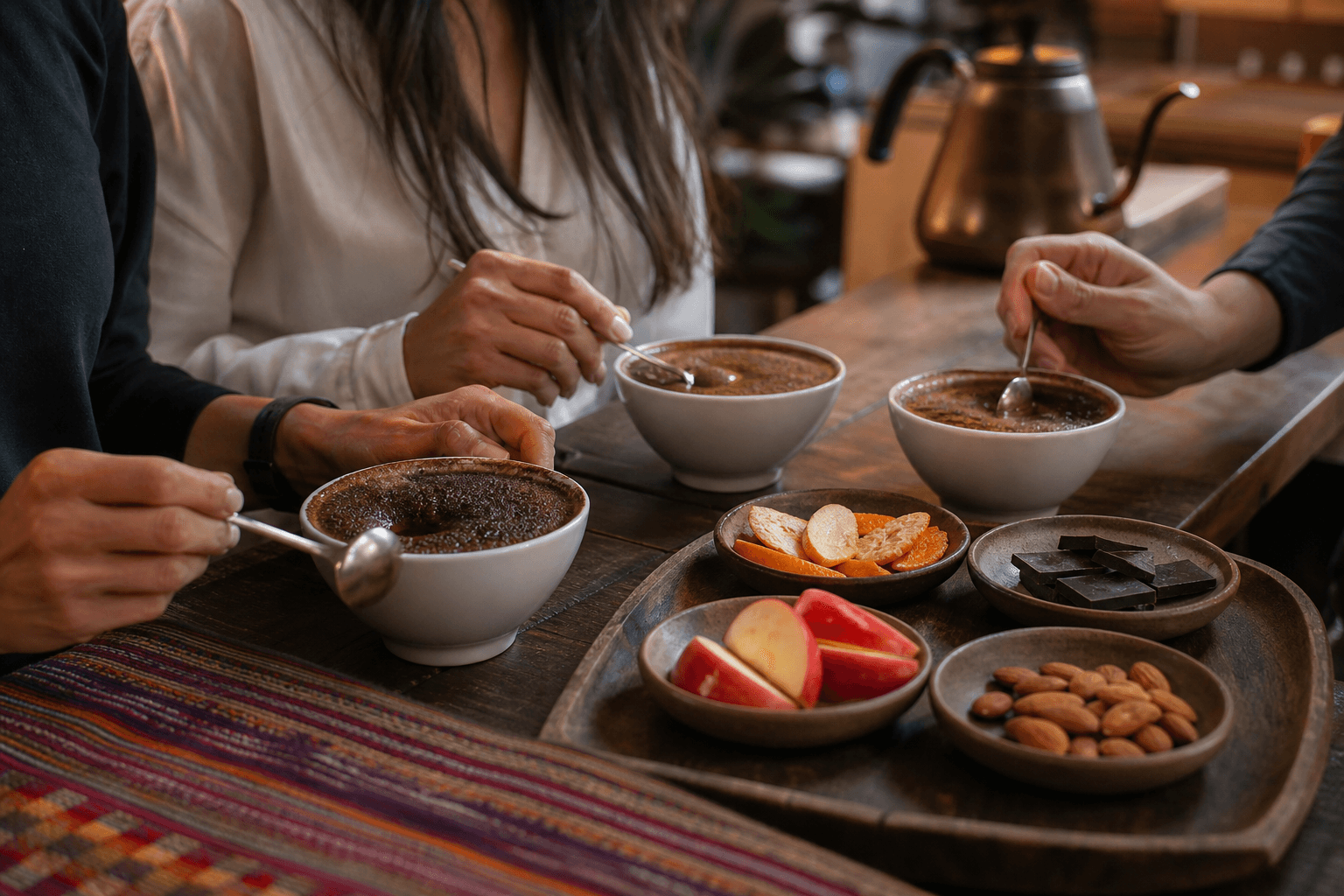
To cup Guatemalan coffee at home, grind several coffees medium-coarse, place the same dose in separate bowls, add hot water, wait four minutes, break the crust with a spoon, skim the surface, and taste each coffee as it cools. Use the same recipe for every bowl so the differences come from the coffee, not the brewing method. With Guatemalan coffee, look for cocoa sweetness, citrus lift, red apple or stone fruit, spice, and a clean finish.
The goal is not to decide whether a coffee is “good” in a vague way. The goal is to notice what kind of good it is — sweet, bright, round, structured, delicate, intense, familiar, or surprising.
Why cupping matters in modern specialty coffee
Cupping is the shared language of specialty coffee. The Specialty Coffee Association describes standards and protocols that help coffee professionals evaluate coffee in a consistent way, from green coffee to brewed cup (SCA coffee standards). In plain English, cupping removes most of the variables that home brewing adds: filter shape, pouring technique, espresso pressure, paper type, and brewer design. Every coffee sits in water. Every coffee gets the same treatment.
That is useful for home brewers because many coffee frustrations are not really brewing problems. Sometimes a coffee tastes flat because it is old. Sometimes it tastes sharp because the roast is too light for your current recipe. Sometimes the bag says “citrus” but what you taste is closer to red apple, orange peel, or dried fruit. Cupping helps you separate what the coffee naturally offers from what your brew method is doing to it.
It also fits the way international specialty culture is moving. CBI’s research on the European coffee market points to premiumisation and Europe’s large role in global coffee consumption, with Europe accounting for 30.7% of global consumption in 2023/2024 (CBI European coffee demand). Its specialty coffee analysis highlights traceability, transparency, origin storytelling, and coffee shops introducing consumers to new varieties and taste profiles (CBI specialty coffee market potential). Cupping brings those big market words down to the table: this coffee, this region, this taste, this decision.
Why Guatemala is a good origin for learning to taste
Guatemala is especially helpful for cupping because it gives you both structure and range. Many carefully sourced Guatemalan coffees have enough sweetness and body to feel approachable, but enough acidity and regional character to reward attention. That makes them ideal for people moving from “I like strong coffee” toward “I can describe what I like.”
Compared with Ethiopian coffee, Guatemalan coffee is often less overtly floral and tea-like, though some lots can be beautifully aromatic. Compared with Kenyan coffee, it is usually less sharply blackcurrant-like and less intensely acidic. Compared with Brazilian coffee, it often brings more brightness and origin definition. Compared with Colombian coffee, it can feel similarly balanced but with a distinctive highland, volcanic, or microclimate-driven structure.
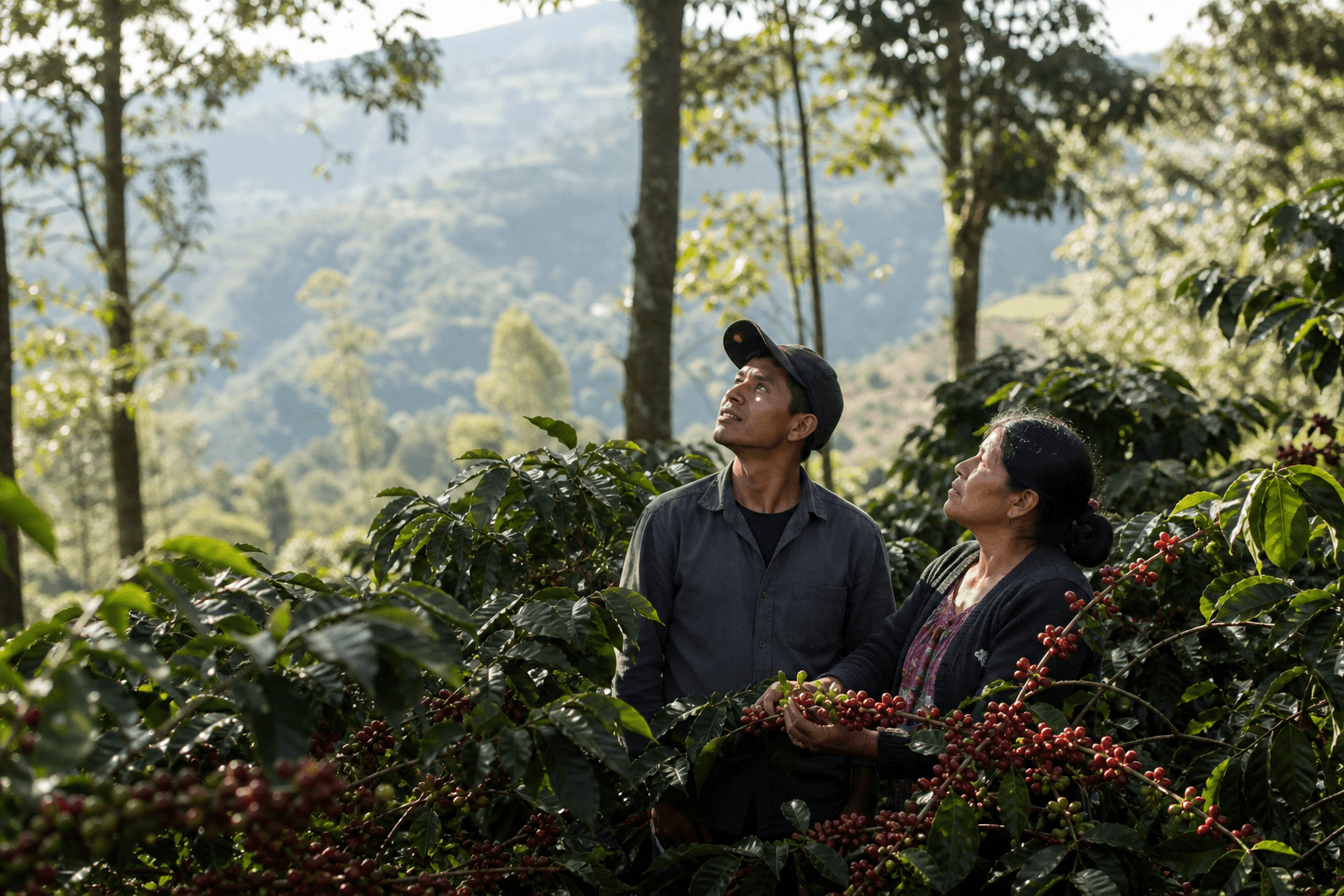
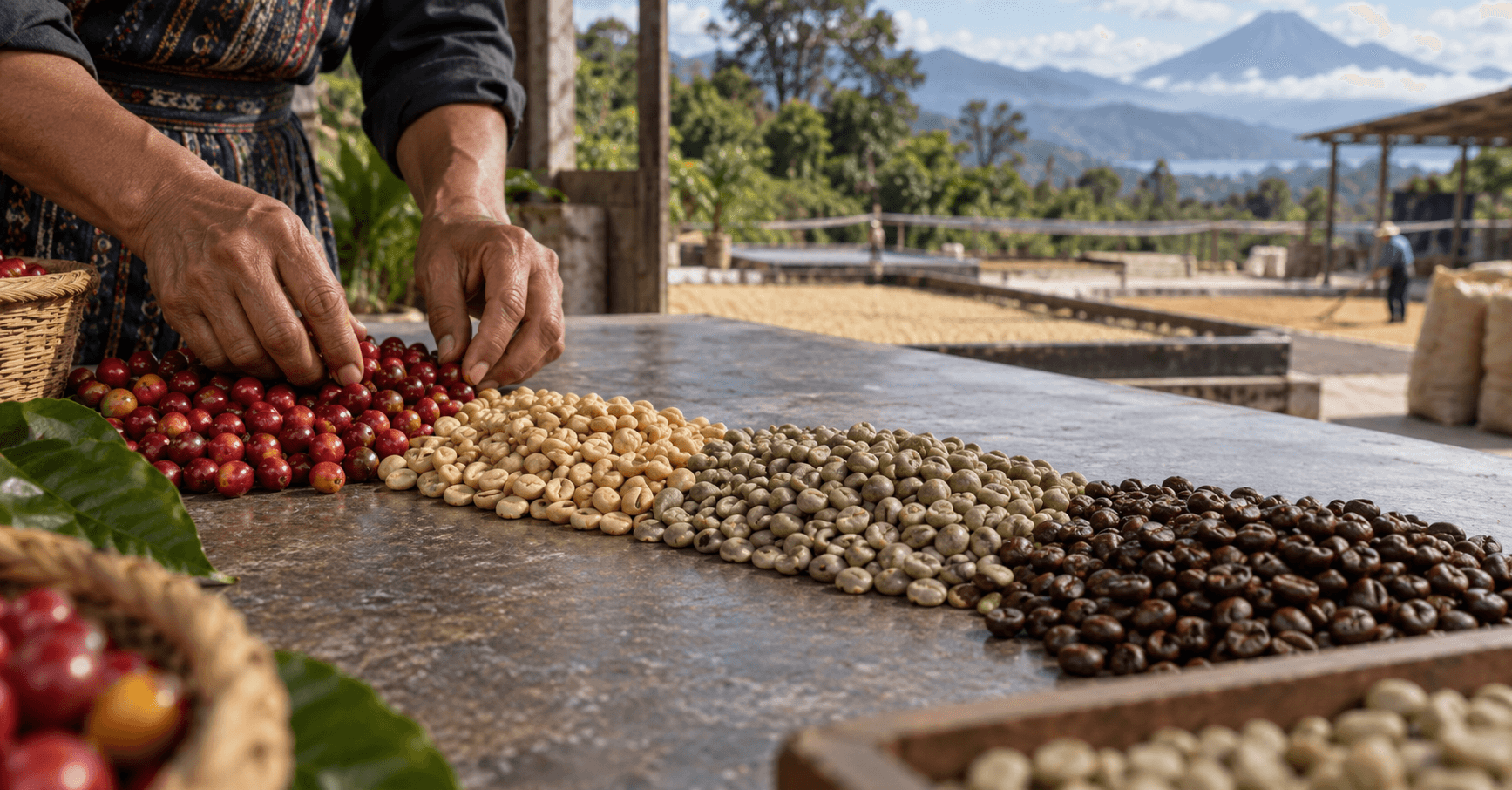
Guatemala is also not one flavor. Guatemalan Coffees, the origin platform associated with Anacafé, presents several regional profiles, including Antigua Coffee, Highland Huehue, Acatenango Valley, Traditional Atitlán, Rainforest Cobán, Fraijanes Plateau, New Oriente, and Volcanic San Marcos, and connects cup character to microclimate, varieties, and growing conditions (Guatemalan Coffees regions and profiles). A cupping table lets you experience that diversity directly instead of treating “Guatemalan coffee” as one generic taste.
If you want a broader origin primer before tasting, Kapalaj’s Guatemala origin guide is a useful companion. If you are ready to choose beans for your own table, start with Kapalaj’s single-origin coffee selection.
The simple home cupping setup
You can make this as formal or relaxed as you like. For a first tasting, compare two or three coffees rather than six. More bowls look impressive, but fewer coffees make it easier to learn.
You need:
- 2–3 fresh coffees, ideally including at least one Guatemalan coffee
- 2 identical bowls or cups per coffee if you want to check consistency
- A grinder
- A kettle
- A scale
- A timer
- A soup spoon or cupping spoon
- A glass of hot water for rinsing spoons
- A notebook, or just a few notes on your phone
Basic recipe:
Swipe the table sideways to see all columns.
| Item | Home cupping baseline |
|---|---|
| Coffee | 12 g per bowl |
| Water | 200 g per bowl |
| Grind | Medium-coarse, like coarse sand |
| Water temperature | Just off the boil, about 93–96°C |
| Steep time before breaking crust | 4 minutes |
| First tasting | Around 8–10 minutes |
| Best learning window | Taste repeatedly as the coffee cools |
This recipe is not sacred. The important thing is consistency. If one bowl has 12 g of coffee and another has 17 g, you are no longer comparing origin character; you are comparing recipe mistakes.
Step by step: from dry aroma to cooling cup
1. Smell the dry grounds. Grind each coffee and smell it before adding water. Dry fragrance can show chocolate, nuts, spice, fruit, flowers, or roast notes. With Guatemalan coffee, you may notice cocoa, brown sugar, orange, apple, almond, or baking spice.
2. Add water evenly. Start your timer and pour hot water over the grounds, saturating all the coffee. Do not stir yet. A crust of grounds will form at the top.
3. Break the crust at four minutes. Push the back of your spoon gently through the crust three times while putting your nose close to the bowl. This is often the most aromatic moment. You may smell fruit more clearly now than in the dry grounds.
4. Skim the surface. Use two spoons, or one spoon and patience, to remove floating foam and grounds. This makes the cup easier to taste.
5. Taste as it cools. Slurp from the spoon if you can; the point is to spray coffee across the palate and smell retronasally, through the back of the nose. If slurping feels silly, sip normally. You will still learn. Taste once when the coffee is hot, again when it is warm, and again near room temperature. Acidity, sweetness, and aftertaste often become clearer as coffee cools.
What to taste for in Guatemalan coffee
Specialty coffee language can sound abstract until you connect it to normal food memories. Start with five simple categories.
Swipe the table sideways to see all columns.
| What you notice | Plain-English meaning | Guatemalan coffee clues |
|---|---|---|
| Sweetness | Does it remind you of sugar, caramel, ripe fruit, or chocolate? | Cocoa, brown sugar, panela, red apple, dried fruit |
| Acidity | The lively lift that makes coffee feel fresh, not sour when balanced | Orange, lime, apple, stone fruit, sometimes grape-like brightness |
| Body | The weight or texture of the coffee in your mouth | Silky, round, creamy, structured, medium to full |
| Finish | What remains after swallowing | Clean cocoa, citrus peel, spice, lingering sweetness |
| Balance | Whether sweetness, acidity, body, and roast feel integrated | A hallmark of many approachable Guatemalan lots |
Acidity is worth explaining because it is one of the most misunderstood words in coffee. In specialty coffee, acidity does not mean the coffee is defective or harsh. It means liveliness — the pleasant brightness you find in an apple, orange, or ripe berry. If the coffee tastes mouth-puckering, thin, or unpleasantly sharp, that may be under-extraction, roast mismatch, or simply not your preferred profile.
Body is the opposite kind of clue. It is not flavor; it is texture. A Kenyan coffee might feel juicy and bright. A Brazilian coffee might feel round and nutty. A good Guatemalan coffee often gives you enough body to feel satisfying while still keeping the finish clean.
A three-coffee tasting flight that teaches fast
If you want one practical exercise, build a small tasting flight around contrast.
Bowl one: Guatemalan coffee. Use it as your anchor. Look for cocoa, citrus, spice, red fruit, or structured sweetness.
Bowl two: Ethiopian coffee. Notice whether it feels more floral, tea-like, lemony, or perfumed. This helps you understand what “aromatic” and “delicate” can mean.
Bowl three: Colombian or Brazilian coffee. Colombian coffee often gives balance, caramel, and fruit clarity; Brazilian coffee often leans nutty, chocolatey, and low-acid. Either comparison helps you place Guatemala on the flavor map.
After tasting, ask four questions:
- Which coffee became sweeter as it cooled?
- Which had the clearest fruit note?
- Which felt best for filter coffee, espresso, or milk drinks?
- Which would you want to drink every morning?
That last question matters. Cupping is not only about professional scoring. It is about buying better coffee for the way you actually live.
How cupping helps you buy better beans
Once you have cupped a few times, coffee bags become easier to read. Tasting notes stop feeling like poetry and start acting like useful clues.
If you love cocoa, almond, caramel, and orange, look for Guatemalan coffee with medium sweetness, washed processing, and a balanced roast. If you enjoy brightness, search for lots described with citrus, apple, grape, or stone fruit. If you brew espresso, pay attention to body and sweetness; a coffee can be exciting on the cupping table but too sharp in a short shot unless roasted and dialed for espresso. If you brew pour-over coffee, prioritize clarity, acidity, and a clean finish.
Traceability also becomes more meaningful. “Direct trade coffee” usually refers to a closer buying relationship between roaster and producer or exporter, though the term is not a formal certification. What matters for the drinker is whether the seller can tell you something specific: country, region, producer or cooperative, process, roast date, and cup profile. In a market where specialty buyers increasingly care about origin transparency, those details help you choose with confidence.
Common home cupping mistakes
Using different bowl sizes. Use similar cups so temperature and extraction stay comparable.
Grinding too fine. Fine grounds make cupping muddy and over-extracted. Aim coarser than pour-over.
Tasting only while hot. Hot coffee hides sweetness and detail. Many Guatemalan coffees show their best fruit and finish as they cool.
Searching for exact tasting notes. You do not have to find “mandarin zest” because someone else wrote it. “Citrus,” “red fruit,” or “clean chocolate” may be more honest.
Confusing preference with quality. You may prefer a rounder Guatemalan cup over a very floral Ethiopian coffee, or the opposite. That does not automatically make one better. It tells you what to buy next.
FAQ
Is cupping the same as brewing coffee?
No. Cupping is a tasting method designed for comparison. Brewing is how you prepare coffee to drink. Cupping removes many technique variables so you can evaluate the coffee itself.
What does Guatemalan coffee usually taste like?
Guatemalan coffee often shows cocoa sweetness, citrus or apple-like acidity, medium to full body, spice, red fruit, and a clean finish. The exact profile depends on region, variety, process, altitude, roast, and freshness.
Can I cup coffee without a special cupping spoon?
Yes. A deep soup spoon works for home tasting. A professional cupping spoon is helpful, but consistency matters more than equipment.
Should I cup whole bean or ground coffee?
Buy whole bean when possible and grind just before cupping. Fresh grinding gives clearer aroma and makes origin differences easier to taste.
Is Guatemalan coffee good for beginners?
Yes. Many Guatemalan coffees are approachable because they combine familiar sweetness with enough acidity and origin character to teach your palate. They are often a good bridge from everyday coffee into specialty coffee.
Taste first, then choose with confidence
Cupping turns coffee from a label into an experience. It helps you understand why one Guatemalan coffee feels chocolatey and comforting, why another tastes brighter and more citrus-led, and why single-origin coffee can be both practical and expressive.
If you want to build your own tasting flight, explore Kapalaj’s Guatemalan coffees and choose two or three bags to cup side by side at home. Start simple, taste as the cups cool, and let Guatemala teach your palate one spoonful at a time.