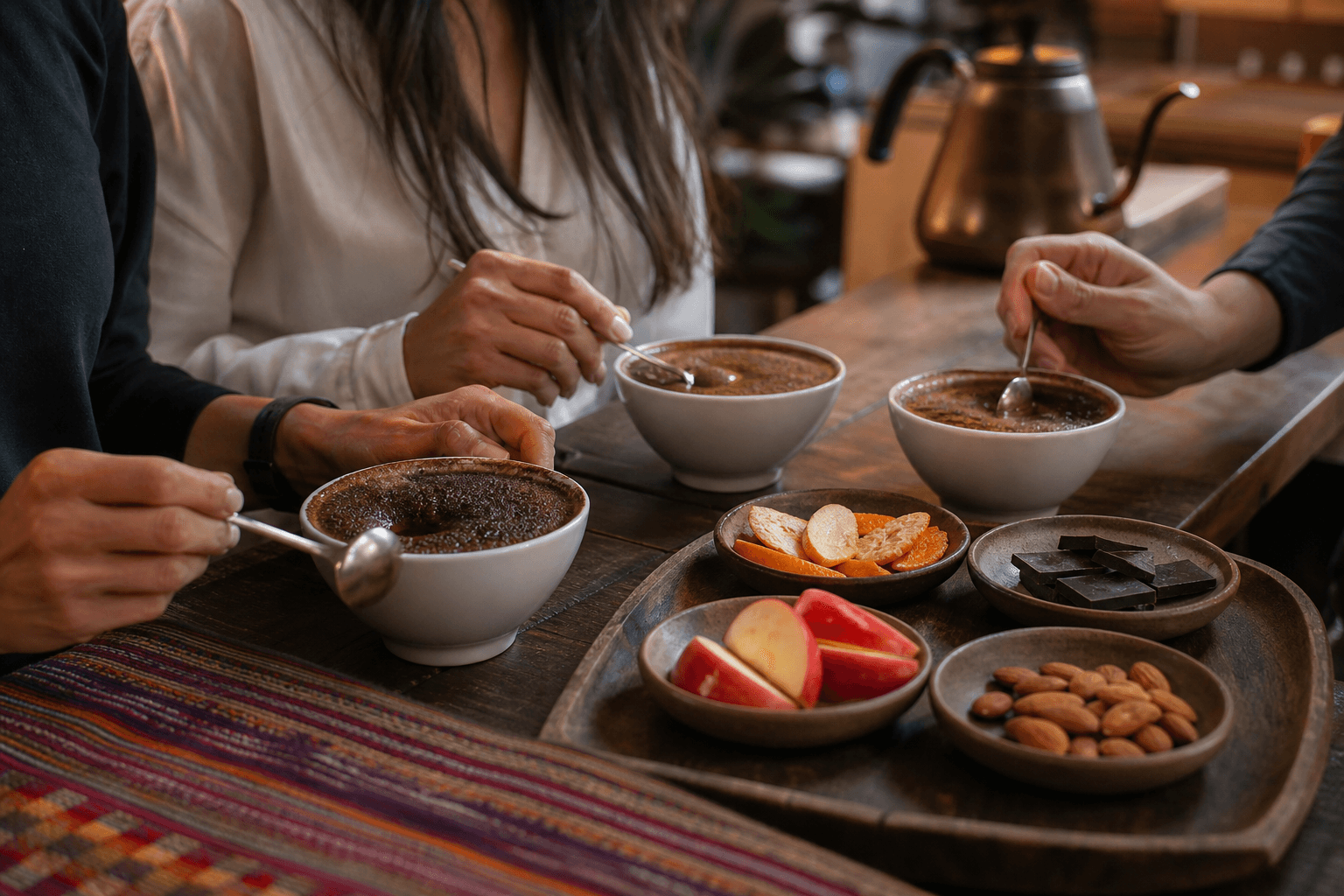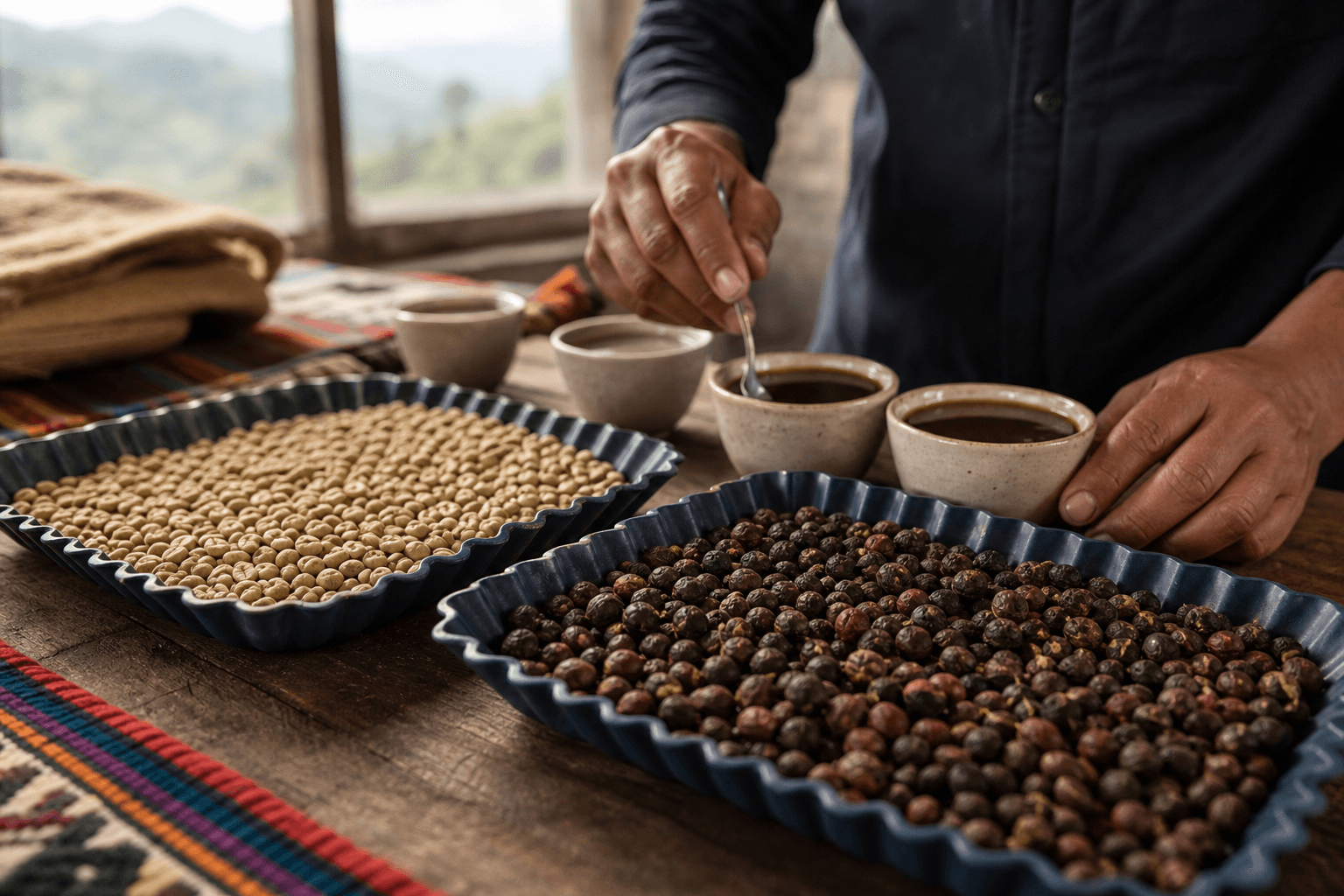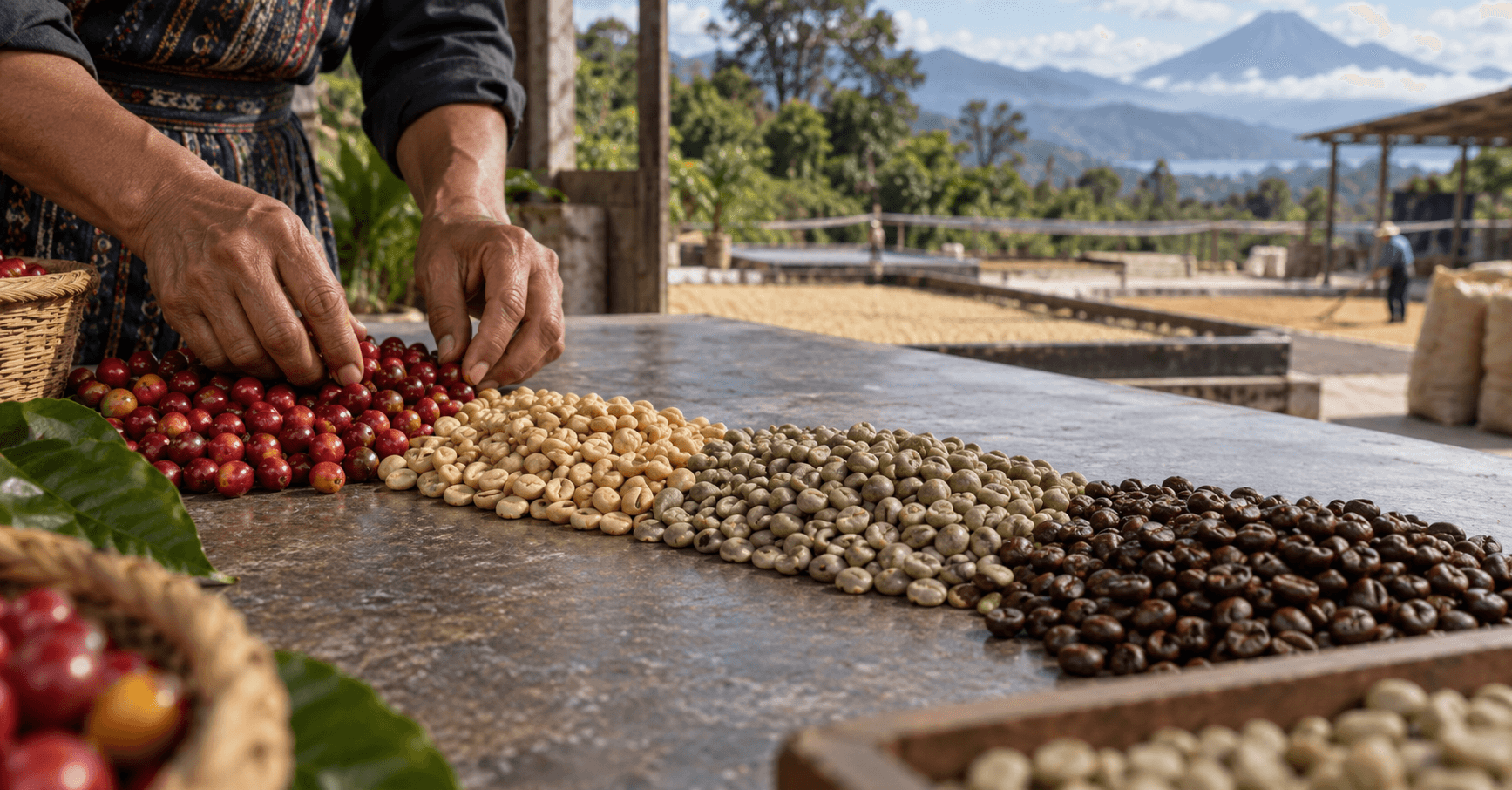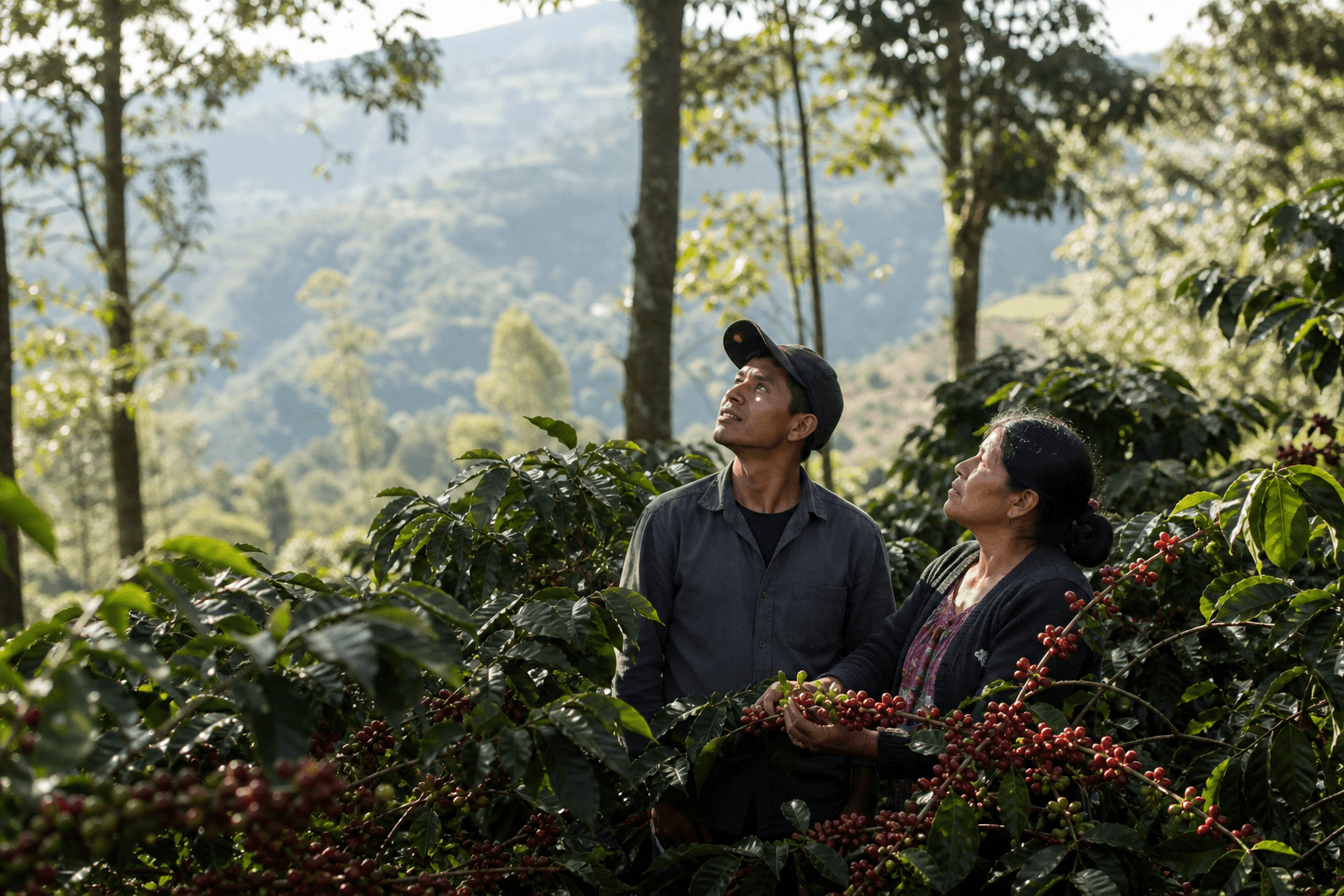
A bag of Guatemalan coffee rarely tells the whole story in one phrase. You might see a region name, an altitude range, a variety, a process, or a note like “cocoa, orange, red apple.” Helpful clues, yes — but behind them is a living landscape: shade trees, steep hillsides, cool nights, changing rainfall, and producers making hundreds of small decisions before the coffee ever reaches a roaster.
For specialty coffee drinkers in the US, UK, EU, and Nordic markets, origin is no longer just a romantic detail. It is part of quality, sustainability, traceability, and flavor. In Guatemala, altitude and shade are two of the most useful ideas to understand: not guarantees of greatness, but clues to why Guatemalan coffee can feel sweet, structured, complex, and approachable across pour-over coffee, espresso, and batch brew.
Quick answer: what does shade-grown Guatemalan coffee mean?
Shade-grown Guatemalan coffee is coffee cultivated under a canopy of trees rather than in full sun. In plain terms, shade can protect coffee plants from heat stress, slow cherry development, support biodiversity, and create gentler growing conditions. Combined with Guatemala’s high elevations and varied microclimates, shade can contribute to the sweetness, clean acidity, and layered flavor that many specialty buyers look for.
That does not mean every shaded farm produces better coffee than every sunny farm. Variety, soil, harvest selection, processing, drying, storage, roasting, and brewing all matter. Think of shade and altitude as quality clues — useful signals to combine with region, producer information, process, and freshness.
Why this question matters in specialty coffee now
Modern specialty coffee culture has trained drinkers to ask more specific questions. A decade ago, many buyers only wanted to know whether a coffee was “strong,” “smooth,” or “dark.” Today, a home brewer in London may ask about brew water and roast style; a café in Copenhagen may ask about traceability and cup profile; a hotel group may want quality that feels premium but still approachable for international guests.
This shift is visible in European market guidance. CBI describes Europe as a major coffee market with opportunities for specialty and certified coffee, while its specialty coffee analysis highlights traceability, transparency, origin storytelling, and out-of-home consumption as important drivers (CBI European coffee demand, CBI specialty coffee market potential). In other words, people are not only buying caffeine. They are buying a clearer relationship to where coffee comes from and why it tastes the way it does.
Guatemala is a strong origin for that conversation because the country is not one flat flavor profile. Guatemalan Coffees, the origin platform associated with Anacafé, presents distinct regional profiles including Antigua Coffee, Highland Huehue, Acatenango Valley, Traditional Atitlán, Rainforest Cobán, Fraijanes Plateau, New Oriente, and Volcanic San Marcos, and connects cup character to varieties, microclimates, and growing conditions (Guatemalan Coffees regions and profiles). Shade and altitude sit inside that bigger origin picture.
The plain-English version of altitude, shade, and microclimate
Coffee language can become technical fast, so let’s make the key terms useful.
Altitude means how high the coffee grows above sea level. In many Arabica-growing regions, higher elevation brings cooler average temperatures and larger day-night temperature swings. Coffee cherries may mature more slowly, which can support sweetness, acidity, and aromatic complexity. Altitude is not a trophy number, though. A beautifully managed lower-altitude farm can outperform a poorly handled high-altitude lot.
Shade means coffee plants grow under other trees. These may be native forest trees, fruit trees, timber trees, or deliberately planted shade species. Shade can filter sunlight, reduce heat on the plant, help soil retain moisture, and create habitat for birds and insects. Too much shade can reduce productivity or increase humidity-related disease pressure, so good farm management matters.
Microclimate means the local weather around a farm or plot: temperature, rainfall, wind, humidity, sunlight, slope direction, and the way air moves through the landscape. Guatemala’s mountains, volcanoes, valleys, and humid forests create many microclimates close together. That is one reason two Guatemalan coffees can taste different even when they share the same country and harvest year.
Canopy is the layer of shade trees above the coffee. A thoughtful canopy is not just “trees in the background.” It is part of the farm system: how much light reaches the plant, how the soil behaves, and how resilient the plot may be during hot or dry periods.
How shade can show up in the cup
You cannot taste a tree canopy directly the way you taste lemon, cocoa, or berry. But you can often taste the results of slower, steadier growing conditions when they are matched with careful harvesting and processing.
In a well-produced Guatemalan coffee, shade and altitude may help support:
Swipe the table sideways to see all columns.
| Farm clue | What it may support | What you might taste |
|---|---|---|
| High elevation with cool nights | Slower cherry maturation | Citrus, red apple, stone fruit, clean sweetness |
| Managed shade canopy | Reduced heat stress and steadier growth | Rounder sweetness, calmer acidity, layered finish |
| Volcanic or mineral-rich soils | Structure and nutrient complexity | Cocoa, spice, caramel, subtle savory depth |
| Careful selective picking | Ripe cherry consistency | Honeyed sweetness, less harshness, clearer notes |
| Washed processing | Transparency and cup clarity | Crisp acidity, clean finish, distinct origin character |
This is why Guatemalan coffee often appeals to drinkers who want balance rather than extremes. Ethiopian coffees may be loved for florals and tea-like aromatics. Kenyan coffees are famous for vivid acidity and blackcurrant-like intensity. Colombian coffees can be beautifully sweet, diverse, and accessible. Brazil often gives low-acid nutty comfort and body. Guatemala can sit in the middle with cocoa depth, citrus lift, structured sweetness, and enough complexity to stay interesting as the cup cools.
That middle ground is valuable. It gives a roaster room to develop sweetness without hiding origin character. It gives a café a coffee that can be explained to guests without needing a lecture. It gives home brewers a single-origin coffee that works on both quiet weekday mornings and careful weekend brew sessions.
Shade is not a marketing shortcut
“Shade-grown” sounds comforting, and sometimes it is used too loosely. For buyers, the better question is not simply “Is this shade-grown?” but “What does shade mean on this farm, and how is the coffee handled?”
A farm may have scattered shade trees, a dense multi-layer canopy, or shade only on some plots. Shade may be used to manage heat, protect soil, diversify farm income, or maintain a more biodiverse landscape. It may also create challenges: humidity, slower drying conditions, disease pressure, and lower yields if the canopy is unmanaged.
That is why traceability matters. In specialty coffee, traceability means you can follow the coffee back to a meaningful origin point: a producer, farm, cooperative, community, region, or lot. It does not automatically mean “perfect,” but it gives you enough context to ask better questions. CBI’s specialty coffee guidance points to traceability and transparency as part of what differentiates specialty coffee in Europe, especially where consumers and buyers want more than anonymous commodity supply (CBI specialty coffee market potential).
For Kapalaj, this is where Guatemalan coffee becomes more than a flavor category. It is a relationship with place and people. If you want to go deeper into buying language, our guide to traceable Guatemalan coffee explains what to look for on a label before you buy.
What to ask before buying shade-grown Guatemalan coffee
If you are choosing beans online, in a specialty shop, or for a café menu, use this practical checklist.
1. Is the origin specific?
“Guatemala” is useful, but “Huehuetenango,” “Antigua,” “Acatenango,” or a named farm/cooperative is better. Specificity helps you connect flavor to place.
2. Is altitude given as context, not decoration?
An altitude range can be useful, especially for washed Arabica coffees. But do not buy only the highest number. Look for altitude alongside process, variety, producer, and tasting notes.
3. Does the description explain the cup clearly?
Good descriptions are specific but not exaggerated: cocoa, orange, red apple, caramel, almond, plum, floral, spice. Be cautious with vague luxury words that never tell you what the coffee tastes like.
4. Is the process stated?
Washed coffees often show Guatemala’s clarity and structure beautifully. Natural and honey processes can add fruit, texture, and sweetness. If you are unsure where to start, washed Guatemalan coffee is usually the easiest first step for filter brewing.
5. Is the roast level aligned with your brew method?
Light to light-medium roasts suit pour-over coffee and brewers who enjoy clarity. Medium roasts can be excellent for espresso, batch brew, moka pot, and guests who want more chocolate and body. Very dark roasts may hide the nuance that shade, altitude, and origin created.
6. Is there freshness information?
Freshness does not mean “drink it the day it was roasted.” Many coffees taste better after a short rest. But you should know whether the beans are current, whole-bean, and stored well.
For a broader overview of how region affects buying choices, see our Guatemala coffee regions guide, or explore Kapalaj’s Guatemalan coffee origin page.
A simple brew recipe to taste altitude and shade more clearly
To understand shade-grown Guatemalan coffee, brew it in a way that lets sweetness and acidity show without pushing bitterness too hard. A clean filter recipe is ideal.
Guatemalan filter recipe
- Coffee: 18 g whole-bean Guatemalan coffee
- Water: 300 g, clean and neutral-tasting
- Ratio: 1:16.7
- Grind: medium-fine for pour-over, medium for flat-bottom brewers
- Water temperature: 92–95°C / 198–203°F
- Total brew time: about 2:45–3:30, depending on brewer
Start with a gentle bloom: pour 45–55 g of water over the grounds and wait 30–45 seconds. Then pour in steady stages rather than one aggressive flood. The goal is even extraction — pulling sweetness, acidity, and aroma from the coffee without overdoing dry bitterness.
If the cup tastes sour, grassy, or hollow, grind slightly finer or extend the brew time. If it tastes bitter, drying, or heavy, grind coarser or use slightly cooler water. If it tastes flat even when brewed well, check your water quality; minerals can make a surprising difference in how clearly coffee expresses itself.
Taste the cup hot, warm, and nearly cool. Many Guatemalan coffees reveal their best structure as the temperature drops: citrus becomes clearer, cocoa turns sweeter, and the finish becomes easier to read.
How cafés, hotels, and offices can use this story
Shade and altitude are not only for coffee nerds. They help hospitality teams explain value in plain English: “Guatemalan single-origin coffee grown in cool highland conditions, with cocoa sweetness and citrus clarity.” That gives a guest a useful expectation without turning service into a lecture.
This matters in international settings. US and UK guests may recognise third-wave origin language. Nordic drinkers may expect lighter roasts and clean filter cups. European buyers may care about traceability and premium positioning. The key is to connect farming context to sensory experience: steadier growth, a more resilient farm system, and — when paired with careful production — sweetness, clarity, and depth.
FAQ: shade-grown Guatemalan coffee
Is shade-grown Guatemalan coffee better?
It can be, but shade alone does not guarantee quality. The best coffees come from the whole chain working well: farm management, ripe picking, processing, drying, storage, roasting, and brewing. Shade is a positive clue when it is connected to transparent sourcing and a well-described cup.
Does higher altitude make Guatemalan coffee more acidic?
Often, higher-grown Arabica coffees have brighter acidity because cooler conditions can slow maturation. In Guatemala, that acidity is frequently balanced by sweetness and body, which is why the coffee can feel lively without becoming sharp. Roast level and brew recipe still matter.
What does Guatemalan coffee taste like compared with Colombian coffee?
Both origins can be sweet, clean, and approachable. Guatemalan coffee often leans toward cocoa, citrus, spice, caramel, and structured sweetness. Colombian coffee is extremely diverse, but many classic profiles show caramel, red fruit, apple, and balanced acidity. The best choice depends on region, process, roast, and your brew method.
What brew method is best for shade-grown Guatemalan coffee?
Pour-over coffee is excellent for tasting clarity, citrus, and layered sweetness. Batch brew works well for cafés and offices because Guatemala often stays balanced at scale. Espresso can be beautiful with medium roasts that preserve cocoa sweetness and origin character.
The takeaway: look for landscape, not just tasting notes
The next time you choose Guatemalan coffee, read the bag like a map rather than a slogan. Region tells you where the coffee begins. Altitude hints at climate. Shade suggests how the farm manages light, heat, and resilience. Process tells you how the fruit became green coffee. Roast and brew method decide how much of that story reaches your cup.
That is the pleasure of specialty coffee: the more you learn, the more the cup opens up. Guatemalan coffee gives comfort and detail — cocoa and citrus, structure and sweetness, everyday drinkability and origin depth.
Explore Kapalaj’s Guatemalan coffees and choose a single-origin bag that brings altitude, shade, and careful sourcing into the cup.