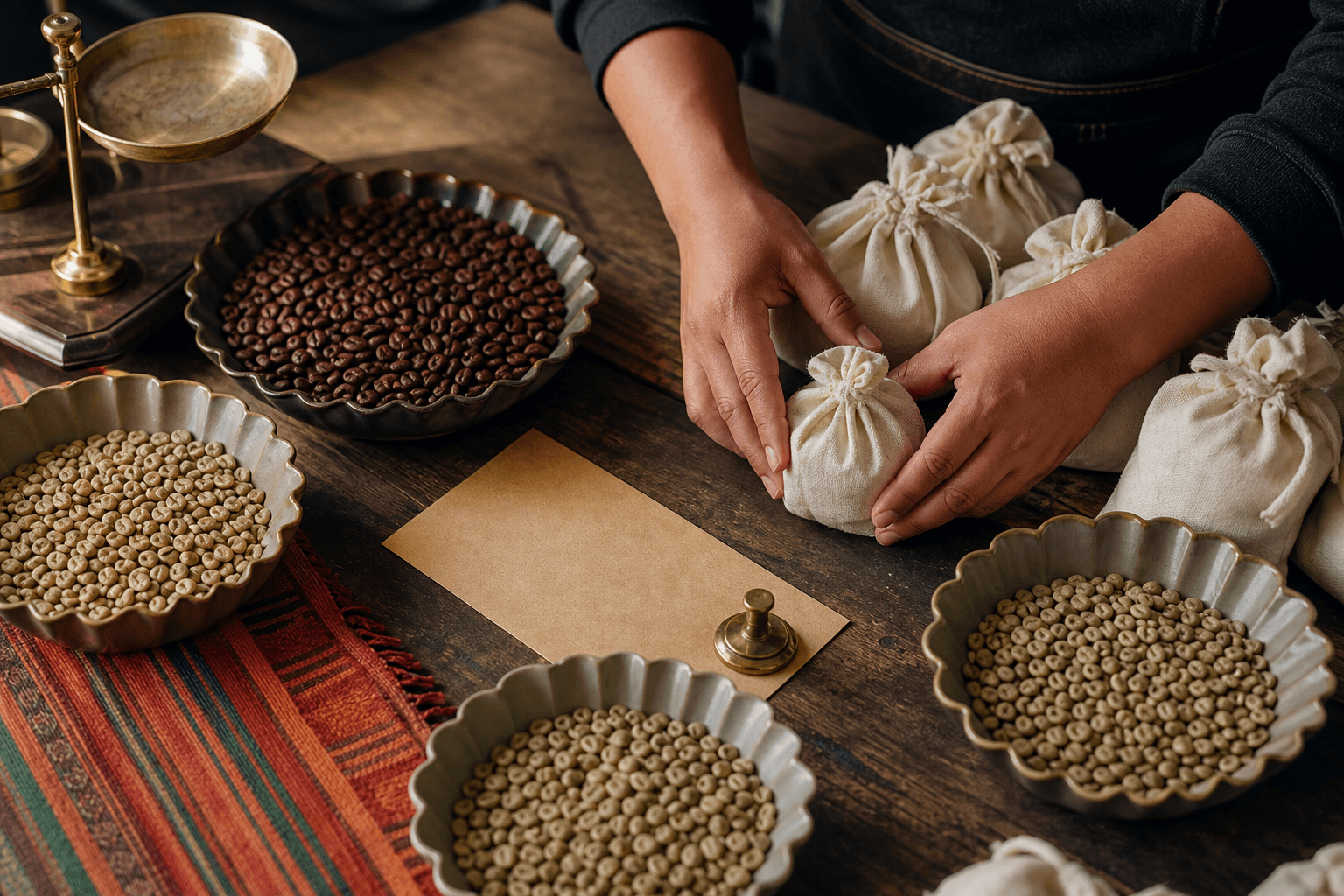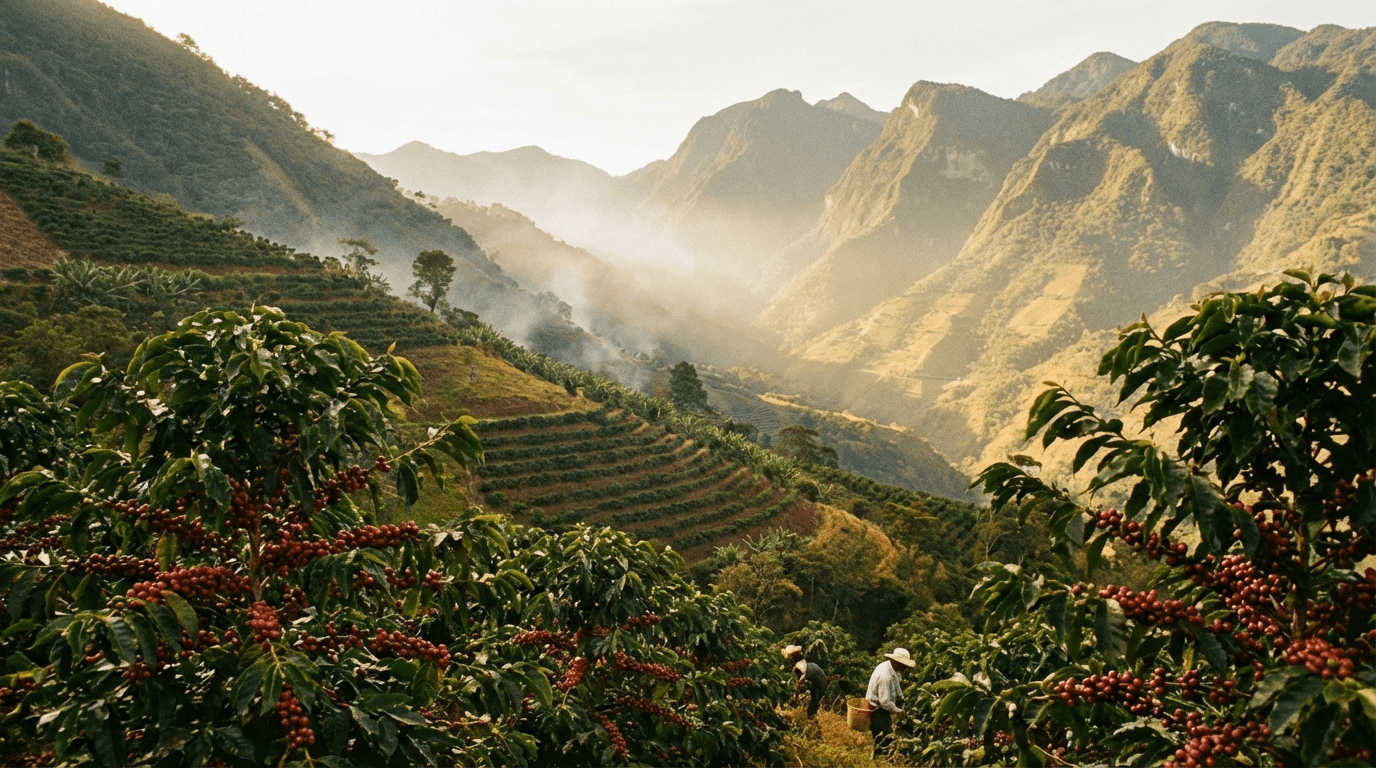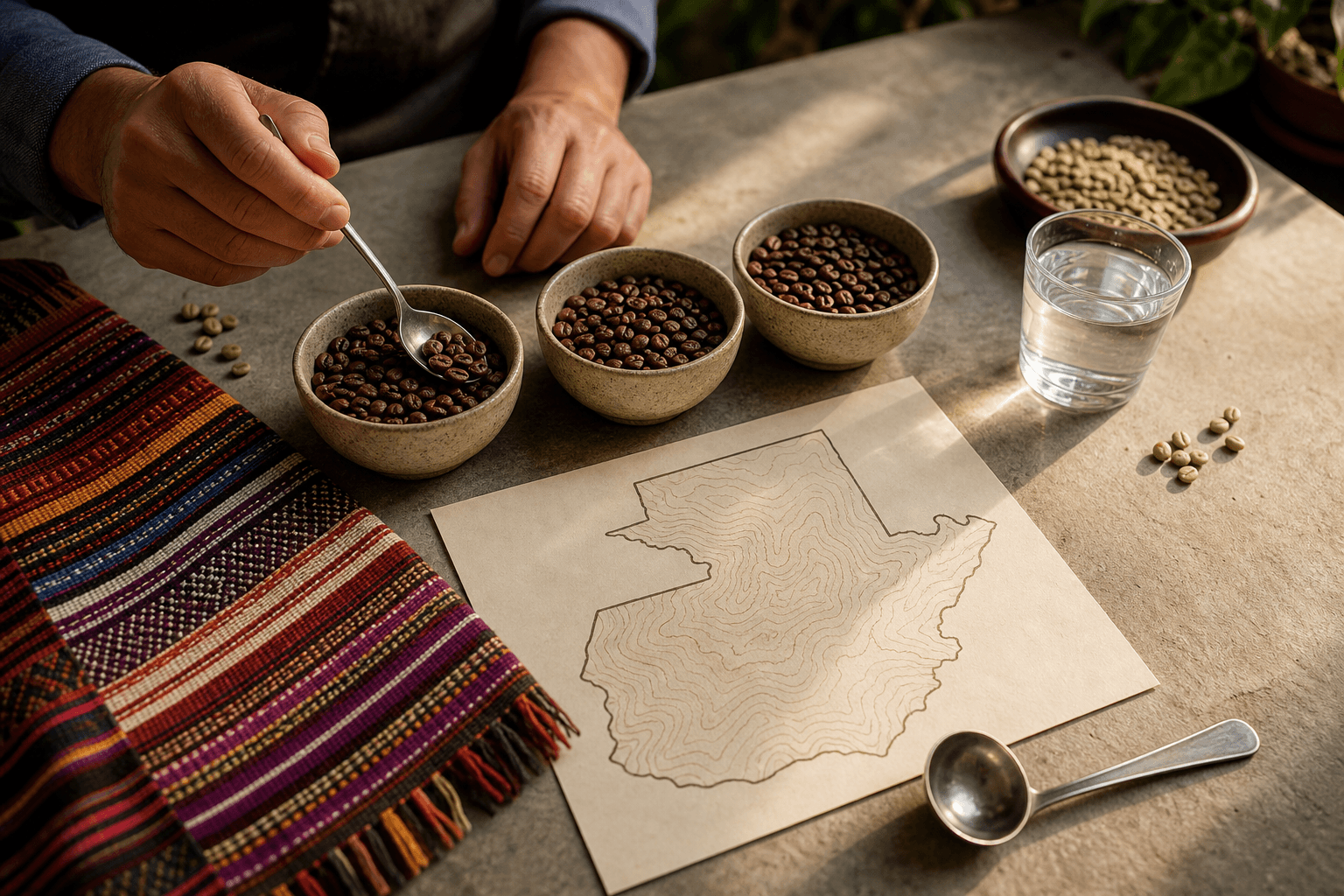
A good bag of Guatemalan coffee can feel familiar and surprising at the same time. You may recognise the comforting notes first: cocoa, caramel, toasted nuts, red apple, maybe a little orange. Then, as the cup cools, something more specific appears. One coffee feels structured and spice-toned. Another is bright and winey. Another is soft, rounded, and quietly sweet.
That is where region starts to matter.
For many specialty coffee drinkers in the US, UK, EU, and Nordic markets, Guatemala is already known as a reliable single-origin coffee choice. It sits between comfort and complexity: less floral than many Ethiopian coffees, usually less sharply acidic than a classic Kenyan, often more lifted than Brazil, and sometimes more cocoa-driven than Colombia. But “Guatemalan coffee” is not one flavour. It is a country of highlands, volcanoes, valleys, humid forests, dry winds, and changing microclimates.
This guide helps you choose with more confidence. If you have ever wondered whether Antigua, Huehuetenango, Acatenango, Atitlán, Cobán, or Fraijanes actually means something in the cup, the answer is yes — with one caveat: region is a clue, not a guarantee.
Quick answer: what do Guatemala coffee regions taste like?
Guatemala coffee regions often share a balanced specialty profile: sweetness, medium to full body, clean acidity, and flavours that range from chocolate and nuts to citrus, stone fruit, berries, florals, and spice. Antigua often means cocoa, spice, and structure; Huehuetenango lively acidity and fruit; Acatenango clarity and volcanic depth; Cobán softer, humid-region complexity.
Use the region name as your first clue, then check roast level, process, variety, freshness, and the roaster’s tasting notes. A light-roasted washed Huehuetenango will behave very differently from a darker roasted natural coffee from another part of Guatemala.
Why regional knowledge matters now
Specialty coffee has trained drinkers to ask better questions. In third-wave cafés, retail shelves, hotel breakfast programs, office coffee services, and home brewing communities, buyers are no longer only asking whether coffee is “strong” or “smooth.” They want to know where it came from, how it was grown, how it was processed, and why it tastes the way it does.
That shift is visible in European market guidance. CBI describes Europe as a major coffee market where value growth is connected to premiumisation, while its specialty coffee analysis highlights traceability, transparency, out-of-home quality, and origin storytelling as important drivers (CBI European coffee demand, CBI specialty coffee market potential). In practical terms, this means a café buyer in Copenhagen, a home brewer in London, and a roaster in Berlin may all be looking for the same thing: a coffee that tastes good, has a clear identity, and can be explained honestly.
Guatemala is well suited to that conversation because it has recognisable regional diversity. Guatemalan Coffees, the origin platform associated with Anacafé, presents profiles such as Antigua Coffee, Highland Huehue, Acatenango Valley, Traditional Atitlán, Rainforest Cobán, Fraijanes Plateau, New Oriente, and Volcanic San Marcos, noting the influence of microclimates, varieties, and growing conditions on cup character (Guatemalan Coffees regions and profiles).
For the drinker, the useful question is not “Which region is best?” It is “Which region gives me the cup I want?”
Region is a clue, not a flavour promise
Before we tour the regions, it helps to set expectations. Coffee is agricultural. Two farms in the same region can taste different because of altitude, shade, variety, soil, harvest timing, fermentation, drying, storage, roasting, and brewing. A region name works like a weather forecast: useful, imperfect, and best understood with other signals.
In specialty coffee, a few terms appear often:
Altitude usually means how high the coffee grows above sea level. Higher altitude often means slower cherry maturation, which can support sweetness, acidity, and complexity. It does not automatically make a coffee better.
Microclimate means local growing conditions: temperature, rainfall, wind, humidity, sunlight, and daily temperature swings. Guatemala’s mountains and volcanoes create many of these small climate pockets.
Process describes what happens after harvest. Washed coffees usually taste cleaner and more transparent. Natural coffees dry with the fruit around the seed and can taste fruitier or heavier. Honey process sits somewhere between.
Cup profile is the professional way of describing what you taste: aroma, acidity, sweetness, body, flavour, balance, and finish. The Specialty Coffee Association’s standards help professionals use shared language around coffee evaluation and brewing, which is why terms like acidity, body, and extraction appear so often in modern coffee education (SCA coffee standards).
With that in mind, region becomes useful without becoming rigid.
Antigua: structure, cocoa, spice, and classic appeal
Antigua is one of the most famous names in Guatemalan coffee. For many international buyers, it has become a shorthand for a classic profile: chocolate depth, brown sugar sweetness, gentle citrus, spice, and a rounded body. If you are moving from supermarket coffee into specialty coffee, Antigua can feel like a graceful bridge because it gives plenty of comfort while still showing origin character.
Antigua coffees often work well for espresso, moka pot, batch brew, and richer pour-over recipes. A washed Antigua roasted light-medium to medium can make an espresso that tastes like cocoa, orange peel, caramel, and baking spice rather than harsh roast bitterness. For milk drinks, that structure can hold its shape.
Compared with Colombia, Antigua may feel a little more cocoa-and-spice driven. Compared with Brazil, it often has more acidity and aromatic detail. Compared with Ethiopia, it is usually less floral and more grounded. That makes it useful when you want specialty coffee that still feels widely approachable.
Choose Antigua if you like: chocolate, spice, caramel, citrus peel, balanced espresso, and a cup that feels polished rather than wild.
Huehuetenango: brightness, fruit, and mountain clarity
Huehuetenango — often shortened to “Huehue” in coffee circles — is a favourite among specialty drinkers who like brightness without losing sweetness. The region’s high elevation and distinctive conditions can produce coffees with lively acidity, fruit notes, and a clean finish. In the cup, you may find red apple, stone fruit, orange, berry, honey, or floral hints, depending on farm and roast.
This is a strong region to explore if you enjoy washed Ethiopian coffees but want something less perfume-like and more structured. It can also appeal to fans of bright Colombian coffees who want a different expression of sweetness. Huehuetenango does especially well in pour-over coffee because filter brewing highlights clarity and cooling sweetness.
At home, avoid pushing these coffees too dark or brewing them too aggressively. If the grind is too fine or the water too hot, the bright edge can turn sharp. Start with a clean filter recipe, let the cup cool, and taste it across ten minutes. Many Huehuetenango coffees become more expressive as temperature drops.
Choose Huehuetenango if you like: citrus, apple, stone fruit, clean sweetness, lively acidity, and transparent pour-over cups.
Acatenango: volcanic depth with a clean modern profile
Acatenango sits in the imagination because of volcanoes, but the best reason to care is not scenery. It is flavour structure. Acatenango coffees can combine sweetness, acidity, and a mineral-like clarity that feels very modern in specialty coffee. Depending on producer and process, the cup may show cocoa, citrus, red fruit, floral hints, or a crisp finish.
For Nordic-style light roasts and European specialty cafés, Acatenango can be elegant: enough sweetness for everyday drinkers, enough precision for enthusiasts, and enough regional story for staff training. “Volcanic coffee” should not be used as vague marketing; soils, elevation, climate, farming, production, and roasting all interact.
Brew Acatenango as you would a coffee where clarity matters. Use clean water, a consistent grinder, and a repeatable recipe. If it tastes hollow, grind a touch finer. If it tastes dry and bitter, grind coarser or reduce brew temperature slightly.
Choose Acatenango if you like: clean structure, cocoa-citrus balance, subtle fruit, and coffees that work for both filter and refined espresso.
Atitlán, Cobán, Fraijanes, New Oriente, and San Marcos: the wider map
The best way to understand Guatemala is to resist letting three famous regions do all the work. The wider map is where the country becomes even more interesting.
Traditional Atitlán can feel sweet, aromatic, and layered, with citrus, chocolate, floral hints, and rounded body. Rainforest Cobán, shaped by cooler and more humid conditions, often leans softer and less sharply acidic. Fraijanes Plateau can offer bright acidity, chocolate, and structure. New Oriente is worth exploring for sweetness, balance, and fuller body, while Volcanic San Marcos may show fruit, florals, and a distinctive regional feel.
For buyers, the lesson is simple: do not stop reading when you recognise Antigua or Huehuetenango. Lesser-known regions can offer excellent value, memorable flavour, and producer stories that deserve more attention.
A practical region guide for buyers and brewers
Use this table as a starting point, not a rulebook.
Swipe the table sideways to see all columns.
| If you want... | Start with... | Brew suggestion | What to check on the bag |
|---|---|---|---|
| Chocolate, spice, balanced espresso | Antigua | Espresso, moka pot, batch brew | Washed process, medium or light-medium roast |
| Bright fruit and clean sweetness | Huehuetenango | Pour-over, AeroPress, cupping | Altitude, washed process, citrus or stone-fruit notes |
| Clarity with volcanic structure | Acatenango or Fraijanes | Pour-over, batch brew, espresso | Roast level and producer details |
| Softer complexity and less sharp acidity | Cobán or New Oriente | French press, batch brew, immersion | Process, body descriptors, roast style |
| A discovery coffee for tastings | Any traceable micro-lot | Cupping or side-by-side pour-over | Farm, region, process, harvest, importer/roaster notes |
If you are buying for home, pick based on how you brew most often. A delicate Huehuetenango may be beautiful as pour-over coffee but less satisfying if you only drink milk-based espresso. A structured Antigua may be excellent for espresso but less surprising if you want floral aromatics. If you are buying for a café, hotel, or office, choose a region profile that staff can explain in one sentence and guests can actually taste.
How to taste regional difference at home
You do not need professional equipment to learn. Buy two Guatemalan coffees from different regions, ideally with similar roast levels and processing. Brew them with the same method, ratio, grind setting, and water. Let both cups cool for a few minutes before judging; hot coffee hides detail.
Taste for four things:
- Sweetness: caramel, honey, brown sugar, fruit syrup, or chocolate.
- Acidity: orange, apple, berry, lemon, or grape; juicy or sharp.
- Body: light and tea-like, round and creamy, or dense and syrupy.
- Finish: quick, dry, or pleasantly lingering.
This turns origin from a label into an experience. It also makes you a better buyer: you stop chasing one “best” coffee and start recognising what you personally enjoy.
Where Kapalaj fits into the origin conversation
At Kapalaj, we see Guatemalan coffee as more than a flavour category. It is a way to connect drinkers with origin, producer work, and better everyday brewing. A useful specialty coffee site should help you understand what you are buying, not bury you in romantic language.
Go deeper with Kapalaj’s guide to Guatemalan origin and coffee regions. If traceability is your main buying question, our article on traceable Guatemalan coffee explains what to look for before you buy. When you are ready to choose a coffee for your brew method, browse the Kapalaj shop.
FAQ: Guatemala coffee regions
What is the most famous coffee region in Guatemala?
Antigua is probably the most internationally recognised Guatemalan coffee region. It is known for structured cups with chocolate, spice, citrus, and balanced sweetness, though individual coffees still vary by producer, process, roast, and harvest.
Is Huehuetenango coffee better than Antigua coffee?
Not better — different. Huehuetenango often appeals to drinkers who like brighter fruit and lively acidity. Antigua often suits people who want cocoa, spice, body, and espresso-friendly structure. The better choice depends on your taste and brew method.
Which Guatemala coffee region is best for pour-over?
Huehuetenango, Acatenango, Fraijanes, and Atitlán can all be excellent for pour-over when the roast is clean and not too dark. Look for washed coffees with tasting notes such as citrus, apple, stone fruit, florals, honey, or cocoa.
Which Guatemala coffee region is best for espresso?
Antigua is a strong starting point for espresso because its chocolate, caramel, spice, and citrus structure can work well under pressure and with milk. Acatenango and New Oriente can also be excellent depending on roast style.
Does region matter more than roast level?
No. Region matters, but roast level can change how clearly you taste it. A very dark roast may make different regions taste more similar, while a careful light or medium roast usually preserves more origin character.
The takeaway: buy by flavour, learn by region
Guatemala rewards curiosity. Start with the flavour you want, then use region to choose smarter. Choose Antigua for structure, Huehuetenango for brightness, Acatenango for clarity, Cobán for softer complexity, and the wider map for discovery. Then brew carefully, taste as the cup cools, and note what you would buy again.
Ready to explore? Visit the Kapalaj shop and choose Guatemalan coffee that matches the way you like to brew and drink.