Office coffee used to be judged by one standard: is there enough of it? In many workplaces, that led to dark, anonymous blends sitting on a hot plate until the last cup tasted like cardboard. But the people drinking office coffee now are often the same people who buy single-origin coffee at home, order flat whites from third-wave cafés, and know that “bright” does not mean sour.
That shift creates a real opportunity. Better workplace coffee does not need to mean a complicated espresso bar, a full-time barista, or fragile brewing gear. It can start with a coffee that is forgiving, traceable, and interesting enough to drink black. Guatemalan coffee is one of the strongest candidates for that role because it brings sweetness, structure, and origin character without demanding specialist technique from every person in the office.
For teams, co-working spaces, studios, and hospitality buyers, the practical question is: how do you serve coffee that feels intentional without making the system fragile? The answer is choosing the right origin profile, roast style, grinder, recipe, and service rhythm.
Quick answer: is Guatemalan coffee good for office coffee?
Yes. Guatemalan coffee works very well for office coffee because it often combines chocolate-like sweetness, gentle fruit, balanced acidity, and enough body to hold up in batch brew. That makes it approachable for people who want an easy morning cup, while still giving specialty coffee drinkers something clean and traceable to notice.
For most workplaces, start with a fresh light-medium or medium roast, brew it on a good batch brewer, and keep a simple ratio: about 60 g of coffee per litre of water. If the office has a grinder, grind just before brewing. If not, buy smaller amounts more often and store the coffee airtight.
Why office coffee is becoming a specialty conversation
The office is not separate from coffee culture anymore. In the US, UK, EU, and Nordic markets, many coffee drinkers have learned the language of origin, freshness, brew method, and roast level from cafés and home brewing. When those expectations meet a workplace urn of burnt coffee, the gap is obvious.
There is also a market reason to care. CBI describes Europe as a major coffee market where value growth is connected to premiumisation, and its specialty coffee analysis points to out-of-home consumption, origin storytelling, transparency, and traceability as important parts of the specialty segment (CBI European coffee demand, CBI specialty coffee market potential). Offices, studios, hotels, and conference spaces sit inside that out-of-home world. Coffee is part of the guest, employee, and client experience.
The Specialty Coffee Association’s brewing standards are useful here because they remind us that good coffee is repeatable, not mysterious (SCA coffee standards). You do not need to speak in lab language to improve an office brew. A fixed dose, clean water, fresh coffee, and a decent grinder will change more than most people expect.
Why Guatemala fits the workplace cup
The best office coffee has to serve different drinkers at once. Some people add milk. Some drink black coffee all morning. Some want comfort; others want origin character. A very floral Ethiopian coffee might thrill one person and confuse another. A bright Kenyan coffee can be spectacular, but it may feel too sharp for a shared pot at 8:30. A heavy Brazilian coffee can be comfortable, but it may not always give the clarity that specialty buyers want.
Guatemala sits in a useful middle. Many Guatemalan coffees bring cocoa, caramel, red apple, orange, toasted nuts, baking spice, and a rounded body. In a batch brewer, that usually translates as sweetness first, then gentle acidity, then a clean finish. It tastes recognisably better than commodity office coffee without becoming so unusual that only the coffee nerds enjoy it.
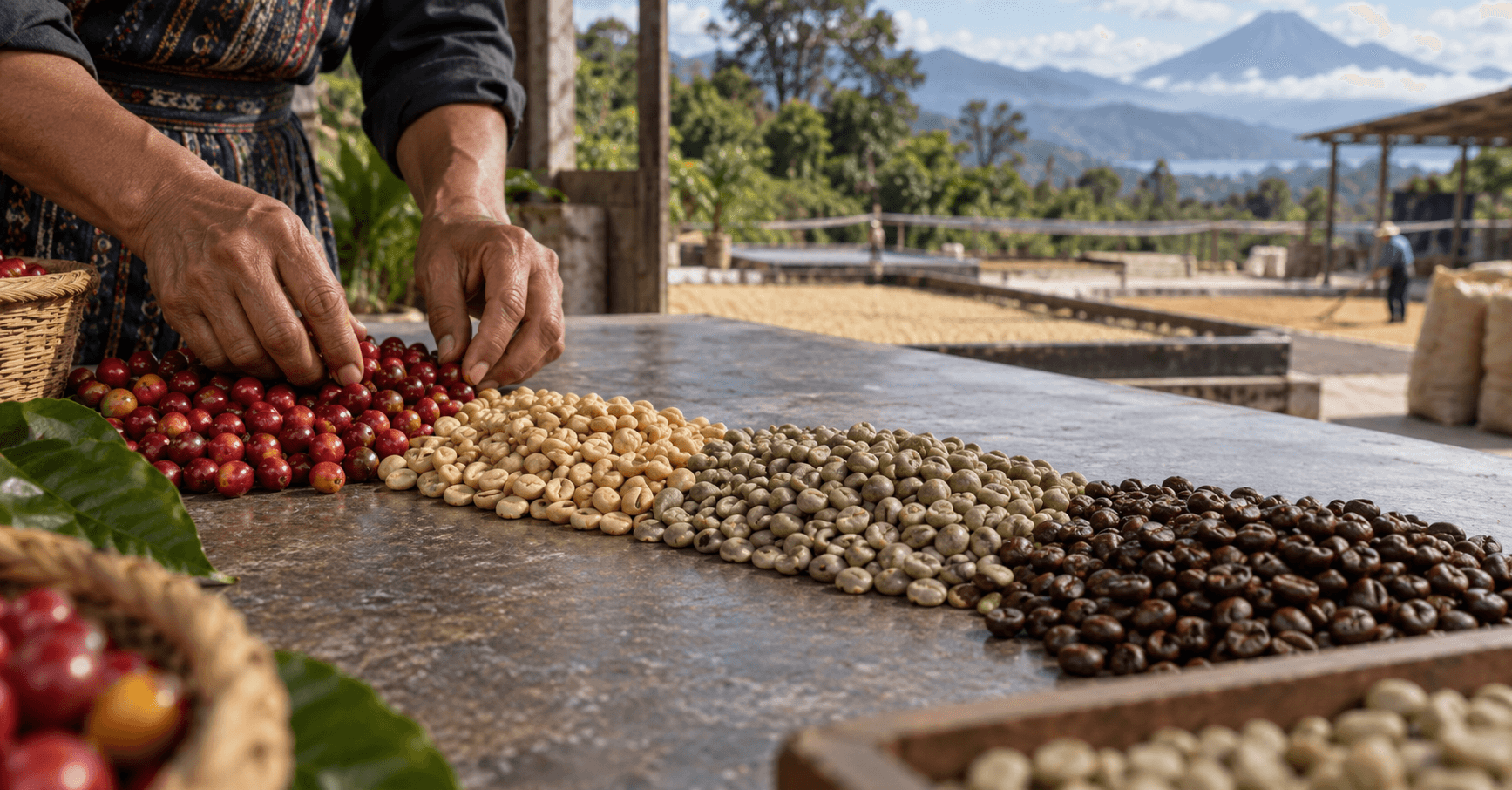
Guatemala is also not a single flavour. Guatemalan Coffees, the national origin platform associated with Anacafé, describes regional profiles shaped by varietals, microclimates, altitude, and growing conditions, including Antigua, Highland Huehue, Atitlán, Cobán, Acatenango, Fraijanes, New Oriente, and San Marcos (Guatemalan Coffees regions and profiles). For office service, that diversity is helpful. You can choose a rounder, chocolate-led profile for everyday brewing, or a cleaner, citrus-lifted lot when you want a more distinctive guest coffee.
In plain English, “body” means how the coffee feels in the mouth: light like tea, creamy like cocoa, or heavy like syrup. “Acidity” means brightness or liveliness, not whether the coffee is harsh. A good Guatemalan office coffee usually has enough body to feel satisfying and enough acidity to avoid tasting flat.
The office coffee system: simple beats impressive
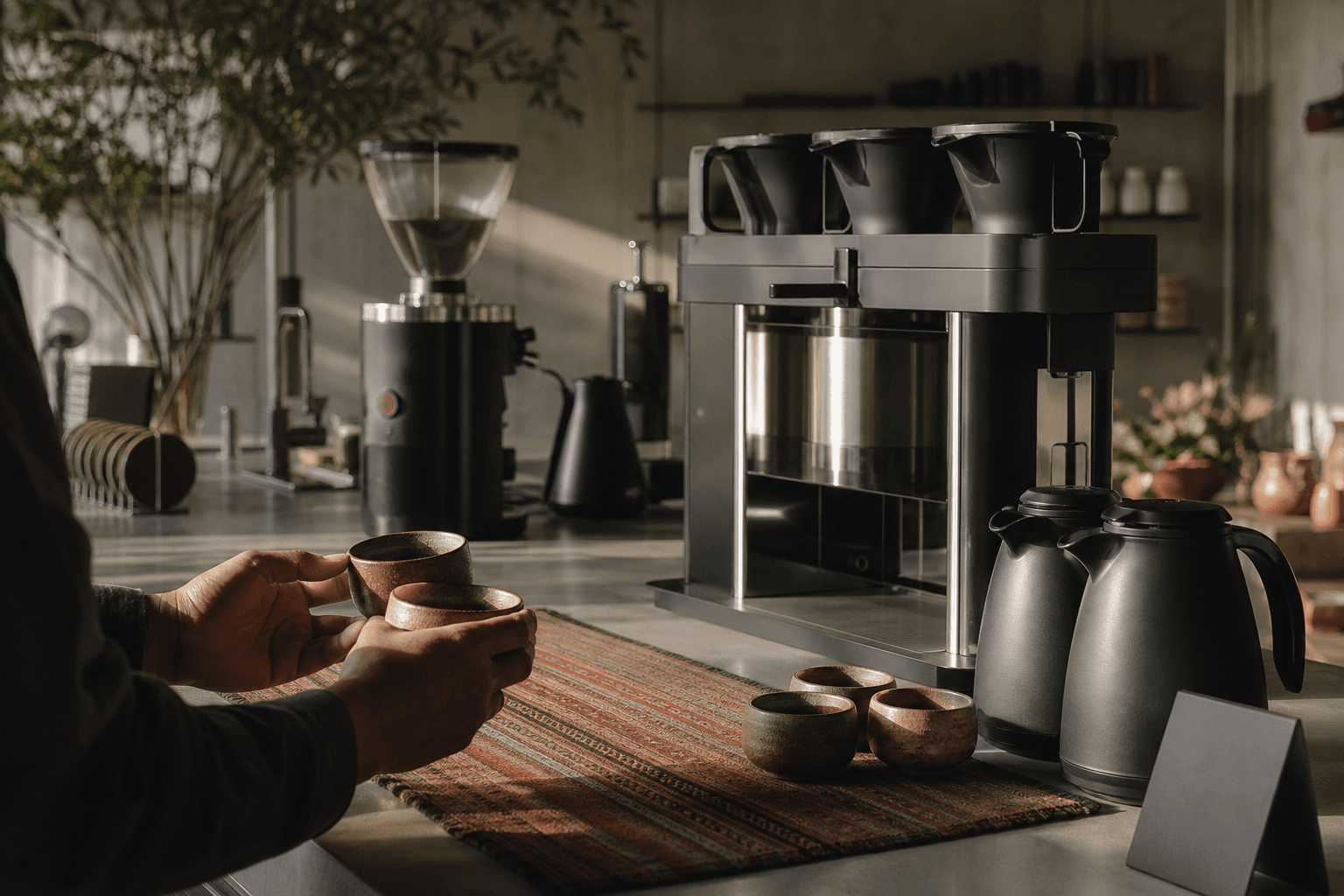
The most common mistake in workplace coffee is buying impressive equipment before designing the routine. A beautiful espresso machine can become a bottleneck if nobody is trained. A pour-over bar can be charming, but it does not scale well when twelve people arrive between meetings. For most offices, the best starting point is a reliable batch brewer and one repeatable recipe.
Think of the setup in four parts:
Swipe the table sideways to see all columns.
| Decision | Practical recommendation | Why it matters |
|---|---|---|
| Coffee | Fresh Guatemalan single-origin coffee or a Guatemala-led blend | Sweet, balanced, and easy to serve black or with milk |
| Roast | Light-medium to medium | Keeps origin character while staying approachable |
| Grinder | Burr grinder if possible | Consistent particles make the brew cleaner and less bitter |
| Recipe | 60 g coffee per litre of water | Easy ratio for repeatable batch brew |
| Service | Brew smaller pots more often | Fresh coffee beats one large pot held too long |
A batch brewer is not the enemy of specialty coffee. In many professional settings it is the most honest tool: stable water temperature, even brewing, and enough volume for a team. The weakness is usually not the brewer. It is stale coffee, inconsistent grinding, dirty equipment, or leaving brewed coffee too long after it is ready.
If the office only changes one habit, change this: stop brewing a huge pot “just in case.” Coffee held hot for too long loses sweetness and clarity. Brew less, more often. The cup will taste more intentional even before you change the machine.
A practical Guatemalan office batch brew recipe
Use this as a baseline for a filter brewer, batch brewer, or high-quality home-style drip machine. Adjust after tasting.
Starting recipe
- Coffee: 60 g Guatemalan coffee
- Water: 1 litre filtered water
- Grind: medium, like coarse sand
- Roast: light-medium or medium
- Brew time target: roughly 4 to 6 minutes, depending on brewer size
- Serve: within 30 to 45 minutes if held hot; sooner is better
If the coffee tastes thin, papery, or sharp, grind slightly finer or use a little more coffee. If it tastes bitter, dry, or hollow, grind slightly coarser, clean the brewer, or reduce how long the coffee sits after brewing. If it tastes dull even when fresh, check the water and the coffee age before blaming the origin.
For teams without a scale, make the recipe visible in a simple way: “one full 60 g scoop per litre” or “three marked scoops for the 1.8 litre pot.” A scale is better, but a repeatable scoop is still better than guessing every morning.
What to taste for in a workplace Guatemalan coffee
A good office coffee should not need a tasting lecture. Still, a few words can turn a routine cup into a shared experience.
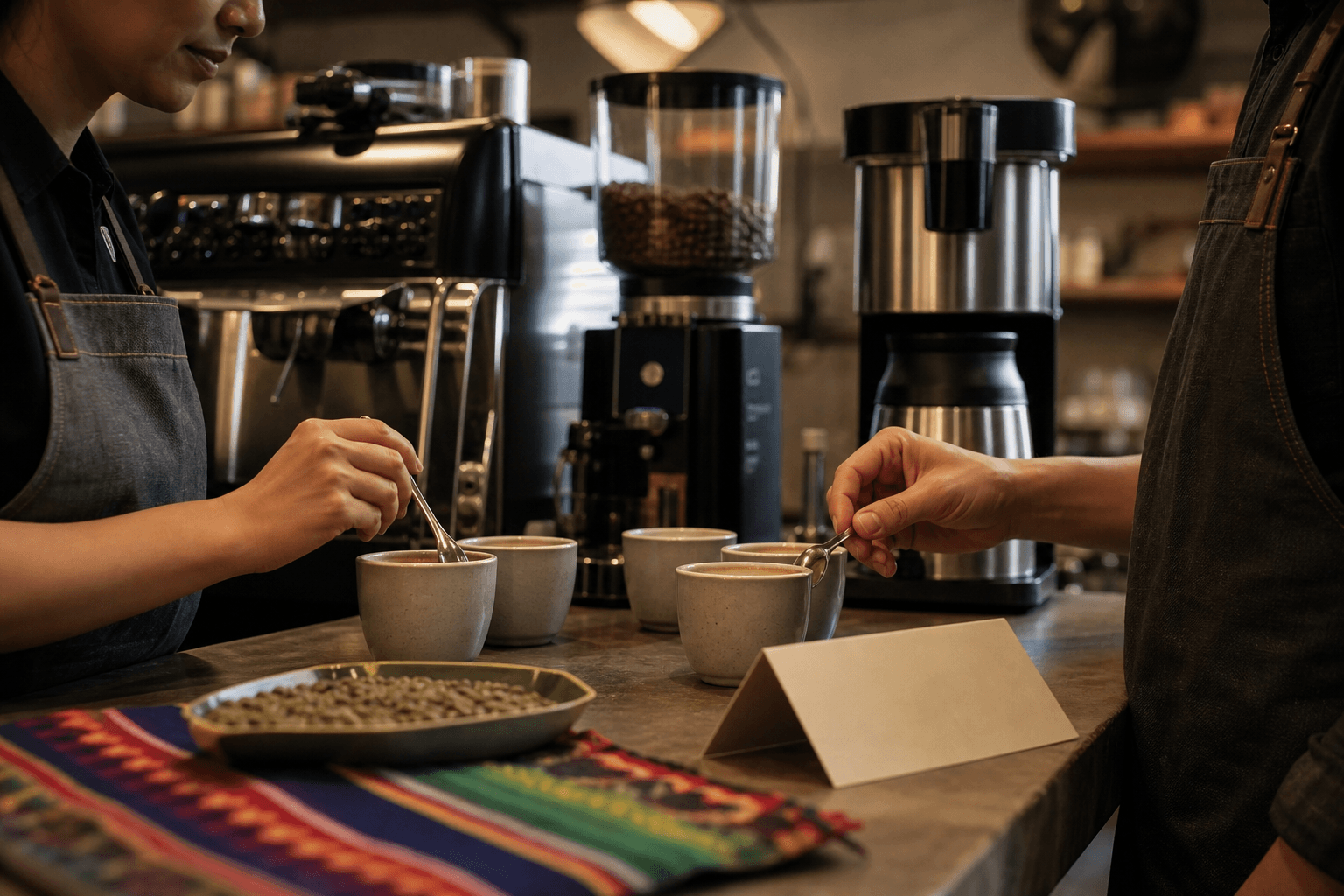
Try this simple tasting frame at the next team coffee break:
- Sweetness: Does it remind you of cocoa, caramel, brown sugar, honey, or ripe fruit?
- Brightness: Is there a clean lift, like orange, apple, or red grape?
- Body: Does it feel light and tea-like, round and creamy, or heavy?
- Finish: Does the flavour disappear quickly, linger pleasantly, or turn dry and bitter?
This works especially well with Guatemalan coffee because the flavour markers are familiar. Many people can recognise chocolate, citrus, nuts, and gentle spice even if they are new to specialty coffee. That makes Guatemala a useful teaching origin: it builds confidence before moving into more polarising profiles like highly floral Ethiopia, intensely bright Kenya, or experimental fermented lots from various origins.
If you want to compare origins in the office, keep it simple. Serve Guatemalan coffee beside a Colombian coffee and ask which feels rounder or brighter. Or compare it with an Ethiopian coffee and ask which one feels more floral. The point is not to rank origins; it is to help people notice that coffee has geography, processing, roast, and brewing behind it.
Buying guidance for office and hospitality teams
For workplace coffee, the best bag is not always the rarest bag. A tiny competition lot might be beautiful, but it may be expensive, limited, and too delicate for everyday service. Look for coffee that performs consistently across repeated brews.
A useful office buying checklist:
- Traceability: Can you name the origin, region, producer group, farm, or trade relationship?
- Freshness: Is there a roast date, and can you buy in a rhythm that avoids stale stock?
- Brew suitability: Does the roaster describe the coffee as good for filter, batch brew, or everyday drinking?
- Cup profile: Are the tasting notes familiar enough for a shared workplace cup?
- Volume: Can the supplier provide enough coffee without changing the profile every few days?
- Education: Can the coffee be explained simply to staff, guests, or clients?
This is where direct trade coffee and relationship-based sourcing can matter. Direct trade is not a single legal certification; in specialty language, it usually means a closer buying relationship between roaster and producer or exporter, often with more transparency around quality, price, and origin story. For an office buyer, the practical value is confidence: the coffee has a story you can explain and a quality standard you can repeat.
If you are choosing coffee for a café menu, meeting space, or hotel breakfast as well as the office, read Kapalaj’s guide to choosing Guatemalan coffee for a café menu. If you want to understand the origin behind the cup, explore Kapalaj’s page on Guatemala and our coffee origins. And when you are ready to brew it yourself, you can browse Kapalaj coffees in the English shop.
Common office coffee problems and how Guatemala helps
“Our coffee tastes bitter by mid-morning.”
The problem is usually holding time, roast level, dirty equipment, or grind size. Guatemalan coffee with cocoa sweetness can handle batch brew well, but no origin tastes good when it sits too long on heat. Brew smaller volumes and clean the brewer daily.
“People add milk because black coffee tastes harsh.”
Try a sweeter light-medium Guatemalan profile. The goal is not to ban milk; it is to make black coffee pleasant enough that milk becomes a choice, not a rescue mission.
“Specialty coffee feels too expensive for the office.”
Calculate cost per cup, not just bag price. Better coffee brewed correctly can reduce waste and make the coffee station feel cared for.
“We want something interesting, but not weird.”
That is where Guatemala shines: origin character through sweetness, citrus, and structure rather than unfamiliar flavours.
FAQ: Guatemalan coffee for office brewing
What is the best Guatemalan coffee for an office?
For most offices, choose a washed or clean honey-process Guatemalan coffee with tasting notes like chocolate, caramel, apple, orange, or nuts. A light-medium or medium roast usually gives the best balance of approachability and specialty character.
Is single-origin coffee too risky for workplace coffee?
Not if the profile is chosen well. Single-origin coffee simply means the coffee comes from one identifiable origin, farm, cooperative, or lot rather than being blended from many sources. A balanced Guatemalan single-origin can be more consistent and more memorable than a generic blend.
Can Guatemalan coffee work with milk?
Yes. Many Guatemalan coffees have cocoa sweetness and enough body to work with milk, especially in batch brew or espresso. For office filter coffee, choose a roast that still tastes clean black but has enough sweetness to stay pleasant with milk.
How much coffee should an office use per litre?
A good starting point is 60 g coffee per litre of water. If the cup tastes weak, use more coffee or grind finer. If it tastes bitter or dry, grind coarser, clean the brewer, or reduce holding time.
Make the coffee station feel cared for
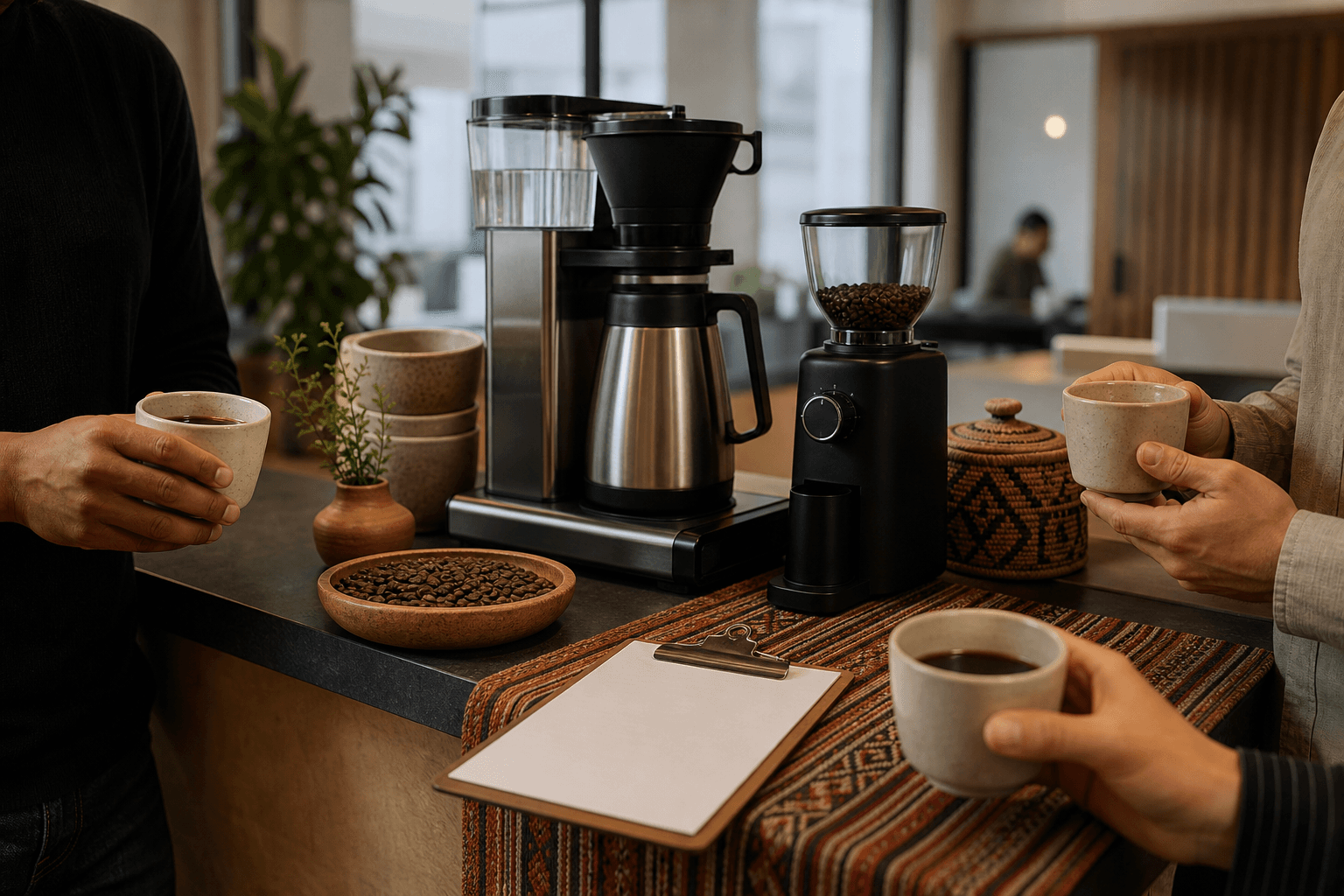
Great office coffee is not about turning every workplace into a café. It is about making a daily ritual feel considered. A clean brewer, a recipe, fresh beans, and a coffee with real origin character can change the mood of a morning meeting more than people expect.
Guatemalan coffee is a practical upgrade because it meets people where they are. It is sweet enough for comfort, structured enough for specialty drinkers, and traceable enough for buyers who care about where value comes from. In an office, that combination matters.
If you want workplace coffee that tastes intentional rather than merely available, start with Guatemala. Explore Kapalaj’s Guatemalan coffees in the shop, or contact Kapalaj to choose beans suited to your office, hospitality, or team brewing setup.