A good dinner rarely ends because everyone is finished. It ends because the table has shifted: plates are cleared, conversation slows down, and someone asks if there is coffee. That moment can be forgettable, or it can become the quiet highlight of the evening.
Guatemalan coffee is especially useful here. It has enough sweetness and structure to stand beside chocolate, cheese, fruit, nuts, and plated desserts, but it does not need to dominate the table. For specialty coffee drinkers used to comparing single-origin coffee by region, process, and roast level, after-dinner service is a different kind of test: does the coffee make the food taste better, and does the food reveal something new in the cup?
This guide is for home brewers, hosts, restaurants, hotels, and coffee lovers who want to serve coffee with more intention than “whatever is open.” We will look at why Guatemalan coffee works after dinner, how to match it with food, and how to brew a cup that feels elegant rather than heavy.
Direct answer: why Guatemalan coffee works after dinner
Guatemalan coffee often works well after dinner because many lots combine cocoa-like sweetness, gentle citrus, stone fruit, caramel, nuts, and a structured finish. Those traits make it easier to pair with dark chocolate, aged cheese, fruit desserts, toasted nuts, and cream-based desserts than very delicate floral coffees or very low-acid, earthy coffees.
If you want one simple rule, start with a medium-light to medium roast washed Guatemalan coffee for chocolate, cheese, and nut-based desserts. Choose a fruit-forward natural or honey-processed Guatemala when the dessert has berries, caramelized fruit, or a richer, more playful profile.
Why coffee pairing is becoming more relevant
Specialty coffee culture has trained drinkers in the US, UK, EU, and Nordics to ask better questions: Where is this coffee from? Who grew it? How was it processed? How fresh is it? That same curiosity belongs at the dinner table. A wine list may describe acidity, body, sweetness, and finish; coffee can do the same without becoming formal or intimidating.
The market context supports this shift. CBI’s overview of European coffee demand describes Europe as a major coffee market where value growth is tied to premiumisation. Its research on European specialty coffee potential also highlights traceability, differentiated taste experiences, and out-of-home consumption as important drivers. In plain English: more consumers are willing to pay attention when coffee feels specific, well-sourced, and served with care.
That matters for cafés and restaurants, but it also matters at home. If you already compare origins or brew careful pour-over coffee, pairing coffee with food is a natural next step. It turns a bag of beans into a conversation about sweetness, acidity, texture, and origin.
The pairing logic: match intensity, then contrast flavor
Coffee pairing becomes easier when you separate two ideas: intensity and flavor.
A practical way to think about it:
Swipe the table sideways to see all columns.
| Food on the table | Coffee direction | Why it works |
|---|---|---|
| 70% dark chocolate | Washed Guatemala, medium-light roast | Cocoa sweetness meets cocoa bitterness while citrus keeps the finish fresh |
| Aged hard cheese | Washed Antigua or Huehuetenango-style profile | Nutty, caramel, and citrus notes cut through salt and fat |
| Cheesecake or panna cotta | Clean Guatemala with orange or stone fruit notes | Acidity brightens cream without clashing |
| Berry dessert | Natural or honey-processed Guatemala | Fruit-forward coffee echoes berries and adds chocolate depth |
| Nut tart or brown-butter cake | Medium roast Guatemala | Caramel, almond, cocoa, and toasted sugar align naturally |
| Very sweet chocolate cake | Slightly stronger brew of washed Guatemala | Structure and bitterness prevent the pairing from becoming sugary |
The goal is not to make coffee taste like dessert. It is to make both taste more complete.
Guatemala brings structure, not just sweetness
It is tempting to describe Guatemalan coffee as “chocolatey” and stop there. That is useful, but incomplete. Guatemala is not one flavor profile. Guatemalan Coffees / Anacafé lists several regional profiles, including Antigua, Highland Huehue, Acatenango Valley, Traditional Atitlán, Fraijanes Plateau, Rainforest Cobán, New Oriente, and Volcanic San Marcos.
For pairing, that diversity is an advantage. An Antigua-style profile may bring cocoa, spice, and a firm finish that works beautifully with dark chocolate or aged cheese. A Huehuetenango-style profile may feel brighter and fruitier, making it useful with citrus, apple, pear, or lighter desserts. Coffees from Atitlán or Acatenango can bring a combination of sweetness, depth, and lively acidity that sits well in a multi-course meal.
Compared with Colombian coffee, Guatemalan coffee often feels a little more cocoa-toned and structured, though both origins can be sweet and balanced. Compared with Kenyan coffee, Guatemala is usually less sharply blackcurrant-like and less intensely acidic, which can make it more forgiving with cheese and chocolate. Compared with many Ethiopian coffees, Guatemala tends to be less floral and tea-like, but more grounded for dessert service.
Washed, natural, or honey: which process pairs best?
Processing describes how the coffee seed is separated from the fruit and dried. A washed coffee has most fruit removed before drying, often giving a cleaner and more transparent cup. A natural coffee dries inside the whole cherry, often creating more fruit aroma and heavier sweetness. Honey processing sits somewhere between, with some sticky fruit mucilage left on the seed during drying.
For after-dinner coffee, washed Guatemalan coffee is the most flexible starting point. It usually gives you clarity, cocoa, citrus, and a clean finish. That makes it easier to serve beside several foods at once: chocolate, cheese, nuts, and fruit.
Natural Guatemalan coffee can be excellent when the pairing is more specific. If you are serving berry tart, poached pear, chocolate mousse with fruit, or caramelized banana, a natural or honey-processed Guatemala can add a generous aroma that feels almost like a second dessert. The risk is that a very funky or winey natural can fight with delicate food. If the dessert is subtle, choose clean and sweet rather than loud.
To taste the difference before serving guests, brew two small cups: one washed, one natural. Taste each with dark chocolate and a small piece of cheese. The contrast will teach you faster than a long tasting note.
How to brew after-dinner Guatemalan coffee
After dinner, the best brew is usually concentrated enough to feel intentional, but not so strong that it behaves like a bitter digestif. Think clarity, aroma, and a clean finish.
The Specialty Coffee Association’s standards help the industry use shared language around brewing and evaluation, but you do not need laboratory equipment. You need consistency.
Try this simple table-service recipe for two to three people:
- Coffee: 24 g freshly ground Guatemalan coffee
- Water: 360 g, clean and good-tasting
- Ratio: 1:15, slightly stronger than many everyday filter recipes
- Grind: medium for pour-over, medium-fine for smaller brewers
- Water temperature: just off boil for light roasts; slightly cooler if the roast is darker
- Brew goal: sweet aroma, clear cocoa or fruit, no harsh dryness
Serve in small cups rather than large mugs. This changes the mood immediately. A smaller pour encourages sipping, tasting with food, and noticing aroma before the coffee cools.
If the coffee tastes bitter with chocolate, grind a little coarser or use slightly cooler water. If it tastes thin beside cheese, grind a little finer or use more coffee. If it tastes sour with dessert, the brew is probably under-extracted, meaning the water did not pull enough sweetness from the grounds.
Pairing notes for chocolate
Dark chocolate is the easiest place to start because many Guatemalan coffees already carry cocoa, caramel, or brown-sugar notes. The trick is choosing the right chocolate intensity.
With 65–75% dark chocolate, use a washed Guatemalan coffee with cocoa and citrus notes. The chocolate brings bitterness and fat; the coffee brings lift.
With milk chocolate, choose a coffee that has enough brightness to avoid a flat, sugary pairing. A Huehuetenango-style profile or a clean coffee with red apple and citrus can work well.
With very dark 80–90% chocolate, avoid coffee that is already roasty. You want sweetness and acidity, not more darkness.
Pairing notes for cheese
Coffee and cheese can sound surprising until you think about the palate. Cheese brings salt, fat, umami, and texture. Coffee brings bitterness, acidity, aroma, and warmth. Together, they can act like a less alcoholic alternative to dessert wine.
Aged hard cheeses are the safest match: Comté, aged Gouda, Manchego, Gruyère, or mature cheddar. Their nutty, crystalline, caramel-like character meets the cocoa and almond side of Guatemalan coffee. Add a few toasted nuts or dried fruit and the pairing becomes easy to understand.
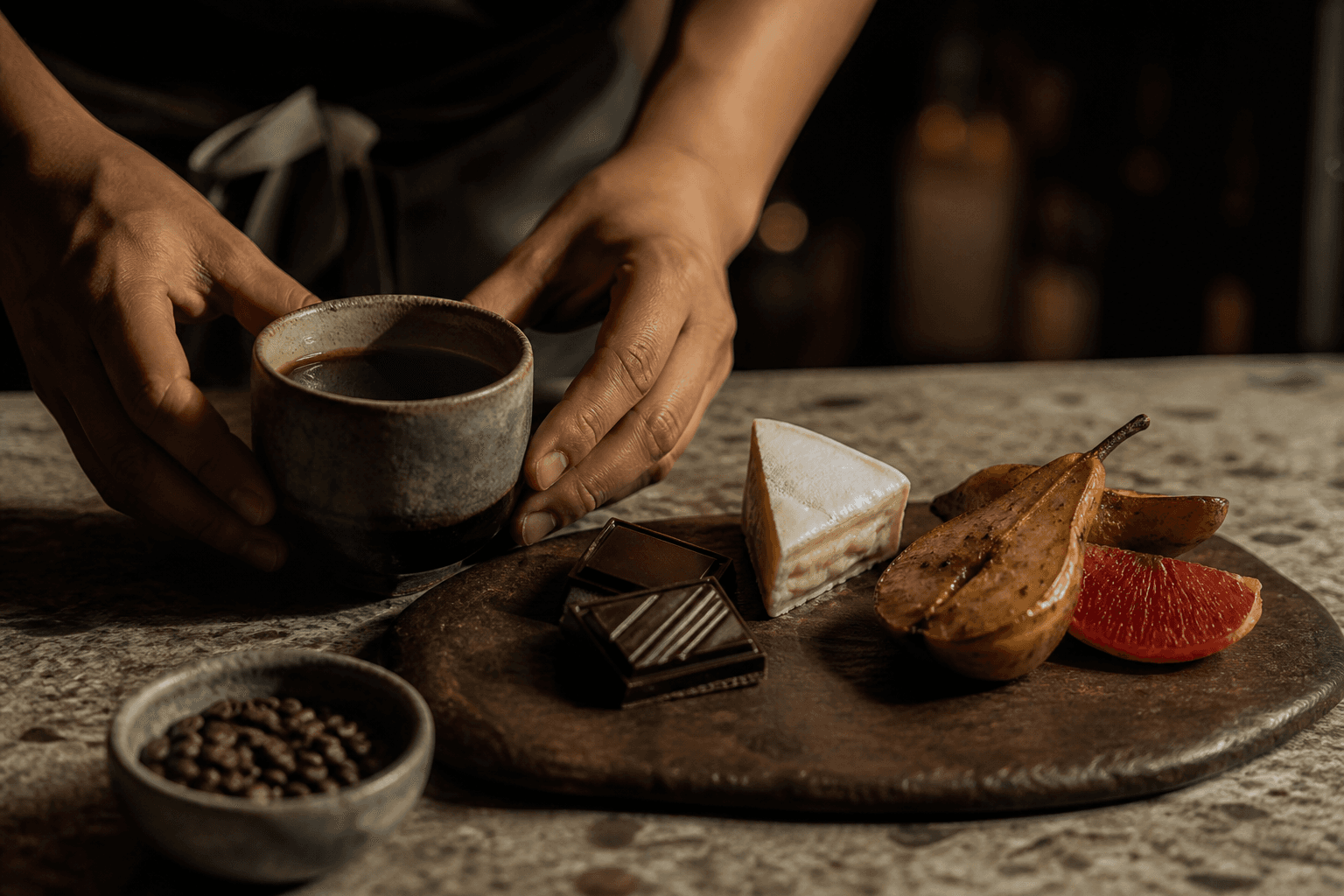
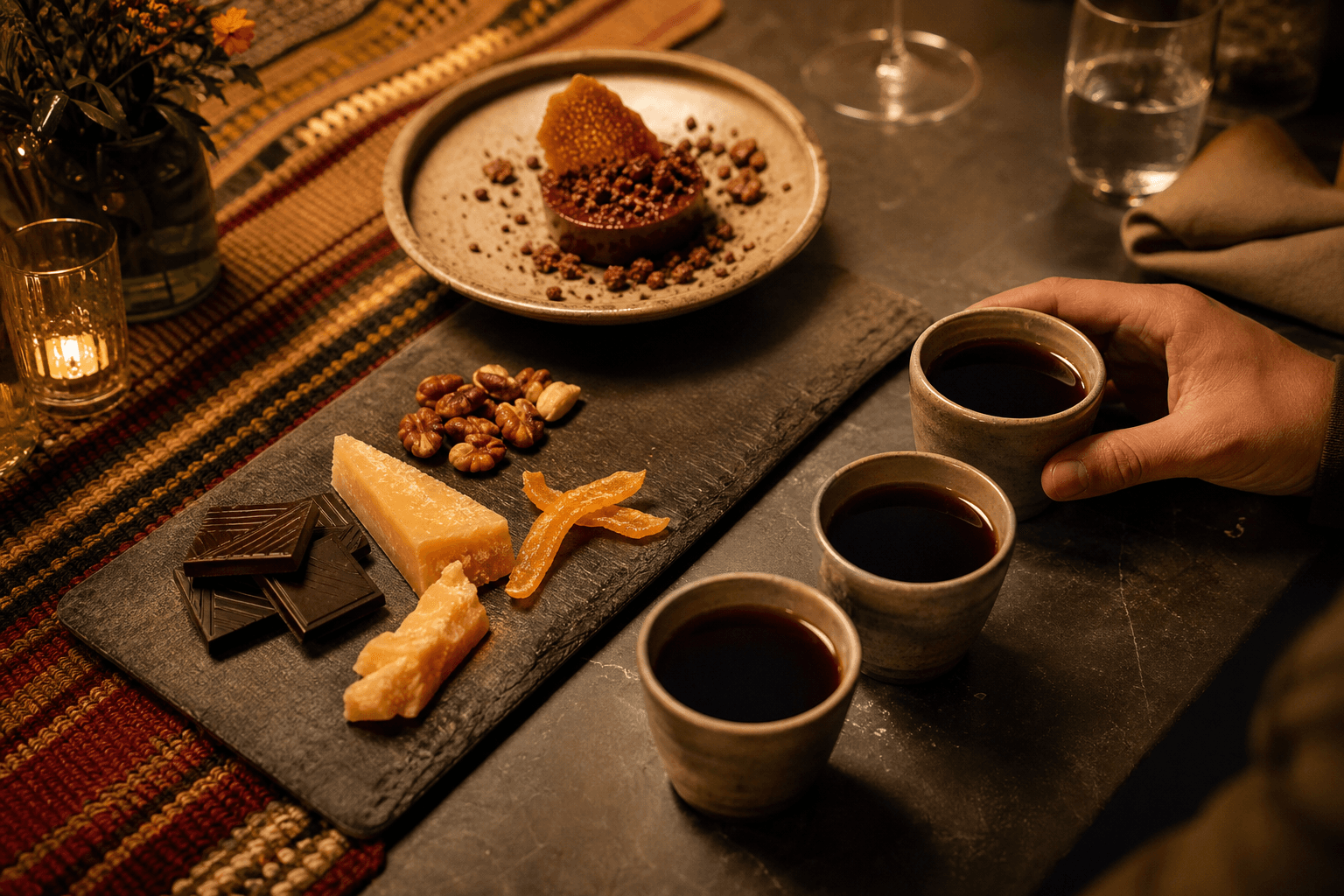
For a simple board, use one aged cheese, one dark chocolate, toasted nuts, and a small citrus or dried-fruit element. Brew one washed Guatemala and taste each bite with the coffee.
Pairing notes for dessert
Dessert pairing is about the dessert’s main source of sweetness.
For chocolate cake, brownie, or mousse, choose a structured washed Guatemala. You want the coffee to cut through richness and bring a clean finish. For caramel, toffee, or brown-butter desserts, a slightly more developed roast can echo toasted sugar without tasting burnt. For fruit tarts, citrus cake, or poached pear, choose a brighter Guatemala with orange, apple, or stone-fruit notes.
Creamy desserts such as panna cotta, cheesecake, custard, or crème brûlée benefit from acidity. This is where Guatemalan coffee can outperform a flatter, low-acid coffee. The acidity does not need to be sharp; it simply refreshes the palate.
A simple after-dinner tasting to try at home
Set out four small bites: dark chocolate, aged cheese, toasted nuts, and a fruit element such as orange peel, dried apricot, or berry compote. Brew one Guatemalan coffee and taste it in this order:
- Coffee alone
- Coffee with chocolate
- Coffee with cheese
- Coffee with fruit
- Coffee again alone
Notice what changes. Does the chocolate make the coffee taste sweeter or more bitter? Does the cheese make the acidity feel brighter? Does fruit pull out citrus or berry notes? This is the practical takeaway: a good pairing is not about memorizing rules. It is about noticing which flavors become clearer together.
If you want to compare origins, repeat the tasting with a Colombian, Ethiopian, or Kenyan coffee. The Colombian may feel familiar and balanced, the Ethiopian more floral or fruit-driven, and the Kenyan more vivid and acidic. Guatemala often earns its place by feeling composed: expressive enough for specialty drinkers, comfortable enough for guests who simply want a beautiful cup.
Buying checklist for after-dinner coffee
When choosing Guatemalan coffee for pairing, look for:
- Origin detail: region, producer, cooperative, or community when available
- Process: washed for versatility; natural or honey for fruit-focused desserts
- Roast level: medium-light to medium for sweetness without heavy roast bitterness
- Tasting notes: cocoa, caramel, citrus, stone fruit, almond, red apple, spice
- Freshness: recently roasted, stored airtight, ground just before brewing
- Traceability: enough information to connect flavor with place and producer practice
If a bag only says “Guatemala” and nothing else, it may still be enjoyable, but it gives you fewer pairing clues. A more traceable coffee lets you choose with intention. You can explore Kapalaj’s origin approach on our Guatemalan coffee origin page, compare articles in the Kapalaj blog, or browse coffees in the Kapalaj shop when you are ready to match a bag to a table.
FAQ
What food pairs best with Guatemalan coffee?
Dark chocolate, aged hard cheese, toasted nuts, caramel desserts, citrus desserts, and cream-based desserts often pair well with Guatemalan coffee. The best match depends on roast, process, and tasting notes.
Is Guatemalan coffee good with chocolate?
Yes. Many Guatemalan coffees have cocoa, caramel, almond, citrus, or brown-sugar notes, which can pair naturally with dark or milk chocolate. Avoid overly dark roasts with very dark chocolate if you want balance rather than bitterness.
Which Guatemalan coffee is best for dessert?
For a mixed dessert table, choose a clean washed Guatemalan coffee with cocoa and citrus notes. For berry, caramelized fruit, or richer desserts, a natural or honey-processed Guatemala can add more fruit aroma and sweetness.
Can I serve Guatemalan coffee instead of dessert wine?
Yes, especially with cheese, chocolate, nuts, and not-too-sweet desserts. Serve it in small cups and brew slightly stronger than everyday filter coffee so it feels deliberate and table-ready.
Should after-dinner coffee be espresso or filter coffee?
Either can work. Espresso is intense and compact, while filter coffee is easier for tasting across several foods. For a relaxed pairing board, a clean pour-over or small batch brew often gives more aroma and room for comparison.
Bring Guatemala to the table
After-dinner coffee does not need to be complicated. Choose a traceable Guatemalan coffee with sweetness, structure, and a flavor direction that matches the food. Brew it carefully, serve it in small cups, and let the table discover how chocolate, cheese, fruit, and coffee change one another.
If you want a coffee that can turn the final course into a conversation, explore Kapalaj’s Guatemalan coffees in the Kapalaj shop and choose a bag for your next dinner table.