
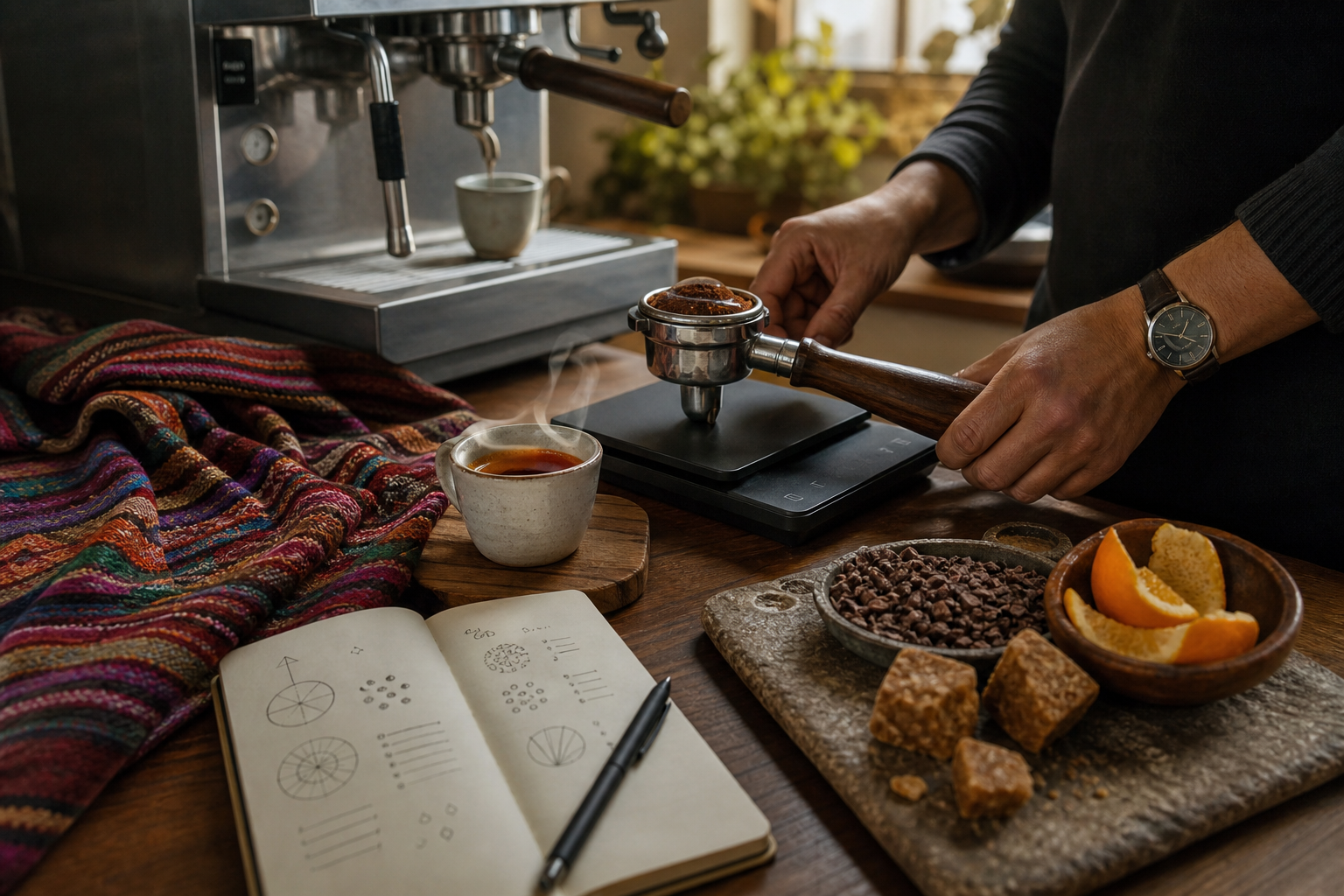
Guatemalan Coffee for Espresso: How to Dial In Sweetness Without Losing Origin Character
May 24, 2026 · 11 min read
Guatemalan Coffee for Espresso: How to Dial In Sweetness Without Losing Origin Character
Espresso has a way of exposing a coffee’s personality. A filter brew can be gentle and forgiving; espresso is concentrated, immediate, and honest. That is why Guatemalan coffee is such an interesting choice for home baristas and cafés: it brings enough chocolate-like sweetness and structure to feel satisfying, but enough citrus, fruit, and origin detail to remind you that you are drinking a specific coffee from a specific place.
In third-wave cafés across the US, UK, and Europe, espresso is no longer only about dark roast, heavy body, and bitterness. Buyers now ask whether a coffee is traceable, how it was processed, whether it works as a straight shot, and whether it still tastes good with milk. Guatemalan coffee sits beautifully in that conversation. It can behave like a classic espresso while still offering the clarity people expect from specialty coffee.
If you have ever pulled a shot that tasted sharp, hollow, or too roasty, this guide is for you. We will look at what Guatemalan coffee usually tastes like as espresso, how it compares with Colombian, Ethiopian, and Kenyan coffees, and how to dial it in at home without turning it into something generic.
Quick answer: is Guatemalan coffee good for espresso?
Yes. Guatemalan coffee is one of the most useful single-origin coffee choices for espresso because it often combines sweetness, medium-to-full body, clean acidity, and a finish that works both black and with milk. In plain English: it has enough depth to feel like “proper espresso,” but enough nuance to stay interesting.
Look for tasting notes such as cocoa, caramel, brown sugar, orange zest, red apple, plum, almond, or baking spice. If the roast is very light, brew it with patience and slightly higher extraction; if it is developed for espresso, expect a rounder cup with more chocolate and less sharpness.
Why Guatemala works so well in the espresso conversation
Espresso compresses flavour. A small change in grind size, dose, yield, or water temperature can turn the same coffee from syrupy and sweet to sour and thin. That is why some origins feel difficult on espresso: their best qualities may become too intense under pressure.
Guatemalan coffee tends to offer a helpful middle ground. Many lots from the coffee regions of Guatemala grow at high elevations, where cooler nights slow cherry development. That can contribute to dense seeds, layered sweetness, and lively but not usually aggressive acidity. Guatemala is also known for regions such as Antigua, Huehuetenango, Acatenango, Atitlán, Cobán, and Fraijanes, each with its own climate and cup profile. Anacafé, Guatemala’s national coffee association, presents these regional identities through the country’s wider origin program (Anacafé and Guatemalan Coffees).
For espresso, that range matters. A washed Huehuetenango might show citrus, stone fruit, and a crisp finish. A coffee from Antigua or Acatenango may lean toward cocoa, spice, and a more grounded sweetness. A natural or honey-process Guatemalan lot may bring more jammy fruit and body. The key is not to treat Guatemala as one flavour, but as an origin with enough structure to handle espresso pressure.
Guatemalan espresso compared with Colombia, Ethiopia, and Kenya
Comparisons help when they are practical. If you are buying beans online or choosing a café guest espresso, here is the useful version:
| Origin | Typical espresso impression | Best for drinkers who want |
|---|---|---|
| Guatemala | Cocoa, caramel, citrus, red fruit, spice, balanced body | Sweet espresso with origin clarity and milk versatility |
| Colombia | Caramel, nuts, red fruit, rounded acidity | A friendly, classic single-origin espresso with broad appeal |
| Ethiopia | Floral aromatics, tea-like body, berries, citrus | Bright, expressive shots with lots of fragrance |
| Kenya | Blackcurrant, grapefruit, wine-like acidity, intense structure | High-impact espresso with vivid acidity and complexity |
Colombian coffee can be beautifully dependable, especially for espresso blends and balanced single origins. Ethiopian coffee can be stunning, but lighter washed Ethiopians may taste delicate or very bright as espresso unless carefully roasted and dialed in. Kenyan coffees can be thrilling but polarising; their acidity can feel electric in a short shot.
Guatemala often lands between these worlds. It is less floral than Ethiopia, usually less sharply acidic than Kenya, and often more cocoa-spice driven than many Colombian profiles. For many home baristas, that makes Guatemalan coffee easier to love day after day.
The best Guatemalan coffee profile for espresso
When shopping for Guatemalan coffee for espresso, start by reading the bag like a brewer, not a collector. Beautiful region names are helpful, but the tasting notes and roast intention matter more for your machine.
For straight espresso, look for:
- Sweetness: brown sugar, panela, caramel, milk chocolate, honey.
- Structure: medium or full body, syrupy texture, clean finish.
- Acidity: orange, red apple, plum, or gentle citrus rather than razor-sharp lemon.
- Roast style: light-medium to medium is usually easiest; very light roasts need more careful extraction.
- Processing: washed coffees are clean and precise; honey and natural coffees can add fruit and body.
A quick note on specialist terms: body means how heavy or tactile the coffee feels in your mouth. Acidity does not mean sourness by default; in good coffee it is the lively, fruit-like brightness that makes a cup taste fresh. Extraction means how much flavour you dissolve from the ground coffee into the water. Under-extracted espresso often tastes sour and salty; over-extracted espresso can taste dry, bitter, or harsh.
A practical espresso recipe for Guatemalan coffee
Every grinder, machine, water profile, and roast is different, but a starting recipe helps. Use this for a light-medium or medium-roasted Guatemalan specialty coffee.
Starting recipe
- Dose: 18 g coffee in
- Yield: 40 g espresso out
- Time: 27–32 seconds from pump start
- Temperature: 93–94°C if your machine allows adjustment
- Ratio: about 1:2.2, meaning the drink weighs a little more than twice the dry coffee dose
This slightly longer yield is useful because Guatemalan coffee often has sweetness and citrus that open up when you extract a little more than a classic 1:2 shot. If the coffee tastes sharp, thin, or lemony, grind a little finer or increase the yield to 42–45 g. If it tastes bitter, woody, or drying, grind slightly coarser or stop closer to 36–38 g.
Dial-in checklist
- Pull your first shot and taste it before adding milk.
- If it is sour and weak, grind finer.
- If it is bitter and drying, grind coarser or reduce yield.
- If it is balanced but muted, try a slightly longer yield.
- If it tastes hollow with milk, choose a coffee with more chocolate, caramel, or spice notes next time.
Do not chase a perfect number. Chase a sweet centre. With Guatemalan coffee, the best espresso often tastes like cocoa and citrus meeting in the middle: round, clean, and quietly complex.
What about milk drinks?
This is where Guatemalan coffee becomes especially useful for international cafés and home brewers. Many specialty coffees taste exciting as a black espresso but disappear in a cappuccino. Others cut through milk but lose their single-origin character. Guatemala can do both when the roast and recipe are right.
In milk, a good Guatemalan espresso may taste like milk chocolate, dulce de leche, toasted almond, orange chocolate, or soft baking spice. That makes it approachable for guests who usually prefer a flat white or latte, while still giving trained palates something to notice.
For milk drinks, you can make a small adjustment: use a slightly shorter, more concentrated shot than you would for black espresso. Try 18 g in and 36–38 g out in 26–30 seconds. This keeps the espresso present when steamed milk adds sweetness and dilution.
Single-origin espresso versus blends
A blend is designed for consistency. A single-origin coffee is designed to express place. Neither is automatically better. The question is what you want from the cup.
If you run a busy café, a blend can be practical because it gives staff a stable target. If you are a home barista or a specialty coffee buyer, single-origin Guatemalan coffee gives you a clearer origin experience. You can taste how a washed Antigua differs from a fruitier Huehuetenango or a structured Acatenango. That kind of comparison is part of what makes specialty coffee culture so engaging.
Kapalaj focuses on Guatemalan coffee because traceability and origin identity matter. If you want to understand that broader approach, read our guide to why traceability matters in specialty coffee or explore more of Guatemala’s context on our origin page.
Buying tips: what to look for before you brew
A bag of espresso-friendly Guatemalan coffee should give you enough information to make a smart choice. You do not need every technical detail, but you should be able to answer a few basic questions.
Choose a Guatemalan coffee for espresso if the bag tells you:
- the country and region, not just “Central America”
- the processing method, such as washed, honey, or natural
- flavour notes that match your preference
- roast level or brew intention
- harvest or freshness information when available
- evidence of traceability or direct trade coffee relationships
Direct trade coffee is a broad term, but at its best it means the roaster or brand has a more transparent relationship with producers than anonymous commodity buying allows. It should not be used as decoration. For a buyer, the practical question is simple: does the brand explain where the coffee comes from, who benefits, and why this coffee was selected?
If your goal is clean espresso, start with washed Guatemalan coffee. If your goal is a fruitier shot or an expressive flat white, try honey or natural processing. If you are brewing for a mixed household, a medium roast with cocoa and citrus notes is the safest bet.
Common mistakes when brewing Guatemalan coffee as espresso
The first mistake is treating every Guatemalan coffee like an Italian-style espresso roast. Specialty Guatemalan coffee often has more acidity and origin character, so a very short shot can taste tight or sharp. Give it enough yield to show sweetness.
The second mistake is using beans too soon after roasting. Freshness matters, but espresso needs rest. Many coffees taste better after 7–14 days off roast because trapped carbon dioxide has had time to settle. Too much gas can make shots run unpredictably and taste fizzy or harsh.
The third mistake is assuming that acidity means something went wrong. A bright orange or red-apple note can be exactly what makes the coffee beautiful. The problem is imbalance: acidity without sweetness. Your job when dialing in is to bring the sweetness forward until the brightness feels juicy rather than sour.
FAQ: Guatemalan coffee for espresso
Is Guatemalan coffee better for espresso or pour-over coffee?
It can be excellent for both. Pour-over coffee highlights clarity and aroma, while espresso emphasizes sweetness, body, and intensity. If the same Guatemalan coffee tastes too sharp as espresso, try a longer yield or brew it as filter to enjoy its lighter details.
What does Guatemalan espresso taste like?
Guatemalan espresso often tastes like cocoa, caramel, brown sugar, citrus, red fruit, almond, or baking spice. The exact flavour depends on region, processing, roast style, and recipe.
Is Guatemalan coffee low acid?
Not exactly. Good Guatemalan specialty coffee often has clear acidity, but it is usually balanced by sweetness and body. Compared with many Kenyan coffees, it often feels softer; compared with some Brazilian coffees, it usually feels brighter.
Should I buy washed or natural Guatemalan coffee for espresso?
Choose washed coffee if you want clean, classic espresso with clarity. Choose natural or honey-process coffee if you want more fruit, heavier body, and a more playful shot.
Can Guatemalan coffee work for cappuccino and flat white?
Yes. Guatemalan coffee is especially strong in milk drinks when it has chocolate, caramel, nut, spice, or orange-chocolate notes. Pull a slightly shorter shot for milk than you would for black espresso.
The takeaway: espresso should still taste like Guatemala
The goal is not to force Guatemalan coffee into a generic espresso shape. The goal is to let it be both: concentrated and expressive, sweet and structured, familiar and traceable. That is why Guatemala matters in the global specialty coffee conversation. It gives home baristas and café buyers a bridge between classic espresso comfort and the more transparent, origin-focused world of modern single-origin coffee.
Start with a balanced recipe, taste before adjusting, and let sweetness guide your decisions. When the shot is right, you should not only taste “espresso.” You should taste cocoa, citrus, careful farming, and a coffee origin with real depth.
Ready to brew it for yourself? Explore Kapalaj coffees and choose a Guatemalan coffee with the sweetness, structure, and traceability your espresso setup deserves.